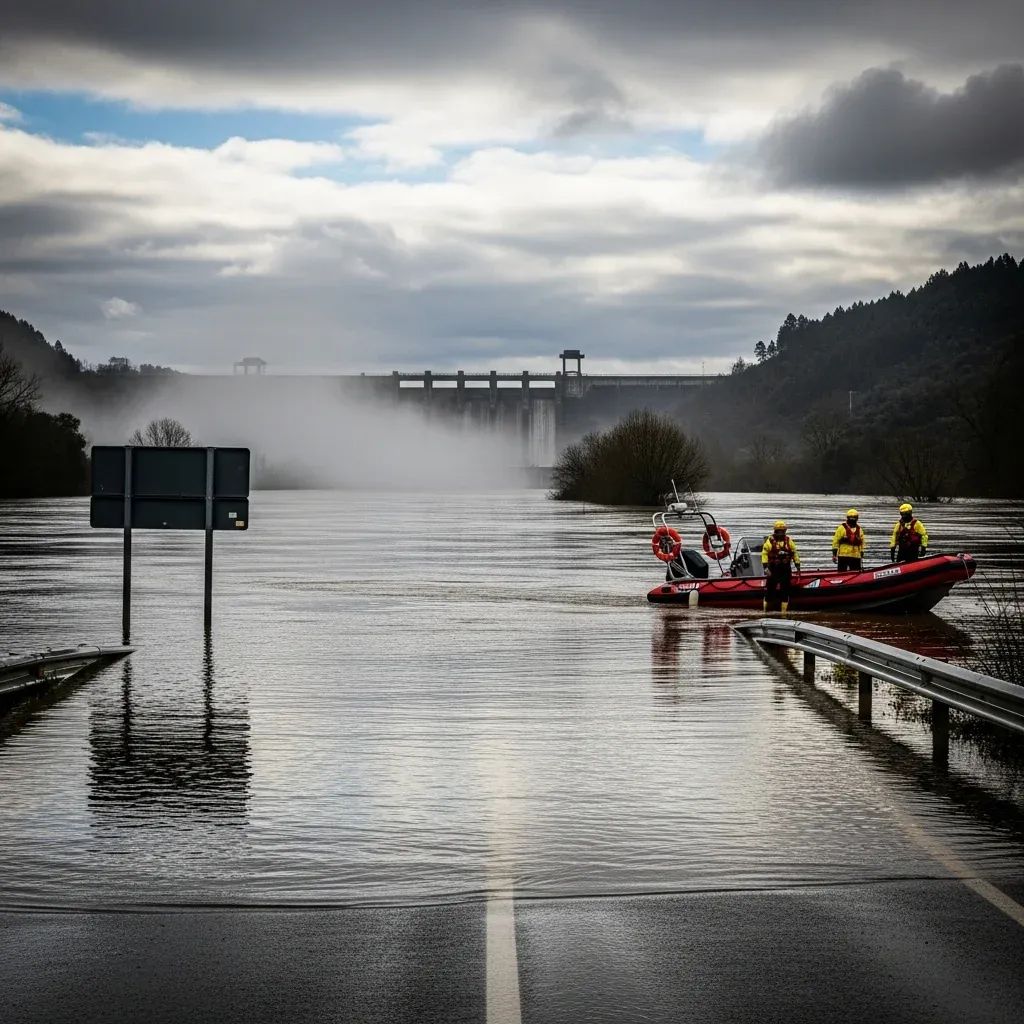
The Portugal National Civil Protection Authority (ANEPC) has escalated weather alerts for 68 municipalities, a move that will limit river-edge access, force school closures in low-lying areas and potentially drive up flood-insurance premiums for thousands of households.
Why This Matters
• Alerts run until 12 February – peak rainfall expected Tuesday night.
• River Mondego, Tejo, Sorraia and Sado on watch; red-level plan active for the Tejo basin.
• 11 district and 124 municipal emergency plans already triggered; public services may operate on reduced hours.
• 15 fatalities since 28 January underscore the life-safety stakes of ignoring warnings.
Where the Risk Is Highest
Intense Atlantic fronts have left soils super-saturated from the Minho to the Alentejo. The Centre-North corridor, especially Coimbra, Santarém and Leiria, faces the sharpest rise in river levels. Coastal communities between Aveiro and Figueira da Foz must also contend with storm-driven tides that push floodwater inland. ANEPC’s live dashboard shows the Tejo basin at 92 % capacity after upstream Spanish dams released water, raising pressure on levees from Abrantes to Vila Franca de Xira.
Why the Alerts Are Escalating
Meteorologists at the Portuguese Sea and Atmosphere Institute (IPMA) forecast a second pulse of 40–60 mm rainfall in less than 24 h, paired with gusts above 90 km/h. That “double hit” is a classic trigger for landslides in granite and schist slopes such as those along the Douro and Tâmega valleys. Three consecutive storms—Kristin, Leonardo and Marta—have already clocked 8,160 emergency call-outs this winter, the busiest run since 2015.
What This Means for Residents
Homeowners in mapped flood zones face automatic inspection by insurance assessors; policies may shift to a higher risk bracket next renewal. Commuters on the A1 and Linha do Norte rail should prepare for rolling speed limits or detours, adding up to 45 min to Lisbon–Porto journeys. Parents in riverfront parishes will receive SMS alerts from parish councils if classes move online. Businesses with ground-floor stock are being urged to raise inventory at least 60 cm and photograph premises for claims.
How Local Councils Are Responding
Nineteen municipalities, from Viana do Castelo to Alcácer do Sal, have declared a “local alert situation.” That authorises pre-emptive roadblocks, ferry suspension on the lower Tagus and door-to-door checks for elderly residents in floodplains. Lisbon City Hall has allocated €2 M for rapid-response pumps and placed 1,200 sandbags at volunteer fire stations for pickup.
Expert View: Building Resilience
Hydrology professor Maria Manuela Portela argues that Portugal must shift from emergency reaction to “preventive civil protection.” She favours mandatory roof-drain audits every 5 y, plus climate-ready building codes that lift wiring and boiler rooms above projected flood lines. Legal analyst Miguel Ramos Ascensão adds that public-works contracts now routinely include force-majeure climate clauses, signalling that contractors—and ultimately taxpayers—will share the cost of weather delays.
Trendline: From Drought to Deluge
Official data chart a stark swing: 2024 ranked as the 4th driest year this century, yet 2025 became the 3rd wettest, and February 2026 has already logged 3,326 flood incidents, double the decade average. Climate physicist Pedro Matos Soares warns that Portugal, wedged between subtropical and mid-latitude systems, will see both harsher droughts and sharper wet spells—making today’s alerts a preview rather than an anomaly.
Quick Safety Checklist
Clear gutters and street drains before nightfall.
Park above ground-floor level in multistorey garages.
Keep a battery radio and power bank; telecom blackouts averaged 3 h during storm Kristin.
Avoid shortcuts across flooded roads—30 cm of moving water can sweep away a mid-size car.
Portugal’s civil-protection officials insist the next 48 h are decisive. Heeding the guidance now could be the difference between minor inconvenience and catastrophic loss.