

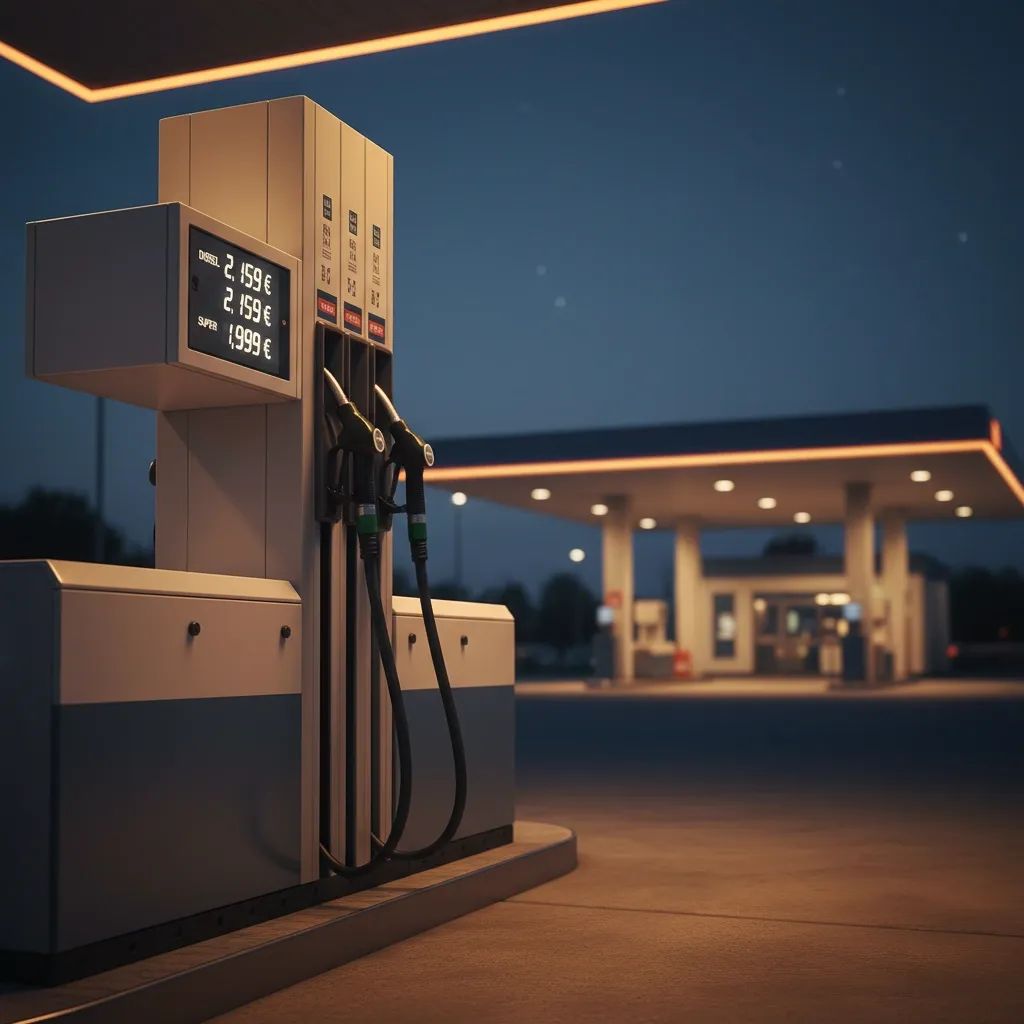
The Portugal fuel market will face sharp price hikes beginning Monday, with diesel climbing roughly 10 cents per liter and unleaded gasoline 95 rising 6 to 6.5 cents, pushing average pump prices to €2.055 for diesel and €1.993 for gasoline. This marks yet another squeeze on household budgets and business margins amid a volatile international crude market shaped by a near-total shutdown of the Strait of Ormuz and escalating U.S.–Iran tensions.
Why This Matters
• Diesel crosses €2: Portugal diesel prices will exceed €2 per liter for the first time in recent memory, with gasoline nearing the same threshold.
• Brent crude at 4-year highs: The European benchmark hit $126 per barrel this week—the highest since the 2022 Ukraine crisis—before settling around $111 on Thursday.
• Ormuz bottleneck persists: Approximately one-fifth of global oil flows through the Strait of Ormuz, which remains effectively closed as Washington maintains a naval blockade on Iranian ports and Tehran threatens "unprecedented military action."
• Government ISP discount continues: Lisbon is holding the line on 18.77 cents per liter off diesel and 19.92 cents off gasoline through extraordinary cuts to the Petroleum Products Tax (ISP), costing the treasury roughly €150 M per month.
Geopolitical Storm Fueling Price Surge
The immediate driver of Portugal's fuel-price spiral lies thousands of kilometers east. Since late February, when the United States and Israel launched coordinated strikes on Iranian nuclear and missile facilities, the Strait of Ormuz has seen maritime traffic collapse by more than 90%. Only vessels linked to Iran continue to move crude and liquefied natural gas through the narrow waterway; commercial shipping has all but stopped after a series of attacks, near-misses, and naval stand-offs.
Although a ceasefire took effect on April 8, peace negotiations remain stalled. The White House has signaled it will not lift the blockade until Tehran agrees to dismantle key elements of its nuclear program—a demand Iran's new Supreme Leader has flatly rejected. Meanwhile, Houthi militants in Yemen have fired on Israeli territory and threatened to expand attacks into the Red Sea, creating what analysts call a "dual chokepoint risk" that could push Brent futures toward $200 per barrel if the stand-off drags into summer.
The closure of Ormuz has removed an estimated 10 M barrels per day from global supply. Global inventories are shrinking, and Iran—unable to store excess output—has cut production. S&P Global Ratings recently lifted its 2026 Brent forecast to $100 per barrel, citing persistent geopolitical risk premium and supply disruption.
What This Means for Residents and Businesses
For Portugal households, the new pump prices translate into an immediate hit on monthly budgets. A typical 50-liter fill-up of unleaded 95 will cost roughly €100—an increase of more than €3 per tank. Over a month, a two-car family that refuels weekly faces an extra €25 to €30 in fuel costs alone, equivalent to a week's groceries for many households.
Small businesses and professional drivers feel the pinch even more acutely. Transport and logistics operators have seen diesel rise by more than 50 cents per liter since February, eroding profit margins and forcing some to pass costs onto customers. The Portugal taxi sector, already struggling with ride-hailing competition, now confronts a fuel bill that eats into daily earnings; the government has offered a one-time €120 per vehicle subsidy, but drivers say it barely covers two weeks of operations.
In the agriculture and fishing sectors, the impact is existential. Farmers rely on diesel to power tractors, irrigation pumps, and harvesters; fishermen burn it to reach distant grounds. The government has extended a 10-cent-per-liter rebate on colored and marked diesel for these industries through June, yet growers warn that prolonged high prices will trigger a cascade of cost increases across the food supply chain. The Federation of Fisheries of the Azores has warned that some vessels may be forced to dock indefinitely if diesel remains above €2.
Aviation has not been spared. European carriers, including those serving Portugal's busy Atlantic and island routes, have begun to cancel flights as jet-fuel costs have doubled year-over-year. Reduced frequency and higher ticket prices are likely consequences for travelers planning summer holidays or inter-island hops in the Azores and Madeira.
Azores Under Extreme Pressure
The autonomous region of the Azores is experiencing the most dramatic fuel-price shock in Portugal. Regional authorities announced Wednesday that effective today, unleaded 95 will jump 21.7 cents per liter to €1.921, while road diesel surges 36.3 cents to €2.004. Household liquefied petroleum gas (LPG) in standard 26-liter cylinders climbs 36.9 cents per kilogram, compounding already steep living costs on the mid-Atlantic islands.
Since February, Azores diesel has risen 53 cents per liter and gasoline 32.3 cents, despite a regional ISP discount of 4 cents on diesel and 3.5 cents on unleaded. The Regional Government of the Azores, led by President José Manuel Bolieiro, has pledged to maintain those discounts through May and hinted at the possibility of mid-month price revisions—a departure from the usual end-of-month adjustment cycle—if international markets stabilize.
Long queues formed at fuel stations across São Miguel, Terceira, and Faial on Wednesday and Thursday as residents scrambled to fill tanks before the price hike took effect. In Ribeira Grande, cashiers reported they could not take bathroom breaks; in Lagoa, a dozen vehicles blocked a traffic lane waiting for pumps. One taxi driver in Horta described the increase as "brutal" and predicted "damage across multiple sectors." A public petition addressed to the regional government and legislature has gathered more than 300 signatures, denouncing the hikes as an "attack on family economies" and warning of "social, political, and economic chaos."
Government Response and Fiscal Trade-Offs
Lisbon's principal tool for cushioning the blow has been aggressive manipulation of the ISP. Under a mechanism introduced in early 2026, the Portugal Revenue Department automatically reduces ISP rates whenever weekly pump prices rise more than 10 cents per liter above the previous week's average. The current discounts—18.77 cents on diesel, 19.92 cents on unleaded—effectively return to motorists the windfall VAT revenue the state would otherwise collect on higher prices.
In addition, the government has suspended the automatic fuel-price-setting mechanism through June 30 and capped monthly increases at 8% for both gasoline and diesel. When retail prices hit the ceiling, the Multi-Sectoral Regulatory Authority for the Economy (ARME) calculates the unrecovered differential; the state absorbs 70% of this gap, while distributors and refiners gradually recover the remaining 30% through future tariff adjustments or direct compensation.
For professional diesel users—heavy goods vehicles over 35 tonnes and buses with more than 22 seats—an additional 10-cent-per-liter subsidy applies, up to 15,000 liters per vehicle, whenever national diesel prices exceed March 2–6 baseline levels by more than 10 cents. Farmers, foresters, and fishers receive a parallel 10-cent rebate on marked diesel, paid directly by the Institute for Financing Agriculture and Fisheries (IFAP).
Humanitarian fire brigades, taxi operators, and social-solidarity institutions (IPSS) have received one-time grants ranging from €120 to €600 per vehicle or entity. Vulnerable families enrolled in social tariffs now qualify for an increased €25-per-month LPG subsidy (up from €15), valid for two cylinders over three months.
These measures collectively cost the treasury approximately €150 M per month, a fiscal burden that has drawn scrutiny from the European Commission, which has pressed Lisbon to phase out energy subsidies. Portuguese officials counter that the supports are temporary, targeted, and designed to prevent a demand shock that could tip the economy into recession.
Inflation Ripple and Broader Economic Impact
Fuel prices are a primary inflation driver in Portugal. April data from the National Statistics Institute (INE) showed headline inflation accelerating to 3.4% year-over-year, with energy products surging 11.7%. Transport costs feed directly into the prices of food, construction materials, and manufactured goods, magnifying the inflationary impulse across the economy.
Businesses in the transport and logistics sector face a profitability crunch. Freight rates have risen, but competition and long-term contracts limit how quickly operators can pass costs to customers. Some hauliers report that margins have turned negative on certain routes, forcing difficult choices between cutting service, raising rates, or exiting the market altogether.
Consumer sentiment has deteriorated. Surveys indicate that households are postponing discretionary spending—vacations, dining out, home improvements—to preserve cash for essentials. Retail sales growth has slowed, and automotive dealers note a marked uptick in inquiries about electric and hybrid vehicles, despite their higher sticker prices.
The Portugal Central Bank is monitoring the situation closely. If energy-driven inflation persists, the European Central Bank may delay interest-rate cuts, keeping borrowing costs elevated and dampening investment. Conversely, if crude prices retreat as diplomatic efforts bear fruit or alternative supply routes open, the inflationary pulse could ease by summer, offering relief to households and policymakers alike.
Outlook and Strategic Reserves
Looking ahead, much depends on whether the Strait of Ormuz impasse breaks. The United Nations Secretary-General has warned that prolonged closure risks a "global economic shock" affecting not only oil and gas but also fertilizers and petrochemicals. Analysts at major investment banks project Brent could stabilize around $90 to $100 per barrel by mid-year if a ceasefire holds and Iran re-enters negotiations, but caution that any renewed military escalation could send prices above $160 in a worst-case scenario.
Portugal has taken precautionary steps, releasing 10% of its strategic petroleum reserve to supplement domestic supply and pledging stricter market oversight to prevent hoarding or price manipulation. The government has also signaled readiness to deploy additional fiscal measures—further ISP cuts, expanded transport subsidies, or direct cash transfers—if the crisis deepens, though officials emphasize such interventions must remain selective and time-limited to avoid structural deficits.
For now, motorists across mainland Portugal and the Atlantic islands face a stark reality: filling the tank costs more than ever, and relief is tied to geopolitical forces far beyond national control. The coming weeks will test both household resilience and the government's fiscal stamina as crude markets gyrate and diplomatic efforts to reopen the world's most critical energy chokepoint grind slowly forward.


