

Portuguese Motorists Face Highest Fuel Prices of 2026
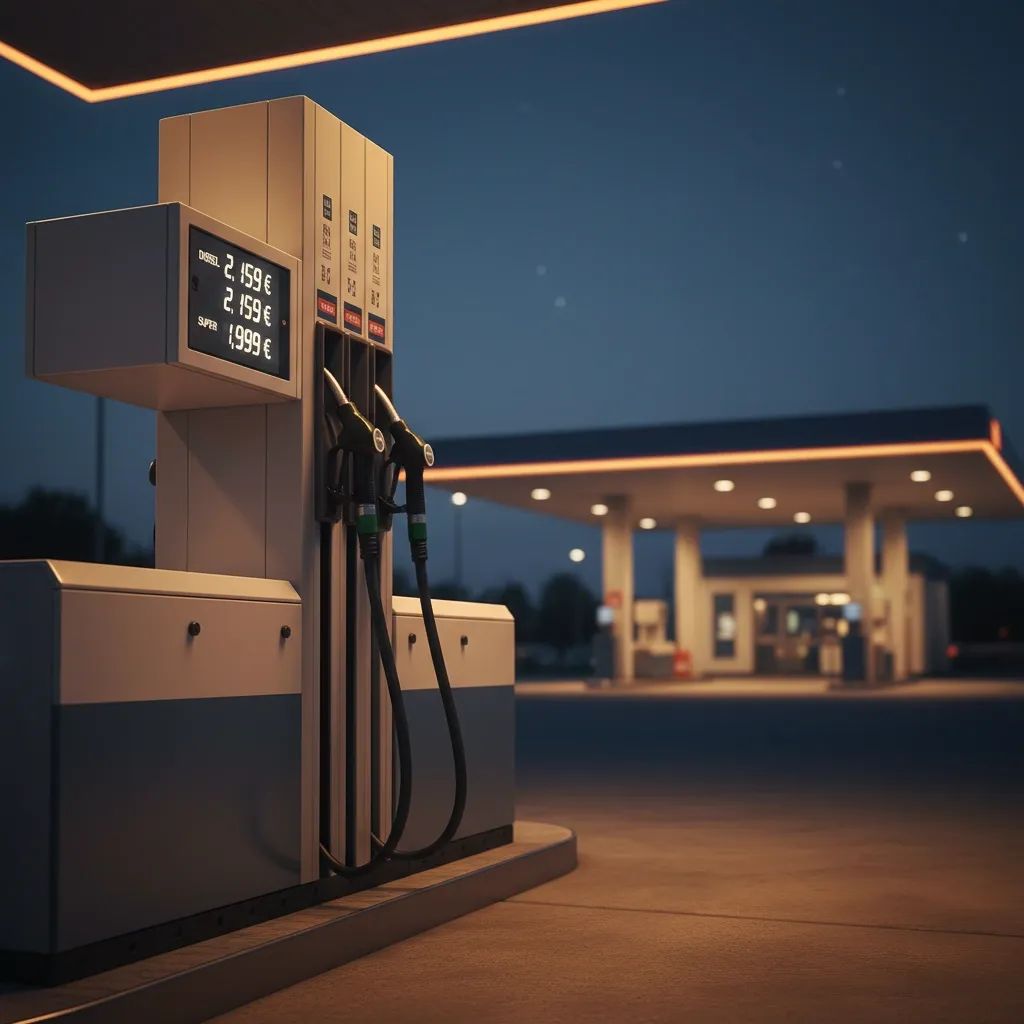
Drivers filling their tanks in Portugal this week are contending with significant cost increases that accumulated within a five-day span. By midweek, the Portugal Energy and Geology Authority (DGEG) confirmed that diesel had climbed to €1.834 per liter and unleaded petrol (95 octane) had reached €1.779 per liter. For households managing tight budgets, these increases represent a substantial additional cost burden on routine expenses.
Why This Matters
• Immediate wallet hit: A typical 50-liter diesel tank now costs €91.70, up roughly €10 from just seven days prior. The government's emergency tax relief of €0.0355 per liter provides partial offset.
• Market position: Portugal now occupies the upper echelon of European fuel costs, trailing only Scandinavian nations and the Netherlands, at prices nearly €0.25 higher than Spain despite geographic proximity.
• Weekly volatility: Forecasts point to an additional €0.06 to €0.15 per liter swing starting March 17, depending on developments in Middle Eastern geopolitical tensions.
A Week of Consecutive Price Increases
The run-up began Monday with an opening surge, followed by a second wave Tuesday. By Wednesday, when the DGEG published its official assessment, the cumulative impact was clear: diesel had added 19.9 cents per liter compared to the week's close, while petrol had climbed 7.4 cents. Consumers faced two distinct price movements in quick succession rather than the typical weekly price stability.
These figures represent weighted averages, incorporating small discounts that retailers apply through fleet cards and loyalty programs. The National Fuel Retailers Association (Anarec) supplies the underlying data; the DGEG then aggregates these reports to produce publicly posted rates. What most drivers encounter at the pump often differs from these averages—independent stations and hypermarket-branded forecourts frequently offer genuine savings of €0.05 to €0.10 per liter for cost-conscious shoppers.
Middle East Tensions Drive Global Oil Prices
Geopolitical tensions in the Middle East have disrupted petroleum markets this week. Military escalations have heightened concerns about maritime transit through the Strait of Hormuz, a critical waterway that channels approximately 20% of the world's daily petroleum trade. These developments have driven the price of Brent crude, Europe's oil benchmark, toward elevated levels unseen since Russia's 2022 invasion of Ukraine. As of midweek, Brent crude traded near €89.60 for May delivery contracts.
Portugal, lacking domestic oil reserves, imports the overwhelming majority of its petroleum, with the transport sector—lorries, cars, buses, and ferries—depending almost entirely on diesel and petrol. The nation's energy dependency rate stands at 74%, among the highest in the European Union. When supply routes face uncertainty or geopolitical risk premiums rise globally, Portugal has limited buffers.
The diesel market faces particular pressure. Europe produces surplus petrol but must import roughly 30% of the continent's diesel consumption from refineries outside the region. When cargoes from Middle Eastern and Asian sources face delays or supply concerns, diesel prices accelerate faster than petrol—explaining why this week diesel exceeded petrol at the pump, a reversal that catches many motorists by surprise.
How the Government's Circuit-Breaker Tax Works
Portugal's Prime Minister Luís Montenegro and the cabinet (Social Democratic Party, PSD) activated an automatic relief mechanism: a reduction in the Petroleum Products Tax (ISP) triggered when weekly price rises exceed €0.10 per liter. This mechanism, refined during the 2022 energy crisis, operates as follows:
When diesel or petrol jumps more than a dime per liter from the prior week's average, the government temporarily cuts the ISP rate for that fuel type. The discount is calibrated to offset additional VAT revenue accrued when prices climb—a revenue-neutral gesture from the treasury's perspective.
For this cycle, diesel qualified immediately, receiving a €0.0355 per liter cut in ISP (equivalent to €0.0437 accounting for VAT effects). Petrol, having climbed only €0.074, fell just short of triggering its own relief—though observers expect it will cross the threshold next Friday. Discounts layer cumulatively: if prices continue rising, additional reductions stack atop existing ones, progressively dampening pressure at the pump.
Fuel invoices now display a line item reading "ISP+VAT Reduction" so consumers understand what offset they received—a transparency measure highlighting government support.
The Fiscal Cushion and Brussels Scrutiny
The Portugal Revenue Service collected a record €3.7 billion in ISP receipts during 2025, providing fiscal capacity to absorb emergency relief costs without violating EU deficit constraints. Officials calculate that sustained relief—should crude remain elevated—will cost the treasury several hundred million euros monthly if extended through spring.
Yet Brussels monitors closely. The European Commission has repeatedly urged member states to phase out fossil fuel subsidies in favor of renewables and decarbonization investments. Portugal's emergency ISP cuts conflict nominally with that directive, though government officials frame the relief as extraordinary and temporary—a shield against geopolitical disruption rather than permanent market intervention.
Finance discussions hint that if the crisis persists, fresh fiscal trade-offs may surface: potential windfall taxes on energy firms, carbon pricing accelerations, or revised budget priorities. Meanwhile, opposition parties press for deeper subsidies, while environmental advocates caution against entrenching fossil dependency.
How Prices Are Set and Forecasted
Every Friday, the DGEG recalculates pump prices for the following week. The calculation incorporates four elements: the Brent crude benchmark, the ISP tax, the VAT impost, and a margin for refining, transport, and retail operations. Should crude close Friday at €89 per barrel and remain stable through the week, the forecasted increase for diesel starting March 17 stands at roughly €0.06 per liter. However, if Brent climbs to €95 or falls to €85, the forecast swing expands accordingly.
As of midday Wednesday, Anarec suggested that if market conditions held steady, drivers would face a modest €0.06 rise for both fuels when prices reset on Monday. This represented a dramatic shift from Tuesday's projections, which had foreshadowed €0.14 for diesel and €0.11 for petrol. The compression—a swing of nearly a dime per liter in forecasts within 24 hours—demonstrates the volatility crude markets currently exhibit.
Minister of Energy Maria da Graça Carvalho noted Wednesday in statements that "should Brent decline through Friday, we could anticipate downward price impacts on petrol by Monday." Her caveat underscores reality: Portugal's pump prices reflect global commodity movements, with policy tools offering brakes rather than steering wheels.
Where Portugal Ranks Across Europe
Comparisons expose Portugal's cost disadvantage. On March 9, the EU average stood at €1.574 for petrol and €1.572 for diesel. Portugal's corresponding rates—€1.780 and €1.834—place the country roughly €0.21 and €0.26 above average, respectively. Only Nordic and Alpine nations command higher prices: Denmark tops both categories at approximately €2.16 for petrol and €2.34 for diesel, followed by the Netherlands, Germany, and Switzerland. Spain, Portugal's closest geographic and economic peer, recorded €1.67 for petrol and €1.79 for diesel—notably cheaper despite similar exposure to Middle Eastern supply concerns.
The disparity has renewed interest in cross-border fill-ups, though with current crisis elevating costs across the peninsula, the savings opportunity has largely diminished.
Government Pledges Monitoring to Prevent Profiteering
Speaking Friday at a PSD (Social Democratic Party) parliamentary gathering in Caminha, Prime Minister Montenegro pledged that his administration would deploy regulatory oversight to prevent speculation and unjustified price escalation. He explicitly drew parallels to post-storm government intervention in the construction sector, where officials increased inspections following flooding to suppress opportunistic mark-ups on materials.
"We will remain vigilant over this specific market," Montenegro stated, "ensuring that fuel price formation adheres to legitimate market function and does not become an avenue for excess profiteering." The statement signals coordinated enforcement between the Portugal Competition Authority and the DGEG, with unannounced inspections of retail stations, wholesale contracts, and refinery margins to verify pricing accuracy.
Retailers who post prices inconsistently with documented supply contracts or withhold mandatory ISP discounts face administrative penalties under Law 45/2018, which governs transparency in the fuel distribution chain.
Commercial Operators Face Cash-Flow Strain
For taxi drivers, small haulage operators, and logistics firms, the cost surge translates into immediate operational distress. A long-haul truck consuming 200 liters daily now absorbs an additional €20 to €30 in fuel costs compared to the prior week. Most small operators lack hedging arrangements and thus absorb shocks in real time.
Industry associations have appealed for emergency credit lines and temporary toll suspensions to ease cash-flow pressure. Some hauliers are reducing kilometers on unprofitable routes or renegotiating freight contracts to pass surcharges to shippers and end customers. These costs ripple through supply chains: groceries, construction materials, and retail goods all depend on diesel-powered logistics.
Public transport operators similarly feel strain. While state subsidies cushion some impacts for buses and trains, fare revenues often lag cost inflation. Rural services, already thinly profitable, may face cutbacks if fuel costs remain elevated.
Strategic Energy Vulnerability
This crisis underscores a structural reality: Portugal's economy remains energy-vulnerable. Transport sector consumption depends almost entirely on fossil fuels, while electric vehicle penetration remains limited. The government has set ambitious EV targets and expanded charging infrastructure, but transition unfolds over years.
The structural imbalance between European diesel demand and refining capacity adds vulnerability. Europe's refineries produce abundant petrol but insufficient diesel. When Middle Eastern supply concerns arise, diesel prices accelerate sharply relative to petrol. For a country whose commercial transport fleet runs predominantly on diesel, this dynamic amplifies economic exposure.
Navigating the Current Situation
Motorists can check real-time fuel prices by station and location at the DGEG fuel price portal: precoscombustiveis.dgeg.gov.pt. Independent operators and hypermarket chains often offer savings of €0.05 to €0.10 per liter compared to branded competitors. Loyalty programs and fleet discounts provide additional modest leverage for frequent buyers.
Carpooling, route consolidation, and deferral of non-essential trips offer household-level mitigation. Rural residents, lacking viable public transit alternatives, face constrained options.
Commercial operators are exploring hedging arrangements for future deliveries and negotiating contracts permitting periodic surcharge adjustments tied to published benchmarks—increasingly common practice across European logistics during volatile periods.
The political reality is this: Portugal has limited unilateral tools to insulate itself from global petroleum price movements. Tax relief slows, but does not reverse, price growth. Market surveillance deters speculation but cannot offset crude-driven inflation. Strategic reserves exist but respond slowly to market conditions. What remains is management of immediate fiscal impact, enforcement of fair pricing rules, and pragmatic planning for scenarios in which Middle East tensions persist, keeping crude elevated and European motorists under sustained financial pressure.
The government has signaled it will not permit retailers to capture windfall gains. Brussels will monitor to ensure fiscal support does not become permanent. Motorists will adapt—making driving decisions more deliberately and monitoring pump prices more closely as weeks unfold.


