

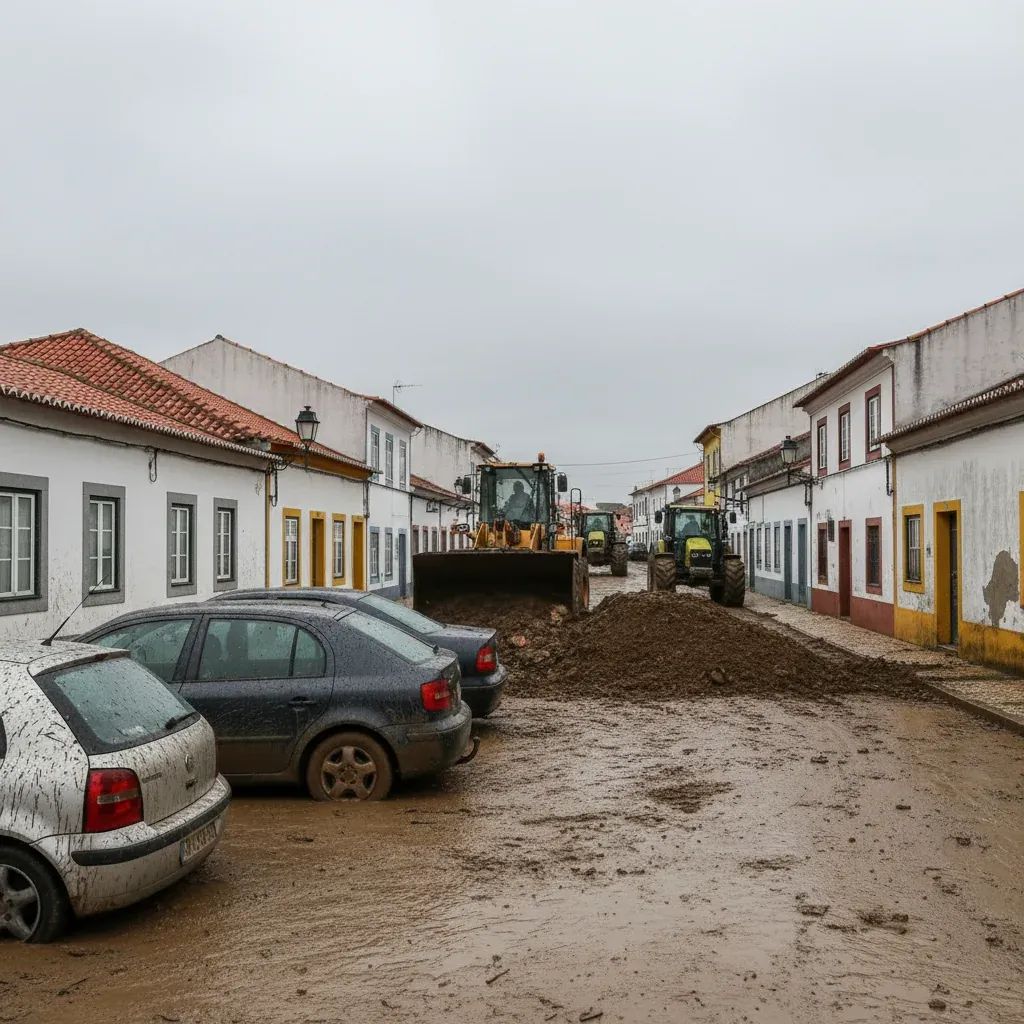
The Portugal National Civil Protection Authority has cordoned off several main roads in Portalegre after a rush of mud, water and rock from the Serra de São Mamede wrecked more than 50 cars, a disruption that will reverberate through insurance offices, repair garages and morning commutes for weeks to come.
Why This Matters
• 52 vehicles written off or heavily damaged – insurers say claims must be opened within 8 days to avoid paperwork penalties.
• Avenidas de Santo António and da Liberdade remain closed, forcing detours to the hospital and industrial zone.
• Further heavy rain forecast as Depression Marta approaches; the district stays under orange alert for flash floods.
• The municipality activated its Emergency Protection Plan, unlocking state funds for street repairs and possible compensation.
How the Torrent Began
Shortly before dawn last Wednesday, Depression Leonardo dumped a month’s worth of rain on the already saturated Serra de São Mamede. A retaining wall near the Miradouro failed, releasing a brown wall of water that barrelled down a dry streambed and into the city’s lower quarters. Locals describe a “roar like a freight train” as boulders and uprooted trees smashed parked cars along Avenida de Santo António, then fanned out toward Rossio.
Cleanup: Heavy Machines, Mud-Caked Boots
By sunrise, the Portalegre Fire Brigade, backed by army engineers, had draglines and front-loaders scooping debris. Farmers brought their own tractors, tackling the sticky clay clogging backyards. The thickest patches – sometimes knee-deep – still require shovels and pressure hoses. City hall says the first priority is restoring storm-water drains so that the next squall does not repeat the chaos.
The Insurance & Compensation Maze
Portuguese compulsory car insurance covers collision, not acts of nature. Only drivers with comprehensive (“todo-o-risco”) policies are automatically protected. Everyone else must apply to the Fundo de Garantia Automóvel or hope Parliament approves an exceptional aid package. Brokers advise:
Photograph the damage from at least three angles.
File the claim online via the insurer’s portal within eight calendar days.
Keep tow-truck and repair invoices – the municipality is negotiating bulk discounts with two local workshops.
Homeowners facing flooded basements can tap the national Civil Protection Relief Fund, but cash grants rarely exceed €5,000 – roughly two months’ rent in Lisbon – so receipts are essential.
Infrastructure Under Pressure
City engineers have identified six critical chokepoints where rubble narrowed culverts to a fraction of their design width. Until dredging finishes, side streets near Rua 31 de Janeiro will flood after even moderate showers. Meanwhile, the main entrance of Hospital Dr. José Maria Grande remains unusable; ambulances are rerouted through Avenida Pio XII. Authorities urge residents to avoid the hospital zone unless absolutely necessary.
What This Means for Residents
• Expect 30-minute detours around the closed avenues; school bus routes have been redrawn.
• If your car was towed, it is now at the Zona Industrial Norte depot; collection hours run 09:00-18:00.
• Stock up on sandbags – hardware shops report dwindling supplies ahead of the next storm.
• Sign up for free SMS alerts from the Portugal Meteorological Institute by texting “ALERTA” to 3838.
Are More Landslides Likely?
Geologists from Évora University note that hillside soils are holding nearly 95 % of field capacity. With tree roots already loosened, even short bursts of 15–20 mm rain could trigger fresh slippage. A preliminary survey logged 14 cracks along hiking trail PR2, prompting the Natural Park authority to close the upper switchbacks until further notice.
Climate Trend or One-Off Shock?
Historical disaster records show Portalegre suffered only two notable flash floods in the past three decades – 1996 and 2007 – none as destructive as last week’s event. Climatologists blame a warmer Atlantic that feeds stronger winter depressions into the Iberian interior. Local councils across the Alentejo are now fast-tracking slope-stabilisation projects, and Portalegre’s budget review in March will likely earmark extra funds for retaining walls and early-warning sensors.
The Political Back-and-Forth
While opposition parties argue over whether austerity cut drainage-maintenance budgets, City Hall insists the priority is “spades in the ground.” The municipal cabinet says it will publish a public damage ledger inside 15 days, a prerequisite for state-of-calamity status that unlocks reimbursement beyond standard insurance.
Bottom Line for Drivers and Homeowners
Replace guesswork with paperwork. Document everything, respect roadblocks, and brace for wetter weeks ahead. For Portalegrenses, resilience now hinges less on forecasts and more on how quickly claims are filed, drains cleared and hillsides reinforced before the next cloudburst arrives.


