

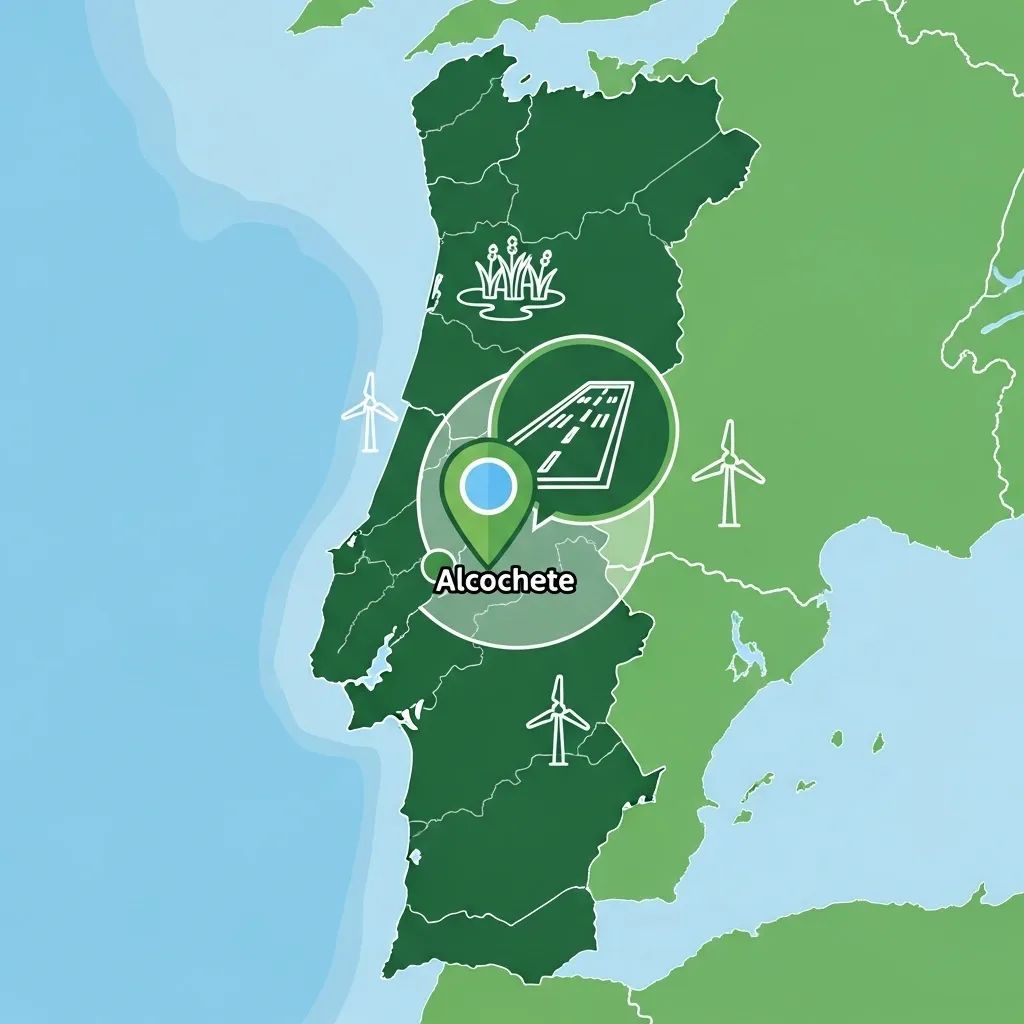
Portugal's tourism boom has pushed Lisbon's Humberto Delgado Airport (LIS) to its absolute limits. The long-awaited solution? A brand-new international gateway: Lisbon Luís de Camões Airport. This guide answers every key question travelers are searching for — from timelines and location to what it means for your next trip — with clear, quotable facts based on the latest 2026 government and ANA updates.
What is the new Lisbon airport?
Lisbon Luís de Camões Airport is Portugal's future flagship hub, designed to replace the overcrowded Humberto Delgado Airport and handle up to 100 million passengers a year by 2050 — roughly triple today's volume.
Named after the legendary Portuguese poet, the new airport will be a modern, high-capacity facility built from scratch on public land. It's the country's biggest infrastructure project in decades and a potential game-changer for air travel in Southern Europe. For an in-depth look at how the project came together, see our coverage of how Portugal rewrote the plan for Lisbon's Alcochete airport.
Where will the new Lisbon airport be located?
The new airport is being built at the eastern edge of the Campo de Tiro de Alcochete (Alcochete Firing Range), on the south bank of the Tagus River — roughly 25–40 km east of central Lisbon.
This location was officially confirmed by the government in March 2026 after years of studies. It offers plenty of space for expansion, minimal disruption to existing neighborhoods, and good potential for new road and rail links — including a planned third Tagus River bridge. Read our deep dive on how the firing range move to Alter do Chão made the 2037 opening possible.
When will the new Lisbon Luís de Camões Airport open?
Current projections point to a 2037 opening — a three-year delay from the original 2034 target. Construction is expected to ramp up after 2028, once environmental and technical approvals are finalized.
Key milestones to watch:
- July 2026: updated Environmental Impact Study and detailed technical report due.
- 2028 or later: full construction application approval.
- Initial phase: two runways capable of 90–95 aircraft movements per hour.
The government and ANA — Aeroportos de Portugal are pushing forward, but delays are common in major European infrastructure projects, so the timeline could shift again. We've tracked the slippage in our piece on why Lisbon's second airport faces yet another delay.
How will the new Lisbon airport change air travel?
Expect fewer delays, more flight options, better connectivity, and a far more pleasant passenger experience — while the current airport gets temporary upgrades to bridge the gap.
By 2050 the new hub could handle three times today's traffic. In the meantime, ongoing modernization at Humberto Delgado (a new South Pier, extra gates, and capacity boosted to 45 movements per hour) will keep Lisbon accessible until the new airport takes over.
Current Lisbon Airport vs new Luís de Camões Airport: quick comparison
Humberto Delgado (LIS) — operating today
- Location: about 7 km from the city center.
- Capacity: ~35 million passengers a year (currently saturated).
- Runways: single runway, capacity-constrained.
- Status: running with interim upgrades through 2037.
- Access: metro (Red Line), taxi, Uber, and direct buses.
- Best for: short-term trips and the next decade of travel.
Lisbon Luís de Camões Airport — opening 2037
- Location: Alcochete, south bank of the Tagus, ~25–40 km east of Lisbon.
- Capacity: up to 100 million passengers a year by 2050.
- Runways: 2 runways at opening, expandable to 4.
- Status: in design and approval phase, target opening 2037.
- Access: new road and rail links, plus a planned third Tagus bridge.
- Best for: long-term growth, fewer delays, and future-proof connections.
What should travelers do in the meantime?
Book flights to Lisbon as normal — the current airport is safe, functional, and actively improving — but plan for occasional peak-hour congestion until 2037.
Interim upgrades at Humberto Delgado (new boarding gates, an expanded Terminal 1, and better facilities) are already underway and due for completion by 2027. These will ease pressure while the new airport is built.
Pro tips for flying to Lisbon now and in the future
- Monitor updates: follow ANA and Portuguese government announcements — the July 2026 technical report will give the clearest picture yet of the timeline.
- Use the current airport smartly: arrive early during busy periods; the new South Pier and extra gates are already reducing queues.
- Plan for 2037+: once Luís de Camões opens, expect faster security, more lounges, and seamless rail connections to the city.
- Consider the bigger picture: the project is set to boost Portugal's tourism, economy, and connectivity — good news for expats, digital nomads, and visitors alike.
The new Lisbon airport represents the future of air travel in Portugal: bigger, greener (in design), and built for the next 50 years of growth. While we wait for 2037, the current airport's upgrades ensure Lisbon remains one of Europe's most accessible capitals.
For the latest official updates, check ANA's project page or the Portuguese government's infrastructure portal. Safe travels — whether you're arriving at the current hub today or dreaming of the shiny new one in the years ahead.


