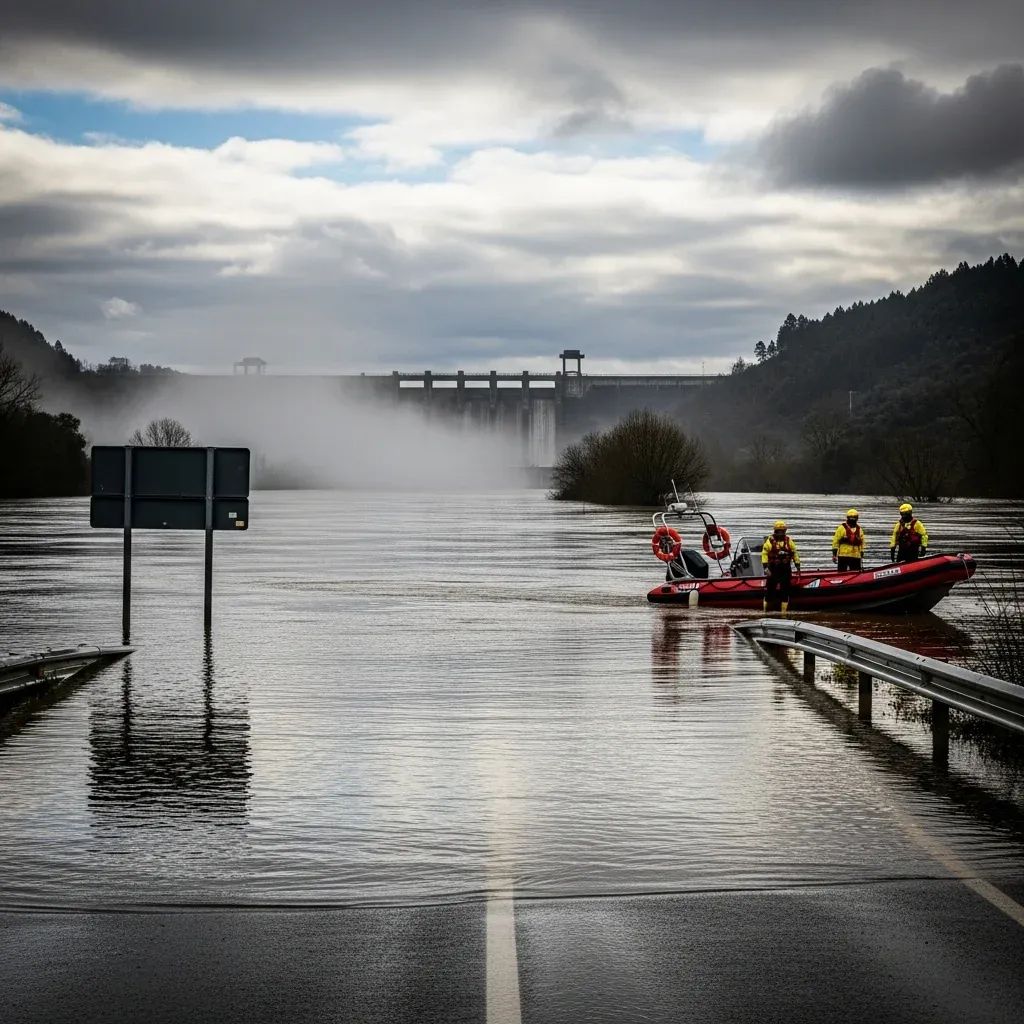
Portugal's national meteorological authority has activated a yellow alert for six coastal districts, putting fishing communities, port operators, and coastal residents on notice for hazardous sea conditions through Saturday evening. The alert, covering roughly half of the country's Atlantic coastline, underscores the disruption that 4 to 5-meter swells can inflict on maritime commerce and safety.
Why This Matters:
• Port closures likely: Under yellow-alert conditions, fishing harbors and marinas from Braga to Leiria may shut access to smaller vessels, potentially halting commercial and recreational activity.
• Economic impact for fishers: If extended suspensions occur, the industry faces potential lost catches and equipment concerns.
• Coastal safety risk: Authorities warn against beachfront walks, cliff-edge fishing, and jetty access during peak wave periods.
• Timeline: The alert runs from 9 p.m. Friday through 6 p.m. Saturday (March 13-14).
Which Districts Are Affected
The Instituto Português do Mar e da Atmosfera (IPMA) has placed Porto, Viana do Castelo, Braga, Aveiro, Coimbra, and Leiria under yellow-level marine warnings. These districts form the core of Portugal's northern and central Atlantic façade, home to major fishing ports such as Póvoa de Varzim, Vila do Conde, Figueira da Foz, and Nazaré, as well as recreational marinas that serve both domestic and tourist sailors.
Yellow alerts indicate moderate risk to weather-dependent activities. While not at the severity threshold of orange or red warnings, such conditions typically prompt harbor masters to assess bar closures for smaller craft, particularly fishing trawlers and leisure boats under 12 meters. Larger commercial vessels may continue operations under strict pilotage rules, though delays and berth congestion are common during such events.
This weekend's alert reflects a typical March pattern for Atlantic coastal warnings, when winter storm tracks gradually shift northward but retain enough energy to generate significant swells. Similar marine warnings are issued periodically throughout the spring season as distant Atlantic weather systems move across the ocean.
What 4–5 Meter Waves Mean on the Ground
To non-mariners, wave heights sound abstract. In practice, 4 to 5-meter northwest swells—roughly 13 to 16 feet—create conditions that make small-boat navigation treacherous and can render harbor entrances impassable. Fishing skippers typically describe these seas as "working conditions you avoid unless you have no choice."
Based on typical patterns during such alerts, impacts generally ripple through multiple sectors:
• Fishing fleets potentially grounded: Trawlers and longliners may stay tied up during bar closures, affecting crews' daily operations. For family-run operations, even brief suspensions can create scheduling pressures.
• Gear damage risk: Nets left submerged or improperly secured can tangle on moorings or suffer damage, requiring repair.
• Port infrastructure strain: Heavy swells accelerate erosion of breakwaters, jetties, and pilings, adding to maintenance concerns.
• Recreational cancellations: Surf schools, sailing charters, and diving outfits typically lose weekend bookings during such alerts, a concern during shoulder season.
Maritime authorities typically issue complementary port orders that restrict bar crossings, require double mooring lines, and mandate precautions for vessels remaining afloat during alerts.
Impact on Coastal Residents and Visitors
Beyond the docks, the alert carries implications for anyone living or traveling along Portugal's western seaboard. The Autoridade Marítima Nacional and civil protection agencies have urged the public to avoid beaches, cliff walks, harbor jetties, and breakwaters during the alert window. Even areas that appear calm can be struck by rogue waves that travel farther up the beach or over rock formations than typical swells.
Cliff-edge fishing, popular among recreational anglers targeting sea bass and bream, becomes especially dangerous during such conditions. Authorities enforce safety measures strictly, and fines can apply for ignoring closure signs.
For coastal homeowners, the alert is a reminder to secure outdoor furniture, reinforce temporary structures, and check drainage systems. Properties fronting the ocean or estuaries may be vulnerable to spray damage and minor water concerns when high tides coincide with peak wave action.
Weather Context: Cool Mornings, Mild Afternoons
While the sea churns, conditions inland remain benign. The IPMA forecasts mostly clear skies across mainland Portugal today, with morning fog and low cloud along the northern and central coast burning off by midday. Light winds and a pronounced overnight chill will give way to a modest temperature rise through the afternoon.
Minimum temperatures this morning ranged from 4°C in Bragança—where frost was visible in higher valleys—to 10°C in Lisboa and Portalegre. Afternoon highs will span 15°C in Guarda, Porto, Aveiro, and Viana do Castelo, climbing to 21°C in Lisboa, Santarém, Setúbal, Évora, and Faro. The north-south gradient reflects typical March patterns, when Atlantic influence keeps coastal districts cooler while southern plains warm faster under longer daylight hours.
The calm inland weather contrasts sharply with the offshore turbulence, a reminder that Portugal's maritime and continental climates often diverge. The northwest swell originates from distant Atlantic storms, arriving days after the systems themselves have moved on, meaning skies can be blue even as harbor precautions are in place.
Historical Pattern and Frequency
March has historically been an active month for marine warnings along Portugal's coast, as winter storm tracks gradually shift northward but retain enough energy to generate significant swells. Yellow-level marine alerts are issued periodically throughout the season as Atlantic weather systems develop and move across the ocean.
Climate researchers note that changing jet-stream behavior and evolving Atlantic patterns may influence the distribution of North Atlantic low-pressure systems. The IPMA continues to monitor coastal conditions and update alert protocols based on observed patterns.
Practical Advice for the Weekend
For those living in or visiting the affected districts, the IPMA and civil protection agencies recommend:
• Check the IPMA website or app for real-time updates; conditions can improve or worsen rapidly.
• Contact local Capitanias (harbor master offices) before planning any maritime activity; bar status changes are posted hourly.
• Postpone coastal walks and beach outings until Sunday afternoon at the earliest, when wave heights are forecast to subside below 3 meters.
• Secure loose items in gardens and balconies if you live within 500 meters of the shore; salt spray can travel inland on strong gusts.
• Respect signage and lifeguard instructions; beaches that reopen may still have strong currents and undertow.
Fishing communities are advised to double-check mooring lines and fender placement, and to move smaller dinghies and tenders to dry storage if possible. Recreational sailors planning offshore passages should consider delaying departure until Monday, when wave heights are expected to decrease and conditions improve.
The alert serves as a routine but important reminder that Portugal's Atlantic coast, while scenic and economically vital, demands respect and vigilance during periods of heightened marine activity. For residents and visitors alike, heeding safety guidance can help ensure the weekend remains inconvenience-free rather than hazardous.