

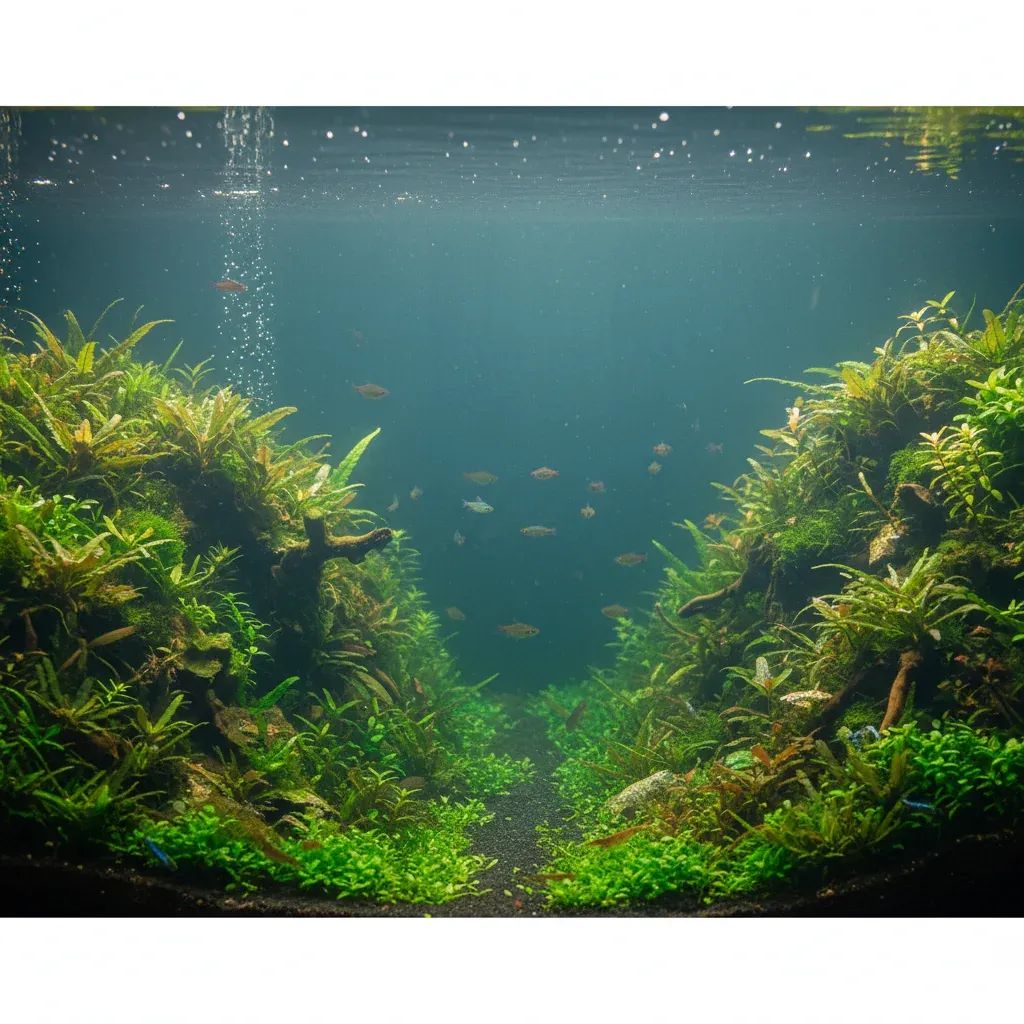
The Lisbon Oceanarium is closing one of its most celebrated chapters. After 11 years on display—far exceeding its original three-year run—the "Florestas Submersas by Takashi Amano" exhibition will officially shut its doors on June 30, 2026. More than 10 million visitors have witnessed the Japanese aquascaper's final masterpiece, a 40-meter tropical freshwater aquarium that has captivated audiences and required over 11,000 hours of specialized underwater maintenance to preserve the artist's vision.
Why This Matters
• Final weeks to visit: Special guided backstage tours run every Wednesday through June 24, revealing the technical work behind the living artwork (sessions in Portuguese and English). Tours are free for ticket holders; advance booking is recommended through the Oceanarium's website (www.oceanario.pt) or by calling +351 218 917 002.
• Cultural tourism loss: The exhibition attracted 1 million visitors in its first year alone, 700,000 of them international tourists from 180 countries, reinforcing Lisbon's profile as a cultural destination.
• New chapter ahead: A replacement exhibition, "Universo Submerso," launched in November 2024, offers an immersive poetic experience blending celestial and marine themes for the next two years.
The Artist's Legacy in Lisbon
Takashi Amano, widely regarded as the father of modern aquascaping, died in August 2015—just four months after inaugurating "Florestas Submersas." The Lisbon installation became his final large-scale creation, a sprawling underwater forest ecosystem holding 160,000 liters of water and sheltering more than 10,000 fish representing 40 species. What began as a temporary loan evolved into a decade-long relationship between the Oceanarium and Amano's legacy, sustained by a team of divers performing meticulous pruning and balancing to keep the aquascape alive.
The exhibition's extended stay was driven by overwhelming demand. Named Exhibition of the Year in 2015 by Time Out Lisboa, it outpaced all projections and became a signature attraction for both locals and tourists. The decision to close now is deliberate: as the Oceanarium explains, the aquarium is a living system that naturally transforms over time, and honoring Amano's original intent requires accepting the end of its cycle rather than allowing the composition to drift from his design.
What Visitors Should Expect in the Final Weeks
The Oceanarium is rolling out farewell programming to mark the closure. Beyond standard entry to the permanent exhibition and the new "Universo Submerso" experience, the institution is hosting guided behind-the-scenes tours on Wednesdays, offering a rare glimpse into the hidden infrastructure—filtration systems, lighting arrays, and the logistics of managing a 40-meter aquatic canvas. Live underwater pruning demonstrations are also scheduled, though exact dates remain unconfirmed.
Practical visitor information: The Oceanarium is located at Parque das Nações, accessible by Metro (Red Line, Oriente station) or bus (routes 25, 28, 44, 728). Free parking is available on-site. Tickets start at €22 for adults, with discounts for children (€14), seniors (€17), and Lisboa Card holders (20% off). Extended summer hours (June-August) run 10 a.m. to 7 p.m. daily. Advance booking is recommended for final weeks due to expected increased visitor traffic.
For those unfamiliar, the "Florestas Submersas" was more than an aquarium. It featured a custom musical score by Portuguese composer Rodrigo Leão, ambient lighting designed to mimic tropical canopy shadows, and a layout that invited prolonged contemplation. The installation emphasized the ecological importance of tropical rainforest river systems, which cover less than 6% of Earth's surface yet harbor over half its biodiversity.
Impact on Tourism and Cultural Programming
Lisbon's tourism sector will feel the absence. The exhibition was a revenue driver and anchor attraction, pulling hundreds of thousands of international visitors annually and extending their stays in the city. For a decade, it served as a differentiator in a crowded cultural marketplace—offering an experience unavailable elsewhere in Europe.
The Oceanarium's permanent exhibition, "Um Planeta, Um Oceano", remains on view, featuring the institution's iconic central tank and four distinct marine habitat zones. This setup, operational since 1998, showcases species ranging from ocean sunfish and sea otters to sea dragons and puffins. The new "Universo Submerso" exhibit, produced in collaboration with French studio LesAteliers BK, occupies a 70-square-meter immersive room and will run through 2028.
Industry observers acknowledge that replacing the cultural weight of a Takashi Amano original presents a significant challenge. His installations have been featured in major exhibitions worldwide, from Tokyo Dome City to the 34th G8 Summit in Hokkaido, where his photographs of primitive cedars were displayed. Few aquatic art projects command the same blend of scientific rigor, aesthetic ambition, and cross-border appeal.
The Maintenance Challenge Behind the Scenes
The Oceanarium's dive team logged more than 11,000 hours underwater over the past decade, performing weekly maintenance sessions that included pruning overgrown plants, removing algae, adjusting rock placements, and monitoring fish populations. Each intervention required specialized training and adherence to Amano's compositional principles—a balancing act between preserving the original design and allowing the ecosystem to evolve naturally.
This intensive upkeep underscores why the exhibition could not remain indefinitely. As aquatic plants grow and fish populations shift, the aesthetic integrity of an aquascape inevitably changes. The Oceanarium chose to end the exhibit while it still reflected Amano's vision, rather than let it drift into an unrecognizable state.
Broader Implications for Portugal's Cultural Sector
The closure raises questions about the sustainability of blockbuster temporary exhibitions in Portugal's cultural institutions. "Florestas Submersas" succeeded precisely because it stayed long enough to become iconic but was always understood as finite. This model—long-term temporary programming that refreshes every decade—may become a template for other museums and aquariums seeking to balance novelty with operational feasibility.
For the Oceanarium, the transition marks a chance to refresh its offerings. The institution has consistently ranked among Lisbon's top five most-visited attractions, and its ability to introduce new programming will be critical to maintaining that status in an increasingly competitive tourism landscape.
Looking Ahead
The Oceanarium remains open year-round. Tickets start at €22 for adults, with discounts for children, seniors, and Lisboa Card holders. The permanent exhibition and "Universo Submerso" together offer approximately 90 minutes of touring, though many visitors spend longer observing the central tank.
For those who missed the Amano exhibition, archival footage and photographs are expected to be integrated into the Oceanarium's digital collections. Whether another institution will inherit or recreate a similar installation remains unclear—Amano's aesthetic and technical approach are difficult to replicate, and his death means no new large-scale works will emerge.
June 30, 2026 marks the definitive end of the exhibition. After that date, the 40-meter tank will be drained, dismantled, and repurposed. The thousands of fish will be redistributed to other habitats or aquariums, the rock formations will be stored or recycled, and the plants will either be composted or transplanted.


