
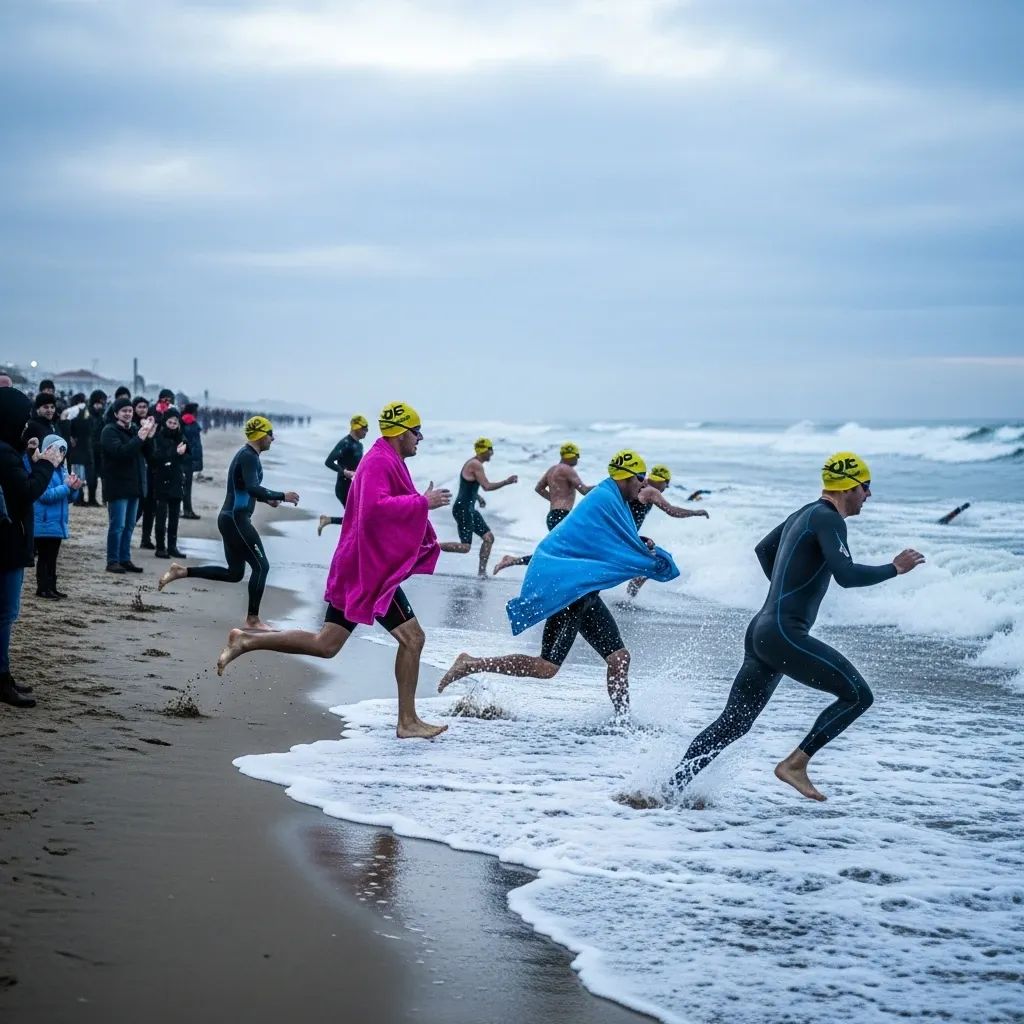
A biting Atlantic breeze and sheets of winter rain did not deter dozens of hardy swimmers from sprinting into the surf at Carcavelos in the early hours of the new year. Their chilly dip was both a personal dare and a public signal that Portugal’s eclectic network of “Primeiros Mergulhos” is officially under way for 2026.
Snapshot for the busy reader
• Carcavelos kept a tradition that dates back to 1943 alive, even with the thermometer hovering near 10 °C.
• At least six other beaches – from Quarteira in the Algarve to Caniço-de-Baixo in Madeira – host similar plunges this weekend.
• Doctors warn that water temperatures near 15 °C can trigger thermal shock and arrhythmias if swimmers are unprepared.
• Organisers lean on community spirit: hot chocolate, bolo-rei and even live brass bands soften the cold.
Atlantic baptism: Carcavelos sets the tone
What looked like a stubborn cloudburst at dawn did not stop regulars from charging toward the rolling breakers of Cascais’ best-known beach. Veteran participant Carlos Afonso – now in his late 80s – completed what he calls his “83rd consecutive plunge”. The Carcavelos gathering remains informal: there is no entry fee, no official timing, barely even a whistle. Yet the scene never fails to draw a crowd of onlookers wrapped in puffy parkas, cheering as swimmers emerge shivering but grinning. Local surf schools quietly stand by with rescue boards, a nod to the rip-current risks that intensify when south-west winds stack water against the seawall.
The story began during World War II when a group of Lisbon friends, inspired by news of a similar feat on the River Thames, decided a splash in January was the ultimate reset button. Eight decades later, the rite still leans on the same recipe: courage, a towel and, preferably, a nearby café serving galão extra-quente.
Coast-to-coast chill: where to leap next
Portugal’s shoreline offers a buffet of cold-water baptisms for anyone keen to copy Carcavelos. Quarteira, now on its 11th edition, asks bathers to dive three times while a lifeguard blows a corneta. Further north, Praia da Barra in Ílhavo expects “centenas” and keeps the triple-dip rule out of respect for the swimming coach who founded the tradition 44 years ago. The neighbouring Vagueira prefers an 11 h00 sharp entrance followed by a charity breakfast; Ovar’s Furadouro spices things up with a 10 km fun run and a toast of Port wine; Vila Nova de Gaia’s Praia da Aguda stages its jump in the petite Portinho dos Barcos cove; Madeira’s Praia do Galo offers arguably warmer seas but still finishes with steaming cocoa.
Why the proliferation? Tourism boards have caught on to the photogenic mix of goosebump skin, foggy breath and Portuguese flags. Municipalities provide first-aid tents, DJs or even fire-breathers to turn what used to be a backyard dare into a mini-festival that helps local cafés through a slow season.
From daredevil act to neighbourhood ritual
Anthropologists see the Portuguese twist on the New Year swim as an example of collective liminality: once a private wager, it morphed into a civic ceremony that stitches together long-time residents, newcomers and winter tourists. Costume choices echo Carnival – superhero capes, saias de folclore, inflatable dolphin suits – signalling that the day is as much about spectacle as about temperature endurance.
In a society that still values the praia as a summer living room, entering it in January flips the calendar and reclaims the coast during what locals call the “época morta.” The ritual also dovetails with a growing taste for wellness trends such as cold-exposure therapy, ice baths and Wim Hof breathing. “It hurts first, then it clears the mind,” says Marina Pinto, a physiotherapist who recommends short immersions under one minute per water degree.
Body versus cold: what doctors want you to remember
Cardiologist João Figueiredo, from the Hospital de Santa Marta, underlines that water below 15 °C can prompt hyperventilation, surge blood pressure by up to 30 % and, in outliers, cause arrhythmias. He advises newcomers to treat the plunge like a sprint: warm-up exercises, slow entry, swift exit. Hypothermia is rare during these flash swims but more insidious among spectators who stand still in wet clothes.
A short guide to safer splashes:
Medical check-in – rule out cardiac issues first.
Gradual acclimatisation – practise cold showers in December.
Never solo – buddy up and keep lifeguards in sight.
Eyes on the sky – postpone if thunderstorms loom; water conducts electricity.
Dry kit waiting – hoodies, wool socks and a thermos reduce post-dive shivers.
While some studies link controlled cold exposure to improved mood, fewer respiratory infections and a slight uptick in basal metabolism, specialists caution that benefits apply mainly to healthy, acclimated adults.
Looking ahead: why the custom endures
Portugal may not match the Baltic nations for sub-zero theatrics, but its blend of mild winters, communal humour and a coastline stretching 1,794 km breeds an ideal laboratory for symbolic renewal. Municipalities already hint at adding charity angles, from raising funds for volunteer firefighters to beach-clean up drives. In the words of Cascais tourism officer Sofia Leite, “if the first thing we do in a new year is protect the ocean that defines us, we start on the right foot – even if it’s a frozen one.”
For now, towels are drying on balconies, memories are buzzing on social media feeds, and the countdown begins for the next excuse to plunge. One certainty holds: rain or shine, the Atlantic will be waiting, as cold and welcoming as ever.


