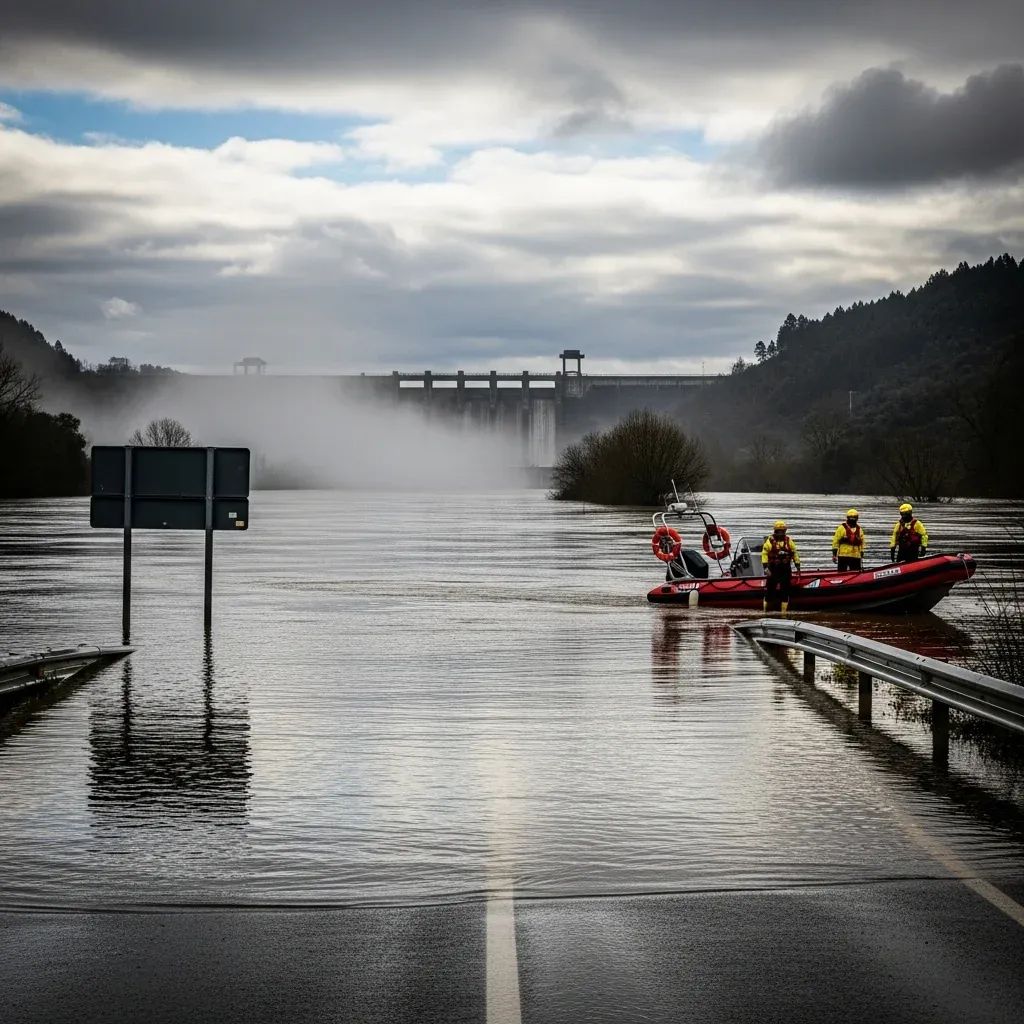
The Portugal Civil Protection Authority (ANEPC) has doubled down on its call for every household to keep a fully-stocked “72-hour emergency kit,” a measure designed to keep families safe and self-sufficient while crews work to restore electricity, water or road access after extreme weather.
Why This Matters
• Storm-related outages are lengthening: after Tempestade Kristine, some inland villages waited 60 hours for power.
• A ready kit buys autonomy: authorities assume it can take up to 3 days before outside help reaches every address.
• Courses start next month: the National Fire-Fighting School will run free online workshops on how to build and store a kit.
• No official count yet: but GNR officers say “the minority” of homes inspected during recent floods had the recommended supplies.
Why the 72-Hour Window Matters
Meteorologists warn that the Atlantic conveyor now sends stronger storms toward the Iberian Peninsula almost every season. For Portugal, that means more flash floods, landslides, and unpredictable wind gusts that knock out the grid. Emergency planners describe the first 72 hours after a disruption as the “golden window” when public systems are stretched thin and personal preparedness becomes critical. By limiting calls for food, water and power during that span, residents help emergency teams concentrate on life-threatening rescues instead of routine requests.
What Goes Inside the Bag
ANEPC’s 2026 list is longer than the one many people saved from civil-defense leaflets a decade ago. Below are the items officials say make the difference between discomfort and danger:
• Water: 3-5 litres per person per day for both drinking and minimal hygiene.
• Non-perishable meals: tinned fish, dried fruit, vacuum-packed rice or pasta, plus a manual tin opener.
• First-aid & meds: a complete kit, prescription drugs for at least a week, single-use gloves, and a thermometer.
• Light & comms: LED torch, hand-crank or battery radio, fully charged power bank, spare batteries, matches and candles.
• Warmth & shelter: thermal blanket, rain jacket, sturdy boots, and a light sleeping bag if space allows.
• Documents & cash: photocopies of IDs in a waterproof pouch and at least €50 in small notes for card-machine blackouts.
• Multi-tool & whistle for minor repairs and distress signalling.
• Special needs items: baby formula, pet food, spare eyeglasses or hearing-aid batteries.
Authorities recommend fitting everything into a single backpack that any adult can lift, plus a smaller version for the car.
Finding the Right Storage Spot
Civil-protection trainers advise against relegating the kit to a high shelf “for later.” Ideal locations are near the front door, under the stairs, or in an easily carried plastic box by the garage exit. The goal is one-grab evacuation if floods or wildfires demand a quick escape. Mark the bag with bright tape so children can recognise it, and set a calendar reminder every 6 months to swap expired food, rotate water and test batteries.
Community and Government Support
Beyond leaflets, several initiatives are rolling out in 2026:
• ENB online classes in April teach step-by-step assembly and maintenance.
• GNR outreach vans will tour rural parishes offering on-site kit audits.
• A proposed “Dia Europeu da Preparação” may become an annual drill day; Lisbon is already planning a pilot exercise in October.
Local councils have also begun stocking collective shelters with extra supplies but insist these should be a back-up, not a substitute for personal kits.
What This Means for Residents
For anyone living in Portugal—whether long-time local or recent expat—the takeaway is blunt: self-reliance for 3 days is now the baseline expectation. Employers are being encouraged to let staff keep a scaled-down kit at the office; condominium boards are discussing shared storage lockers. Insurance brokers hint that future household policies might reward documented preparedness with lower premiums. Most importantly, firefighters say homes that already had water, lights and medication during recent storms needed only welfare checks—not full evacuations. In practical terms, spending €70-€100 today on a well-packed bag could spare far higher costs, stress and even medical emergencies the next time the Atlantic decides to test Portugal’s resilience.