

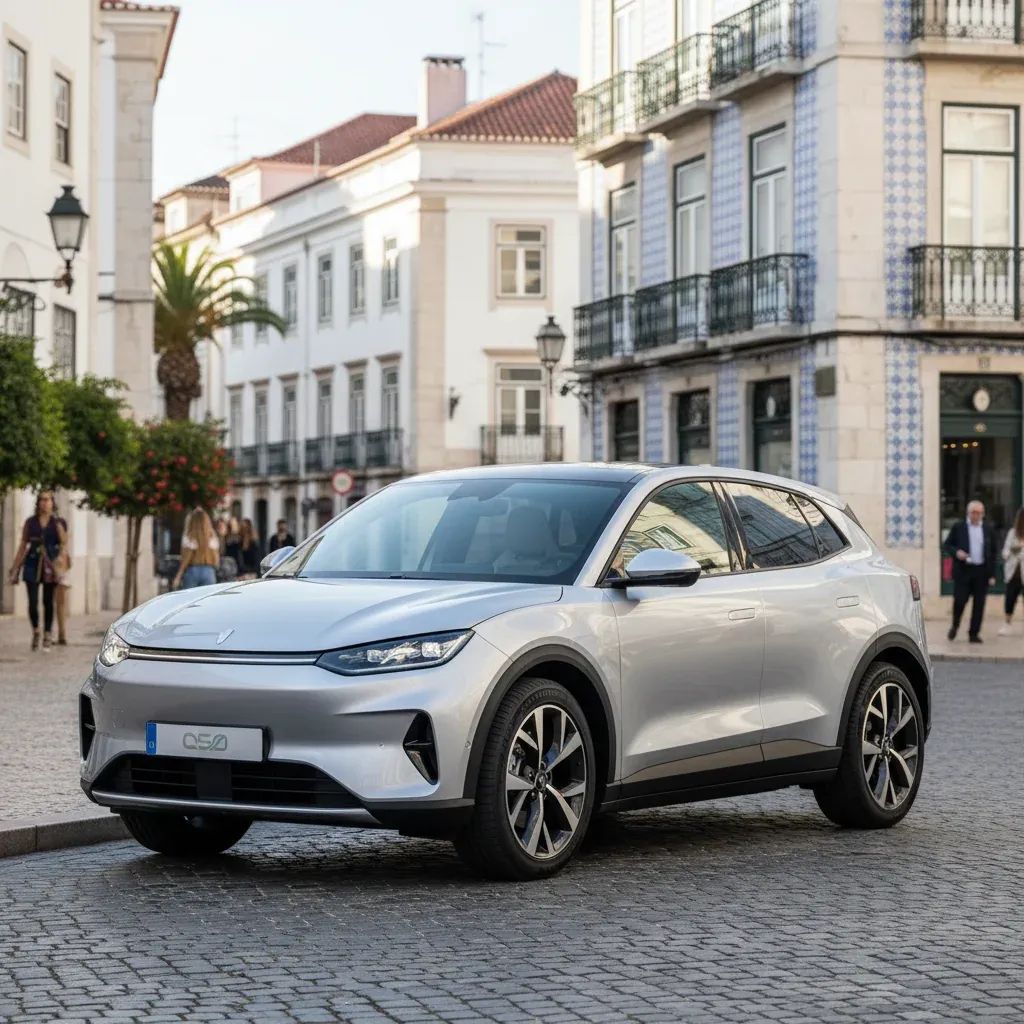
The electric vehicle revolution is reshaping Portugal's roads, with new subsidies, tax breaks, and competitive pricing creating unprecedented opportunities for drivers making their next purchase. Here's what Portuguese residents need to know about the €4,000 incentives, full tax exemptions, and the May-June deadline that could determine your savings.
Portugal's Incentive Window: Act Before Funds Run Dry
Portugal's government is backing zero-emission vehicle purchases with tangible support: a €4,000 subsidy for new 100% electric vehicles priced below €38,500 (conditional on scrapping a combustion car older than ten years), plus full exemption from ISV vehicle tax and IUC annual circulation tax. The Fundo Ambiental (Environmental Fund) is opening a fresh application window in May or June with €17.63 M earmarked for zero-emission vehicles this year.
To put this in perspective: based on historical allocation patterns, this funding typically covers approximately 4,000–5,000 vehicles before running out. With Portugal's electric vehicle market expanding, residents should expect the portal to close within 3–4 months once opened—making early application critical rather than optional.
The subsidy requires an active scrappage program (trading in a combustion vehicle at least ten years old), so buyers currently considering an electric purchase should begin the process now to lock in benefits before the allocation exhausts.
Why Portugal's Market Is Shifting Now
Across the broader European Union, 2.82 million vehicles found buyers in the first quarter of 2026. Battery-electric vehicles captured 19.4% of registrations—nearly one in five sales—up from 15.2% a year earlier. Conventional hybrids remain the leading powertrain at 38.6% market share, while plug-in hybrids climbed 29.7% year-on-year to secure 9.5% of the market.
Together, electrified vehicles command a 67.5% majority of EU sales, leaving internal-combustion engines to fight over the remaining third. This shift isn't random: Germany, Italy, and Spain posted strong gains with 5.2%, 9.2%, and 7.6% increases respectively—all countries with robust national subsidy programs. Nations that tapered incentives, like Belgium and the Netherlands, saw declining registrations. The lesson is clear: fiscal policy drives buyer behavior across Europe.
What Makes Portugal's Deal Competitive?
Portugal's full ISV exemption and €4,000 subsidy stack favorably against peer nations. For comparison:
• Germany offers €1,500 to €6,000 per vehicle through its €3 billion subsidy package, though eligibility focuses on low- and middle-income households.
• France extends "bónus écologique" up to €5,700 per vehicle, backed by €10 billion in annual funding, plus "leasing social" programs for low-income drivers.
• Italy's Ecobonus 2025 grants up to €11,000, contingent on income and vehicle scrappage, with funding available through June.
Portugal's scheme, while numerically more modest, combines straightforward eligibility (scrappage of any car over ten years old), full tax relief, and no income caps—making it accessible to middle-class and affluent buyers alike, not just low-income households.
The Plug-in Hybrid Complication: What You Need to Know
Since January 1, stricter Euro 6e-bis certification procedures have tightened testing requirements for plug-in hybrids. Many vehicles that previously advertised CO₂ emissions of single digits now report figures 30–50 grams per kilometer higher—not because the vehicles changed mechanically, but because the testing methodology now more closely mirrors real-world driving conditions.
To prevent buyers from losing tax incentives overnight, Portugal's tax authority raised the ISV eligibility ceiling for plug-in hybrids to 80 grams CO₂ per kilometer (up from 50)—provided the vehicle achieves at least 50 kilometers of electric-only range. The 75% ISV reduction remains in place for qualifying models.
What this means for residents: If you're considering a plug-in hybrid, verify the homologated CO₂ and electric-range figures under the new Euro 6e-bis standard at your dealership. Many dealers are still updating documentation, so ask directly before signing any purchase agreement. A PHEV can offer operational flexibility for company cars and fleet operators in areas where charging infrastructure remains sparse—but only if it qualifies for the revised tax thresholds.
Chinese Brands Are Reshaping Your Options—and Prices
One of the quarter's most significant shifts is the rapid arrival of competitively priced Chinese electric vehicles. BYD registered 29,291 units across the EU in the first two months alone—a 179% increase—and has matched Tesla's quarterly volume. MG (owned by SAIC Motor), XPeng, Chery, Geely, Leapmotor, and Jaecoo collectively pushed Chinese brands to 14% of EU electric-vehicle sales in March, double the year-ago share.
These manufacturers are localizing production to sidestep EU tariffs: BYD is constructing a factory in Hungary, Leapmotor will assemble models at a Stellantis plant in Zaragoza, Spain, and XPeng is assembling vehicles in Austria.
The practical upshot for Portugal consumers: Showrooms are stocking a broader, more affordable range of electric options, with competitive pricing and feature parity accelerating rapidly. If you're shopping for an EV, you'll encounter genuine options at half the price of premium European equivalents, creating leverage for negotiation with established manufacturers responding with deeper discounts and improved lease terms.
Residual Values and Trade-Ins: A Wildcard to Monitor
The flood of new supply entering the EU market—from Chinese entrants and legacy manufacturers alike—introduces uncertainty around used-car valuations. Trade-in values for older combustion vehicles could depreciate if the used-car pool becomes flooded with new supply, but this same dynamic could create favorable lease terms and purchase deals if manufacturers defend market share through aggressive pricing.
The takeaway: If you're planning to trade in a combustion vehicle as part of Portugal's scrappage incentive, do so sooner rather than later. The incentive itself won't disappear, but the residual value of your trade-in may decline as new EV supply expands and attracts price-conscious buyers to the pre-owned market.
Your Action Plan for the Next Three Months
Verify your current vehicle's age. The scrappage incentive requires a combustion car at least ten years old. If yours qualifies, you're eligible for the full €4,000 subsidy plus tax exemptions.
Prepare documentation now. Gather proof of ownership, registration, and any emissions test records. Once the Fundo Ambiental portal opens in May or June, processing delays won't wait.
If considering a plug-in hybrid, ask dealers for the homologated CO₂ and electric-range figures under Euro 6e-bis standards. Confirm eligibility for the 75% ISV reduction before committing.
Compare Chinese and established brands. Test-drive vehicles from BYD, MG, and XPeng alongside European options. Price, feature sets, and warranty terms may surprise you—and provide negotiating points with mainstream manufacturers.
Apply early once the portal opens. The €17.63 M allocation typically covers 4,000–5,000 vehicles. Expect the fund to exhaust within 3–4 months of launch. Early submission reduces the risk of missing out.
The Bottom Line
Portugal's electric vehicle market is no longer an experiment—it's the center of gravity. The combination of supportive fiscal policy (€4,000 subsidy plus full tax relief), expanding model availability, intensifying competition, and new affordability make this a genuine buyer's market. But the incentive window is finite. The next 90 days represent a critical window to maximize your savings before subsidy funds run dry and the next wave of regulatory tightening arrives.


