Why This Matters
• Over 30 residents have been evacuated from coastal homes in Costa da Caparica, with officials warning they may never return.
• A third landslide since early February signals structural failure of the fossil cliffs, expanding the safety perimeter.
• The Portugal Municipal Housing Authority in Almada is now providing temporary hotel accommodation for at least 160 displaced people, with no timeline for permanent solutions.
• A preschool near the hazard zone has been ordered to close indefinitely.
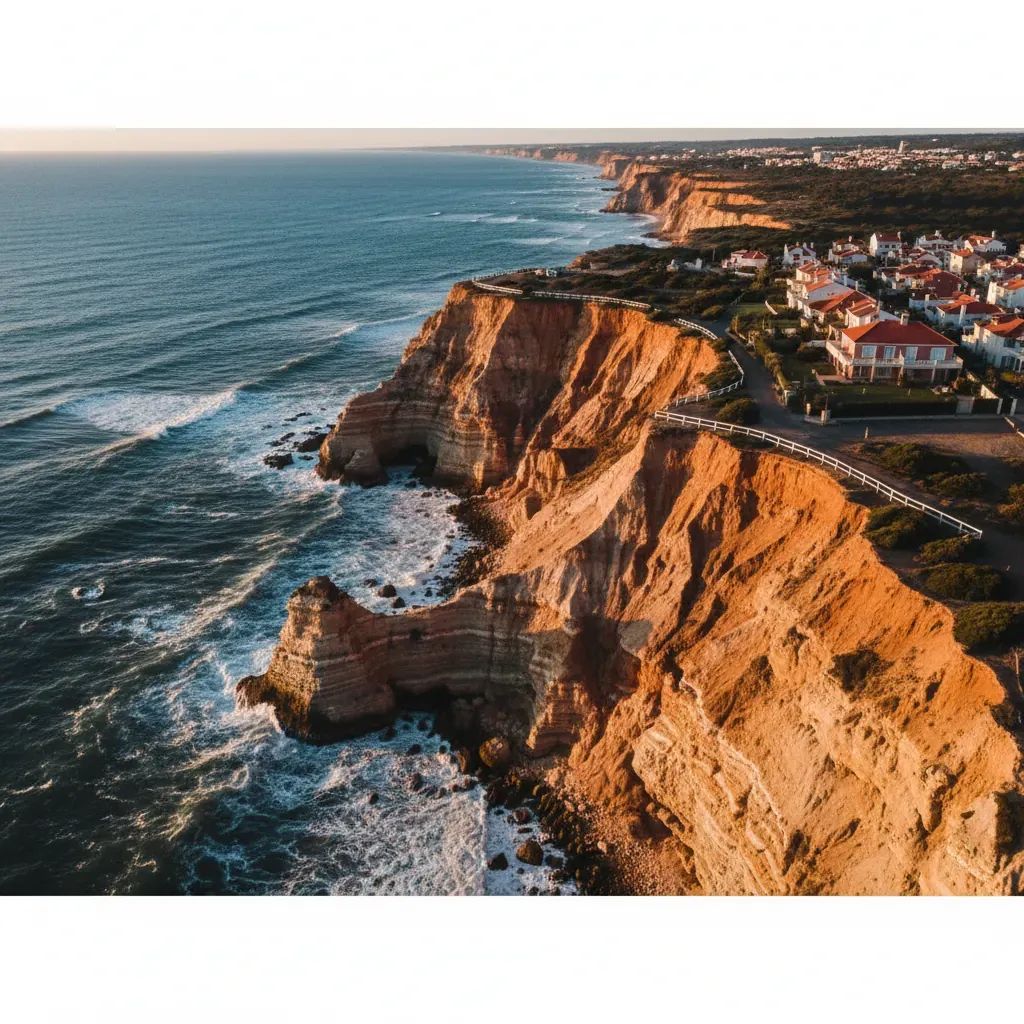
The Portugal Municipal Authority of Almada has issued a stark warning to residents evacuated from Costa da Caparica: the fossil cliffs are too unstable for anyone to safely return home, and the displacement could be permanent. This declaration follows a third major landslide in mid-February 2026, which buried three already-evacuated houses and forced the removal of dozens more people from adjacent buildings.
"We need to tell residents the truth," said Francisca Parreira, Almada's Civil Protection Councilor, speaking from the disaster site. "The cliff face is extremely sensitive and under immense pressure. After expanding the safety perimeter, our technical assessment is clear: there are no conditions for stability that would allow people to remain."
The latest slide occurred around 01:15 on February 17 along Rua Duarte Pacheco Pereira, bringing down earth and rock onto three dwellings that had been emptied days earlier. As a precautionary measure, 30 people from neighboring apartment blocks were evacuated overnight and transferred to the Inatel Foundation camping park for temporary shelter. According to municipal sources, 23 of the 30 displaced residents are now being housed by the Almada council in local hotels, while seven found accommodation with relatives.
A Pattern of Escalating Risk
This is the third landslide event in the same coastal stretch since the beginning of February 2026. The first major collapse occurred on February 5, triggered by Storm Leonardo, which forced the evacuation of at least 35 people from three buildings in São João da Caparica. A second, larger slide hit on February 11 around 04:00, when a section of cliff gave way on Rua João Azevedo, burying part of a residential building and displacing 31 people. Five of those residents were placed in municipal accommodation, while the rest stayed with family.
Technical teams from the Portugal National Laboratory for Civil Engineering (LNEC) and the Faculty of Science and Technology at Universidade Nova de Lisboa have been conducting continuous assessments since the initial event. Their findings indicate that prolonged heavy rainfall has saturated the soil layers within the fossil cliff structure, destabilizing the entire geological formation.
The Mayor of Almada, Inês de Medeiros, has publicly stated that many evacuees are unlikely to ever return to their homes. "The danger persists," she said in a recent statement. "We need exceptional measures from the national government to provide definitive housing solutions, reconstruction support, and protection for livelihoods and jobs."
What This Means for Residents
For the families affected, the situation has shifted from temporary evacuation to potential permanent displacement. The Portugal Municipal Authority of Almada has activated its Municipal Emergency Civil Protection Plan (PMEPC), mobilizing municipal services to provide immediate relief. However, the response remains focused on short-term accommodation rather than long-term housing solutions.
Currently, more than 500 people are displaced across the Almada municipality, with at least 160 being housed in municipal-funded hotel rooms. The council has also made available its "Casa em Almada" rental assistance program, which provides up to €200 per month for six months (maximum €1,200) to help residents secure private rentals. Eligibility requires that applicants do not own property in the Lisbon Metropolitan Area and that household income does not exceed five times the national minimum wage.
For families with children, the disruption extends to education. A preschool located near the expanded safety perimeter has been ordered to close indefinitely, according to Parreira. "We gave clear instructions that it should shut down," she said. "I have no information suggesting it will reopen tomorrow or anytime soon."
Enforcement Gaps and Voluntary Returns
One troubling aspect of the crisis is that some residents had voluntarily returned to their homes after initial evacuations, ignoring safety warnings. "People were removed a long time ago," Parreira emphasized. "If they came back, that was a voluntary movement that should not have happened. Residents must understand they are at risk, exposed to danger, and this perimeter has existed since the first collapse."
This highlights a gap between official evacuation orders and enforcement capacity. While the council has the legal authority to close off hazardous zones, physically preventing residents from re-entering their properties remains a challenge, particularly when homes contain valuable possessions or represent a lifetime of investment.
Engineering Solutions: Can the Cliffs Be Stabilized?
The question now is whether engineering interventions can halt the degradation or if wholesale relocation is the only viable option. In other parts of Portugal, authorities have employed a range of stabilization techniques for vulnerable cliffs, including:
• Shotcrete (projected concrete), sometimes reinforced with metallic fibers and pigmented to blend with the landscape.
• Steel anchoring and rock bolts, using corrosion-resistant steel rods driven horizontally into the cliff face.
• Flexible structural netting (such as Geobrugg Tecco or Deltax systems), which mold to irregular surfaces and require minimal excavation.
• Anchored beams to support foundations of buildings at the cliff top.
• Controlled dismantling of unstable rock blocks.
• Natural engineering approaches, such as re-establishing vegetation cover to reduce surface erosion.
The Portugal Directorate-General for Natural Resources, Maritime Safety and Services (DGRM) has overseen similar stabilization work in central coast ports like São Martinho do Porto and Ericeira. However, the scale and geological complexity of the Costa da Caparica cliffs may make traditional fixes impractical or prohibitively expensive.
In other European countries facing coastal erosion and cliff instability, the trend is toward managed realignment—strategically withdrawing defenses inland and allowing natural processes to reshape the coastline. The European Union's Climate Change Adaptation Strategy encourages member states to prioritize nature-based solutions over rigid engineering, including beach nourishment, dune restoration, and the creation of buffer wetlands. Belgium and the Netherlands, for example, have implemented managed realignment projects like Hedwige-Prosper polder, deliberately flooding agricultural land to create intertidal habitat and reduce wave energy.
Legal and Policy Framework
Portugal's approach to coastal risk is governed by national vulnerability and risk mapping, which serves as the basis for territorial planning. The principle is to prohibit new construction in areas vulnerable to erosion, flooding, and storm surges, while managing existing settlements through gradual relocation.
Under Portuguese urban planning law, buildings in high-risk coastal zones can be classified as "fora de ordenação" (outside planning regulations), a legal status borrowed from Spanish jurisprudence. This designation effectively freezes development rights, meaning structures cannot be expanded, renovated, or rebuilt if destroyed. Owners retain property rights but lose the ability to maintain or improve their homes, creating a financial and emotional burden.
The Portugal Cabinet has been under pressure to introduce exceptional financial measures for affected families, including:
• Compensation for lost property at fair market value.
• Subsidized relocation to safer neighborhoods within Almada or nearby municipalities.
• Tax relief for families forced to abandon homes with outstanding mortgages.
• Employment support for small business owners who lose premises and clientele.
So far, no such package has been announced, leaving evacuees in limbo.
International Comparisons: How Other Countries Handle Coastal Retreat
The situation in Almada mirrors challenges faced across coastal Europe. In the United Kingdom, the village of Happisburgh in Norfolk has seen dozens of homes fall into the sea over the past two decades, with the government refusing to fund further sea defenses and instead offering limited compensation for voluntary buyouts. In France, the 2021 Climate and Resilience Law introduced a 50-year coastal retreat strategy, prohibiting new construction within projected erosion zones and requiring municipalities to plan for long-term relocation.
Key lessons from these cases include:
• Early stakeholder engagement: Involving residents, local businesses, and environmental groups in planning decisions increases acceptance and leads to more innovative solutions.
• Transparent risk communication: Governments that provide clear, science-based assessments of risk (rather than vague reassurances) build trust and facilitate voluntary relocation.
• Financial certainty: Offering predictable compensation timelines and amounts reduces anxiety and allows families to make informed decisions.
• Integrated spatial planning: Coordinating housing, infrastructure, and economic development across municipal boundaries prevents the recreation of vulnerable settlements inland.
What Happens Next
Technical teams will continue daily monitoring of the Costa da Caparica cliffs, using satellite imagery and ground sensors to detect further movement. The expanded safety perimeter remains in force, and residents are legally prohibited from entering the zone without authorization.
For the 30 people evacuated in the latest incident, the immediate future involves temporary accommodation in camping facilities and hotels, supported by municipal social services working with local charities and solidarity institutions (IPSS). Each displaced family has been assigned a case manager to coordinate housing, financial assistance, and psychological support.
Longer-term, the Portugal Ministry of Environment and Climate Action will need to decide whether to invest in large-scale cliff stabilization (likely costing tens of millions of euros) or to formally designate the area as a permanent hazard zone and fund a managed retreat. Given the geological instability and the precedent set by similar cases across Europe, the latter option appears increasingly likely.
For residents like those on Rua Duarte Pacheco Pereira and Rua João Azevedo, the reality is sinking in: the homes they built, the neighborhoods they knew, and the coastal lifestyle they cherished may be permanently lost to the unstable earth beneath them. As climate change accelerates coastal erosion and extreme weather events, the Costa da Caparica landslides may represent not an isolated crisis but a preview of Portugal's coastal future.