

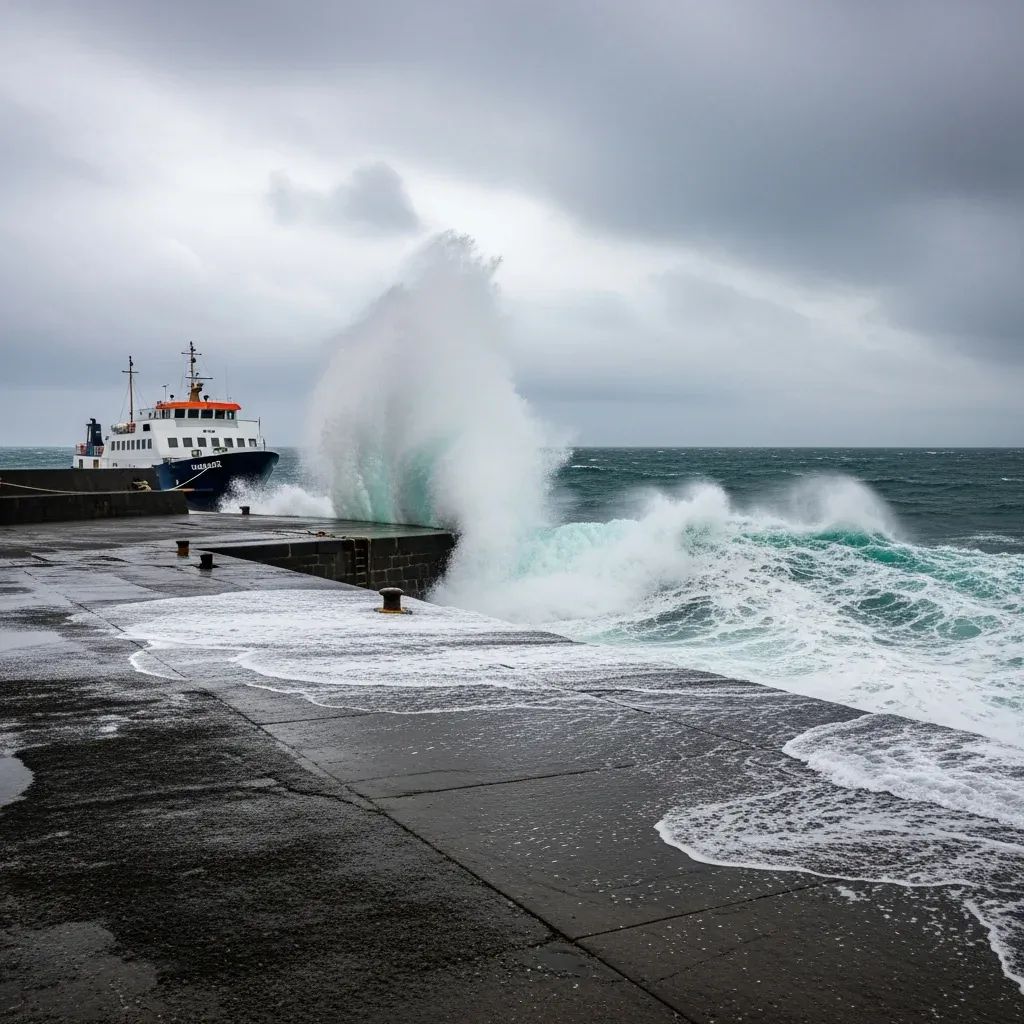
Towering Atlantic waves have forced shipping lines across the Azores to keep their ferries docked, stirring fresh worries over supplies, tourist mobility and the livelihoods of island communities. While the authorities insist the shutdown is temporary, a prolonged red alert could ripple far beyond the nine-island archipelago.
Atlantic swells shut down island ferries
Driving rain and north-westerly gales linked to the Joseph depression persuaded Atlânticoline to cancel every Green, Pink and Blue Line sailing on its timetable. The decision affects Horta, Pico, São Jorge, Flores and Corvo — five islands that rely heavily on the ferry network for both workers and freight. Captain Amílcar Gomes Braz, chief of the Capitania do Porto da Horta, responded by closing the Madalena harbour on Pico, sealing off the busiest passenger gateway in the Central Group.
Why the red alert matters beyond the quay
A stoppage of ferries is not just a transport story. Islanders fear renewed shortages of fresh produce, medicines and construction materials as cargo holds remain empty. Hoteliers and guest-house owners worry that stranded visitors will cut their stay short, harming an industry already bruised by reduced low-cost flights. Meanwhile, mainland distributors face delays shipping dairy, fish and pineapples back to Portugal’s supermarkets, potentially nudging consumer prices higher.
Port closures multiply as Joseph parks over the archipelago
IPMA escalated its advisory to the highest red warning for the Western and Central groups after models projected 10-metre significant wave height and 19-metre peaks. The meteorological service also predicted gusts topping 110 km/h in exposed headlands. In response, harbour masters on São Miguel, Graciosa and Santa Maria pre-emptively barred small craft from leaving, and the regional Civil Protection service counted more than a dozen incidents — from fallen trees to minor coastal flooding — within the first 24 hours of the storm.
What mainland travellers need to know
Regular Lisbon-Ponta Delgada flights are still operating, but anyone planning island-hopping should brace for last-minute tweaks. Atlânticoline says unused tickets remain valid for the next available crossing once the sea state improves. Passengers holding through-tickets that combine ferry and SATA Air Açores segments will need to rebook the maritime leg first, then call the airline. Insurance providers confirm the weather disruption qualifies as a "force majeure" event, meaning refunds depend on policy wording.
Fishers and freight: another revenue gap opens
The blanket ban keeps the small-scale artisanal fleet in port just weeks after stricter quota caps on species such as goraz came into force. Buyers in mainland fish markets warn that if landings stall for more than two days, prices for fresh snapper and limpets could spike. Cargo operators, already struggling with a chronic shortage of refrigerated containers, now face a backlog that can only be cleared once larger freighters resume their weekly service rounds.
Authorities activate the contingency playbook
Regional government officials say they are drawing on a €84.4 M investment envelope earmarked for transport resilience to subsidise emergency air-cargo flights should the sea link remain unsafe. The Autoridade Marítima Nacional has deployed extra patrol vessels around Faial and São Jorge to enforce the closure order and assist any vessel caught outside harbour limits. Local councils, especially in Madalena, Lajes do Pico and Santa Cruz da Graciosa, have cordoned off low-lying coastal roads after previous storms punched holes through sea walls.
Forecast: a brief lull, then another punch?
Forecasters expect the strongest swell to ease by early Wednesday, though residual 8-metre rollers could linger into Friday. A second, smaller low dubbed "Kristin" is tracking east of Newfoundland and may brush the Azores over the weekend, raising the prospect of extended delays. IPMA urges residents — and would-be visitors — to monitor updates because "conditions can escalate rapidly when successive lows queue up in the North Atlantic".
Quick facts at a glance
• Red warning: Western & Central Groups, 10 m waves, 19 m peaks
• Ferry lines halted: Green, Pink, Blue
• Ports closed: Madalena plus six secondary harbours
• Peak gusts: up to 110 km/h
• Civil Protection incidents: 11 logged, no injuries
• Contingency budget: €84.4 M for air & sea logistics
• Next forecast update: early Wednesday morning
Despite the drama at sea, life on land remains largely calm. The coming forty-eight hours will reveal whether the Azores can reopen their blue highways quickly, or whether January 2026 will be remembered for another costly rupture in the islands’ fragile supply chain.


