

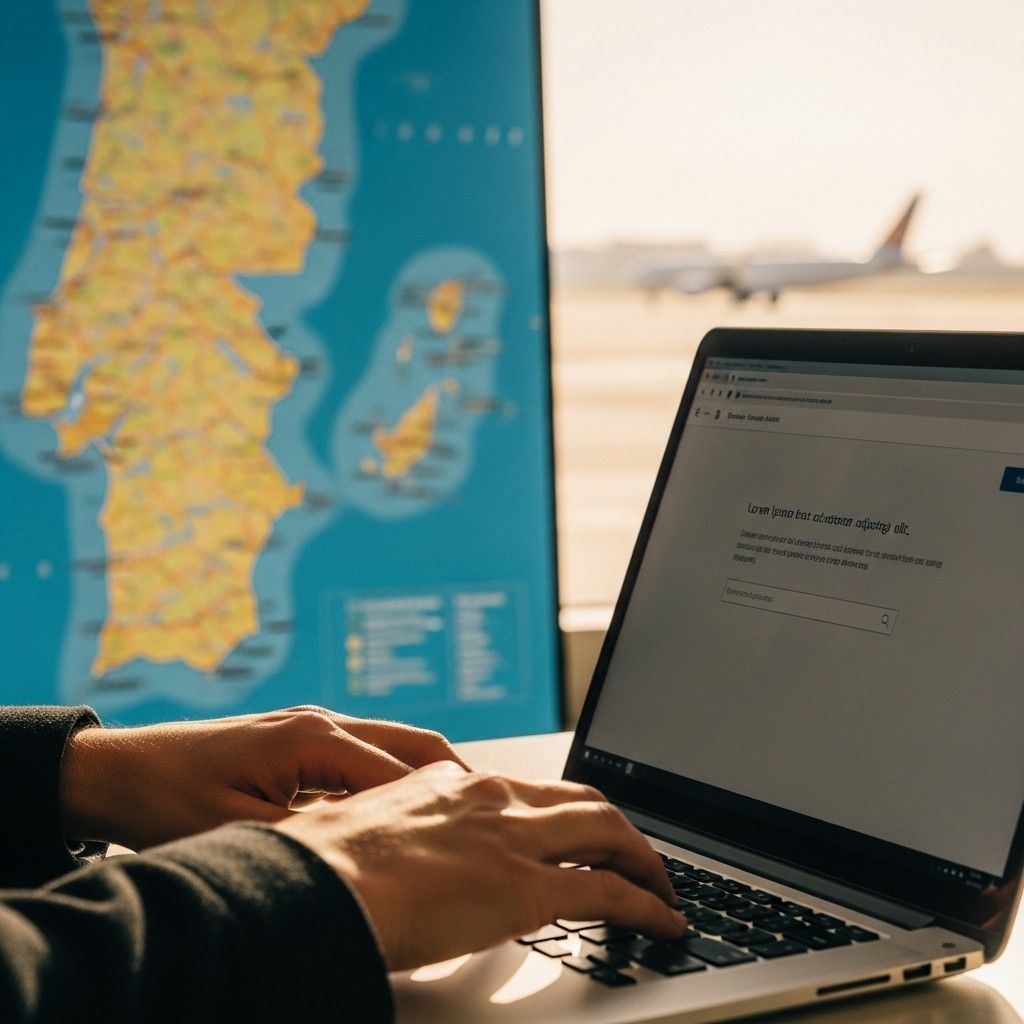
The Portuguese Parliament has overhauled the island subsidy system linking the Azores and Madeira to mainland Portugal, removing spending caps and bureaucratic checks in a vote that split the governing center-right and drew concerns from airlines about the changes to regional air routes.
Why This Matters:
• Unlimited reimbursement: Islanders now receive the full fare difference above their fixed payment (€79–€119 for residents), with no ceiling—meaning a €1,000 ticket is fully covered by the state.
• Tax-debt check scrapped: Access no longer depends on being current with the tax office or social security, a requirement that had been suspended since January under regional pressure.
• Receipt rule dropped: Travelers submit only an invoice at booking; proof of payment comes 30 days later, and travel agencies can now file on behalf of clients.
The reform, approved Thursday by a cross-party coalition excluding most of the center-right Social Democratic Party (PSD), rebaptizes the aid as the "Mechanism for Territorial Continuity" and marks the third major revision to subsidy rules in eight months. Six PSD deputies from the islands broke ranks to support it, underscoring the political sensitivity of air-fare equity for Portugal's 500,000 Atlantic islanders.
What Changed—and What It Costs
Under the revised system, Portugal Social Security no longer cross-references benefit claims with tax records. The original January regulation—never enforced—would have barred anyone with outstanding debts to the Portuguese Tax Authority or social-security arrears from claiming reimbursement, even retroactively. Regional governments in Ponta Delgada and Funchal called the provision unconstitutional; the national executive suspended it three times before Parliament struck it from statute.
The cap removal is more contentious. Previously, the state reimbursed the gap between ticket price and resident contribution only up to €400 for Madeira (€500 from Porto Santo) and €600 for the Azores. Any fare above those ceilings fell to the traveler. Now the formula is unbounded: if a last-minute round trip from Funchal to Lisbon costs €800, the resident pays €79 and the Treasury covers €721.
For a student flying Ponta Delgada–Lisbon at €700, the out-of-pocket is €89; the reimbursement €611. One-way tickets split the resident charge in half—€39.50 for a Madeira resident, €59.50 for an Azores resident—making even short-notice single legs affordable at face value.
Impact on Expats & Investors
The overhaul simplifies compliance for non-Portuguese EU residents registered in the autonomous regions, who qualify as "equivalent residents" under the 2015 statute. Digital nomads and remote workers with Azorean or Madeiran tax residence can now skip the old receipt-upload step and authorize a travel agent to handle the claim, potentially shortening turnaround from weeks to 48 hours via the gov.pt platform launched in January.
But the uncapped model raises concerns within the industry. Airlines have expressed opposition to the subsidy model, warning about technical and operational difficulties in adapting their systems to the changes. Regional Economy Secretary Eduardo Jesus of Madeira cited Azores fares that topped €1,900 before a cap was introduced, predicting a return to "extremely elevated" ticket prices if carriers realize the state underwrites any amount.
TAP Air Portugal and SATA Air Açores dominate the routes and may be affected by shifting competitive dynamics. Industry observers note that without competitive pricing pressure, route planning and capacity decisions become more unpredictable.
Political Fallout and the Chega Factor
The final vote—PS (Socialist), Chega (populist right), Left Bloc, Livre, PAN, and regional party JPP in favor; PSD (except six islanders) against; CDS-PP, Liberal Initiative, and Communist abstaining—produced rare parliamentary theater. PSD floor leader Alexandre Poço accused Socialists of crossing a "red line" by applauding Chega's closing statement, a nod to the populist party's campaign to end what it calls "second-class citizenship" for islanders.
Francisco César, a Socialist deputy from the Azores, countered that the government's original January decree was "reckless" and that Parliament "corrected an error." Filipe Sousa of JPP, a Madeira-based party, hailed "cross-party cooperation" that "reinforces democracy" and reminded lawmakers "we are islanders, but above all we are truly Portuguese."
Left Bloc lawmaker Fabian Figueiredo said the Assembly "did well to fix the flawed model the mainland PSD designed," while Livre's Jorge Pinto accused the center-right of "arrogance" and "trying to impose its will over the consensus" of regional and left-wing blocs.
How the New System Works in Practice
Starting this week, travelers book and pay full fare, then submit the invoice—no boarding pass required—through the gov.pt portal using Autenticação.gov credentials. For TAP and SATA bookings, claims can be filed immediately; for other carriers, after travel is complete. The platform promises processing in 1–2 days; proof of payment (receipt or bank statement) must arrive within 30 days of reimbursement.
CTT postal branches continue to offer in-person assistance until June 30, 2026, with a one-year extension for group bookings and travelers unable to navigate the digital system—effectively through June 2027. Travel agencies must register on the platform and obtain written client authorization, which can cover "all acts necessary" including receiving funds on the traveler's behalf.
The beneficiary portal now allows family pooling: one account holder can link household members and first- or second-degree relatives (parents, grandparents), streamlining claims for multi-traveler bookings.
Regional Context and History
Portugal established the Social Mobility Subsidy in 2015 to offset the "island penalty"—the fact that a 90-minute flight can cost more than a week's groceries. Madeira lies 1,000 km southwest of Lisbon; the Azores span 1,500 km of mid-Atlantic ocean, with Ponta Delgada roughly level with Casablanca. For islanders, air travel is not leisure but necessity: medical appointments, university enrollment, family visits, and business.
The original model set maximum eligible fares because Treasury officials feared open-ended liability. Madeira's €400 cap dated to 2015; the Azores operated without a ceiling until September 2024, when the Montenegro cabinet imposed €600 to match Madeira's framework. Regional governments protested, arguing the move penalized Azoreans for geographic distance and seasonal fare volatility. The January decree tightened the screws further by adding the tax-check requirement and demanding receipts upfront—moves that paralyzed the rollout and triggered this week's legislative fix.
Financial and Operational Unknowns
National Finance Minister Joaquim Miranda Sarmento called the uncapped model "very strange" and warned it could "worsen prices." Madeira's budget already allocates tens of millions annually for mobility; the Azores nearly double that per capita despite fewer passengers. Without a ceiling, Treasury exposure depends entirely on airline yield management—dynamic pricing algorithms that adjust fares minute by minute based on demand.
If carriers realize the state absorbs any premium, last-minute and peak-season inventory could drift upward, shifting cost from traveler to taxpayer without improving seat supply. Conversely, if competitive pressures shift and route options narrow, base fares could rise even as subsidy payments increase, a potential concern for both Budget and passengers.
Parliament's infrastructure committee acknowledged the fiscal risks but argued that dignity and constitutional equity outweigh fiscal conservatism. The decree includes a clause requiring the managing entity—currently the Institute of Mobility and Transport (IMT)—to publish quarterly spending and fare data, giving lawmakers a dashboard to monitor unintended consequences.
What Residents Should Do Now
Register on gov.pt if you haven't: You'll need Chave Móvel Digital or a Citizen Card reader. The portal is mobile-friendly and stores past trips for reference.
Book and pay in full: Airlines have not adjusted their checkout flow; you still see the gross fare. Keep the e-ticket and invoice PDF.
File immediately for TAP/SATA: The sooner you claim, the sooner funds hit your IBAN. Other carriers require post-travel filing.
Upload the invoice, not the receipt: A PDF from the airline or agency suffices. The system emails a 30-day reminder for proof of payment; a bank statement works if you lost the receipt.
Authorize your agency if traveling often: Frequent flyers and corporate travelers can delegate the entire process, though agencies may charge a small service fee.
Use CTT for group or complex bookings: School trips, family reunions with mixed one-way and return legs, or travelers without digital literacy can still walk into a post office through mid-2027.
The reforms take effect immediately for tickets purchased from Thursday onward. Trips booked under the old rules—before April 10—remain subject to January's caps and requirements, though the tax-check suspension applies retroactively.
Airline Industry Holds Its Breath
Industry observers note that pricing discipline is a concern when the buyer is insensitive to price. If a Funchal resident booking a €600 ticket pays only €79 regardless of timing, surge pricing becomes pure state revenue transfer. Low-cost carriers built their model on advance-purchase discounts; uncapped subsidies alter that traditional dynamic.
TAP, as flag carrier, operates the routes under public-service obligation and may experience shifting market conditions. SATA serves inter-island and Azores–mainland links with state backing, insulating it from some competitive pressures. But regional tourism boards worry that changes in route capacity or airline operations—even if islanders pay fixed amounts—may affect overall travel patterns to the islands.
The sustainability of the current route network and service levels will depend on how carriers adapt their operations in response to the subsidy changes.
Parliamentary Odd Couples and Red Lines
The spectacle of Socialists and Chega standing together—applauding in unison as Chega deputy Francisco Gomes declared "no Portuguese will be treated as second or third class"—marks a rare alignment in a legislature otherwise defined by center-right minority government gridlock. PSD's Alexandre Poço invoked "papa maisena" (a Portuguese baby-food brand), suggesting opposition parties lack the maturity to lecture the center-right on autonomy, given that PSD created the subsidy in 2015 under Prime Minister Pedro Passos Coelho.
Yet six PSD deputies from the islands voted yes, and three Madeira social democrats filed written dissents explaining their defiance. Regional politics in the Atlantic archipelagos often trump Lisbon party discipline; islanders vote on connectivity and cost-of-living, not abstract fiscal philosophy.
For Chega, the win cements its "periphery first" brand, contrasting mainland elites with island hardship. For PS, it offers a policy victory in opposition and reinforces Socialist credibility in the autonomous regions. For the Montenegro government, it's a legislative defeat softened only by the fact that six of its own deputies agreed with the outcome.
What Comes Next
The Institute of Mobility and Transport has 90 days to update the platform with agency-registration modules and family-pooling features. The Finance Ministry must prepare quarterly reports on aggregate spending, average ticket price, and carrier market share, due by end of each quarter starting July.
Regional governments in Funchal and Ponta Delgada are expected to lobby Brussels for EU cohesion funds to offset the Treasury hit, arguing that island connectivity is a structural disadvantage eligible for support under Article 174 of the Treaty on the Functioning of the European Union, which recognizes "islands and sparsely populated areas" as deserving special attention.
Airlines have until June to signal route adjustments for the 2026–27 winter season. The coming months will reveal how carriers respond operationally to the subsidy restructuring.
For now, islanders have what they demanded: simplified access, no debt checks, and unlimited reimbursement. Whether that translates to genuinely cheaper travel or simply shifts the bill from household to state—while airlines adapt their pricing strategies accordingly—remains the open question Treasury and Parliament will answer in the months ahead.


