
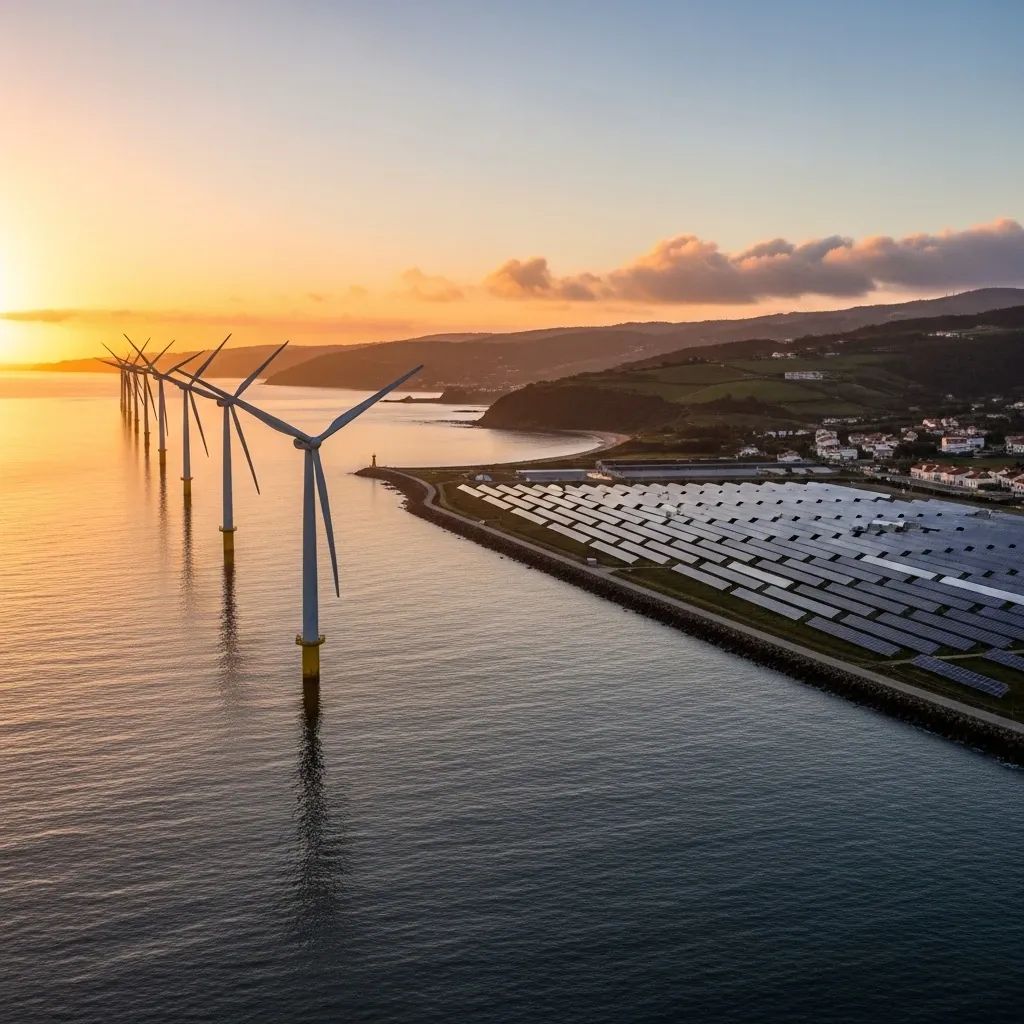
Europe’s energy bill got a little lighter last year. Fresh figures from Eurostat reveal that the European Union burned through 1,202 Mtoe of primary energy in 2024—0.8 % less than the year before and the most frugal tally since the early 1990s. The dip edges the bloc closer to its 2030 efficiency target and, importantly for Portuguese households and factories, signals that the Continental price pressures of the past two years may finally be easing.
Snapshot for busy readers
• Primary energy use across the EU dropped, even as final consumption crept up.
• The bloc now sits 21 % above its 2030 ceiling; the gap was 24 % a year ago.
• Industry remained the chief drag on demand; transport kept climbing thanks to e-mobility.
• Portugal stayed below 21 Mtoe, extending a two-decade decline in fossil-heavy fuels.
Why this matters for Portugal
Lisbon’s energy planners track Brussels’ yardsticks because they shape everything from energy-tax rebates to EU funding streams for insulation projects. A smaller EU appetite for imported gas and oil translates into downward pressure on wholesale prices, which in turn softens the cost of electricity contracts that Portuguese SMEs renew every winter. For cash-strapped families, the prospect of lower regulated tariffs in 2026 hinges partly on this continental trend. Moreover, Portugal’s own decarbonisation game plan—spelled out in its Plano Nacional Energia e Clima—is benchmarked against EU averages. Falling European demand therefore buys Lisbon precious breathing space to ramp up offshore wind without breaching interim caps.
A continent turning down the dial
From the consumption peak of 1,511 Mtoe in 2006, the EU has shaved off nearly a fifth of its primary demand. Germany, Italy and Greece recorded the steepest long-term retreats, each trimming more than a quarter of their 2005 footprint. A handful of outliers—Poland, Malta and Cyprus—still run higher than they did two decades ago, mostly because of industrial catch-up and tourism growth. In the Iberian Peninsula, Spain’s energy hunger fell below 110 Mtoe, while Portugal slipped to roughly 20.7 Mtoe in the last confirmed dataset for 2023, reinforcing a pattern of steady contraction.
Inside the numbers: sectors and prices
The headline decline hides divergent movements under the hood:• Industrial output—particularly in chemicals and basic metals—staggered under elevated electricity bills, curbing energy purchases even after wholesale prices slid 16 % on average in 2024.• Transport demand nudged higher as a record 3 million electric cars hit EU roads, a trend that pushes electricity use up but shaves oil imports.• Residential consumption eased on the back of a second consecutive mild winter and aggressive roll-outs of heat-pump subsidies. For many Portuguese households, those pumps are replacing gas boilers at a pace of nearly 30,000 units per year.
Policy levers driving the descent
Three policy packages stand out:
The revamped Energy Efficiency Directive sets a hard-to-miss cap of 992.5 Mtoe for 2030, forcing ministries to prioritise LED retrofits and smart-grid investment.
The new Buildings Performance Directive obliges public buildings erected after 2028 to be zero-emission, pushing construction firms toward thicker insulation and rooftop solar.
Emergency gas-saving rules—first triggered during the supply shock of 2022—remain on standby, allowing Brussels to re-impose coordinated cuts if storage drops below 45 % next spring.Together, these levers are credited with trimming roughly 35 Mtoe from 2024’s theoretical baseline, according to analysts at the European Environment Agency.
Where Portugal fits in
Although Portuguese primary energy demand has already fallen 28 % since 2005, the country still leans heavily on imported fossil fuels—mostly LNG arriving at Sines. The government’s target is to dip below 17 Mtoe by 2030, a path that requires:
• Doubling the current wind-and-solar share in electricity generation from 60 % to 80 %.
• Accelerating the rail electrification programme to cut diesel usage on regional lines.
• Expanding deep-renovation subsidies so that at least 3 % of the housing stock undergoes thermal upgrades each year.Failing to keep pace could expose Portugal to penalty payments under the EU governance regulation and undermine its bid to become a clean-hydrogen exporter.
Looking ahead: the 2030 sprint
At the current clip, the EU needs to shed another 210 Mtoe of primary demand in just five years—essentially erasing the combined 2023 consumption of France and Belgium. Experts warn that the "easy gains"—coal plant closures and low-hanging efficiency tweaks—are largely exhausted. The next tranche will demand deeper changes: electrifying heavy trucks, overhauling building stock, and capturing the political will to fund both. For Portugal, whose per-capita energy use already lags the EU average, the challenge lies less in cutting demand and more in ensuring that the coming wave of green investment lands on its shores, rather than drifting north to larger economies. Success would mean lighter energy bills, new jobs in renewables, and a smoother path toward the emissions-free horizon lawmakers in Brussels have set for the end of the decade.


