

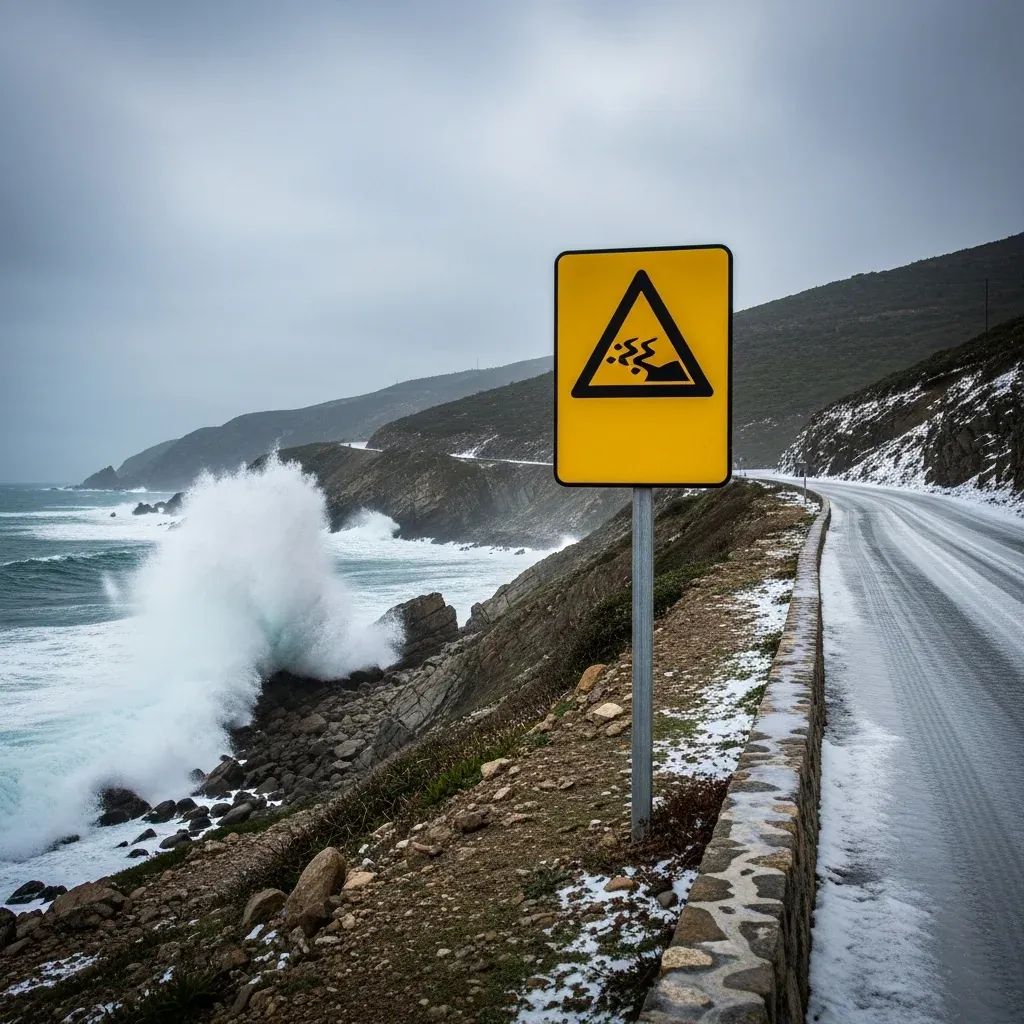
The icy dawn may look deceptively calm across mainland Portugal, yet the weekend’s yellow alerts, triggered by the Portuguese Institute for Sea and Atmosphere (IPMA), continue to cast a long shadow over travel plans, seaside walks and even power-grid operations. Although most official warnings for snowfall and rough seas expired in the early hours of Sunday, authorities insist that residual risks—from black ice on mountain roads to loose debris along the coast—remain on the table.
Storm Recap: From Mountain Peaks to Atlantic Swells
Over the past 48 hours, a fast-moving polar air mass swept across the peninsula, blanketing 15 mainland districts with up to 20 cm of snow in the highest reaches of the Serra da Estrela while hurling 4–5 m north-westerly waves against the entire western shoreline. The IPMA raised conditions to orange level for seven coastal districts at one point, as buoy data hinted at peaks flirting with 10 m. By late Saturday, the agency downgraded all signals to yellow, acknowledging a slow but steady easing trend.
Lingering Hazards for Sunday Travellers
Meteorologists say the cold air will only grudgingly loosen its grip. Freezing temperatures overnight left a hard glaze on elevated routes such as the A25 and A23 corridors, especially near Guarda, Castelo Branco and Vila Real. Coastal commuters face different headaches: pockets of blowing sand, spray and overtopping waves could still shut down boardwalks in Porto’s Foz, Nazaré and stretches of the Costa Vicentina without warning. The National Road Safety Authority urges motorists to treat shaded bends “as if they were a skating rink” until at least mid-morning.
District-by-District Snapshot
Interior North & Centre
Heavy bursts hit Bragança, Viseu, Guarda and Vila Real, where 5 cm accumulations above 800 m were common. The municipal fleet in Guarda city spread 90 t of salt overnight, keeping the link to the Hospital Sousa Martins open.
Coastal Lowlands
While snow never touched Lisboa or Setúbal, the Atlantic delivered a different punch. Harbour authorities in Leixões, Aveiro and Peniche logged multiple inbound vessels delaying entry until buoy readings fell below 5 m.
Official Advice: What the Authorities Want You to Remember
Check the latest IPMA updates every three hours, even if the sky looks clear. Authorities refine local warnings quickly when micro-fronts roll in from the Bay of Biscay.
• Keep snow chains in the boot and confirm tyre pressure before climbing above 700 m.
• Stay away from breakwaters, jetties and cliff-top paths; rogue waves arrive in sets with little warning.
• Use layered clothing—thermal base, fleece, wind-stopper—to cut wind-chill, rather than piling on a single heavy coat.
• The National Civil Protection Authority hotline (800 246 246) is staffed 24/7 for road, rail and health queries linked to the cold snap.
Bigger Picture: Extremes Becoming the New Normal?
Climate researchers such as Francisco Ferreira of NGO ZERO link this January’s twin assault of snow and storm surge to a broader uptick in “high-impact weather events” driven by a warming Atlantic. Data from the European Environment Agency show that Portugal’s annual bill for climate-related disasters has risen by 80 % since 2000, with coastal flooding and heatwaves taking the lion’s share. The government’s Preventive Civil Protection Strategy 2030 aims to pivot from emergency response to risk mitigation, but funding gaps persist, notably in rural snow belts where ageing populations and sparse broadband make early alerts harder to disseminate.
Preparing for the Next One
Meteorologists caution that a second cold pulse could drop in from Greenland later this week, though confidence is still low. In the meantime, municipalities are topping up road-salt reserves, checking diesel stocks for snow-plough fleets and running tabletop exercises to stress-test power-outage protocols. For households, the golden rule is simple: “Act on yellow as if it were orange.” That mindset, officials say, is Portugal’s best shield against winter’s increasingly erratic moods.


