

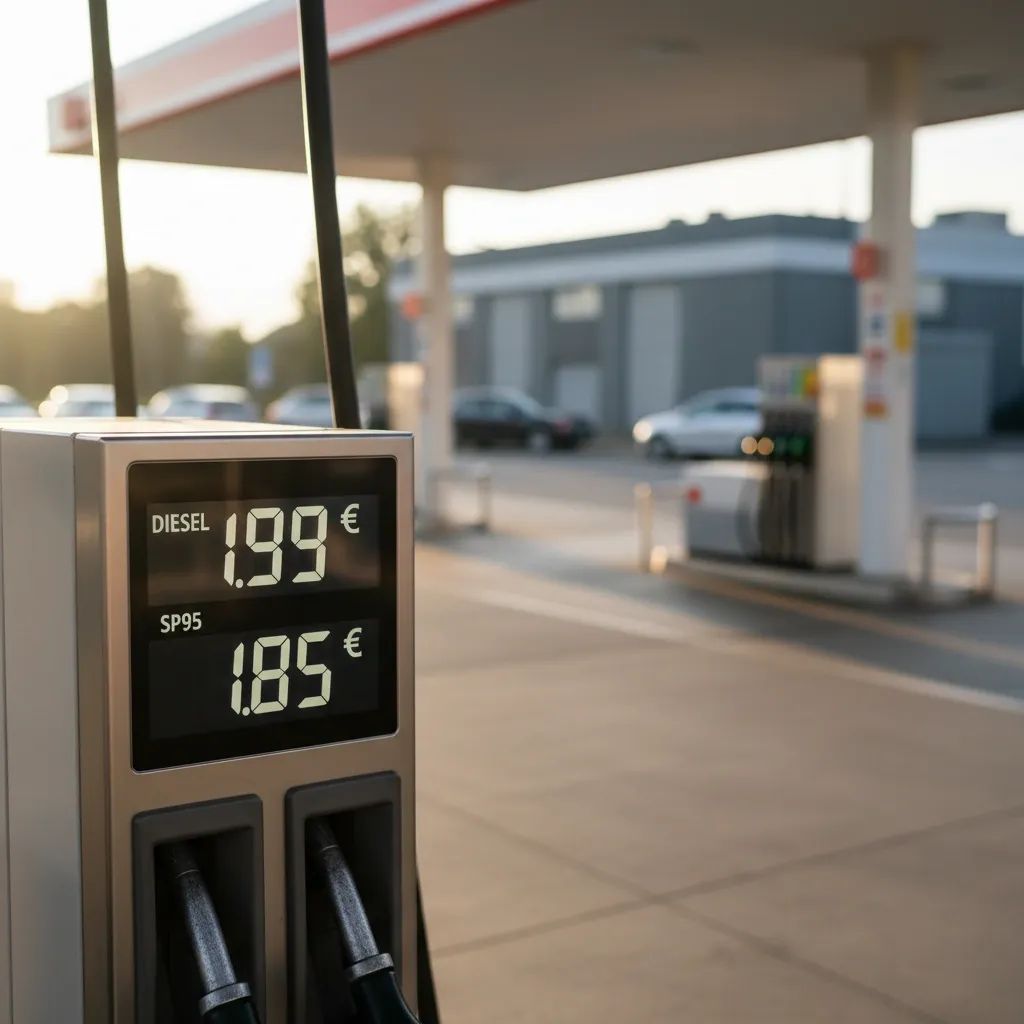
Portugal's pump prices are about to jump sharply this week, with diesel climbing roughly 10 cents per liter and petrol rising by about 6.5 cents, driven by a collision of geopolitical tensions and an unfortunate geographic reality: every drop of fuel entering Portugal depends on stable shipping routes thousands of kilometers away.
Why This Matters
• Diesel will likely average €2.05 per liter starting Monday, petrol around €1.99—meaning a typical 50-liter fill-up costs €5 to €8 more than it did last week.
• The Strait of Hormuz blockade, which has persisted for 61 days, disrupts the passage of roughly 20% of global oil supplies, directly feeding into what Portuguese fuel retailers see at the pump.
• Portugal imports 100% of its crude oil, making household and business budgets acutely vulnerable to distant power plays between Washington and Tehran.
• The government has already deployed temporary tax cuts to soften the blow, but analysts warn these measures may exhaust themselves if crude prices hold above $120 per barrel.
The Middle East Chokepoint and Its Portuguese Consequences
On February 28, Iran closed the Strait of Hormuz—one of the world's most vital maritime passages—in response to U.S. military operations in the region. What began as regional tensions has become an economic fact shaping your weekly fuel bill in Lisbon, Porto, or the Algarve.
The Strait normally channels approximately 20% of the planet's crude oil and liquefied natural gas exports, a volume so large that its disruption touches every economy that imports energy. For Portugal specifically, this means the Brent crude benchmark—the pricing standard for European refineries—has surged past $126 per barrel, the highest level since Russia invaded Ukraine in 2022.
The numbers tell the story. Before late February, Brent traded around $70 per barrel. Today it fluctuates between $114 and $124, a 60% to 77% leap in less than three months. The Automobile Club of Portugal (ACP) and the National Association of Fuel Retailers (ANAREC) based their latest forecasts on Thursday's market close, signaling that Monday's pump adjustments will mirror these international movements within hours as refineries pass costs downstream.
Complicating matters further, the United States has simultaneously blockaded 42 vessels heading to or from Iranian ports, creating a two-sided squeeze on global crude availability. President Trump has publicly stated this blockade will remain in place until Iran accepts Washington's nuclear demands—a condition Tehran shows no willingness to meet. On Wednesday, Iran threatened "unprecedented military action" if the U.S. did not lift its port restrictions and reopen the Strait. Neither side appears inclined to budge.
When Energy Bills Feed Into Everything Else
The immediate pain hits drivers first, but the cascading effects touch nearly every aspect of living in Portugal. Transportation firms—the backbone of moving goods across the country—report significant pressure as fuel costs mount. Many freight contracts lack fuel indexation clauses, meaning carriers face difficult choices: absorb the increases, renegotiate mid-term on smaller profit margins, or pass costs to clients. Portuguese law permits automatic price adjustments when fuel costs swing more than 5%, but negotiating this protection requires foresight many businesses lacked.
The economy feels this ripple effect immediately. Groceries, construction materials, spare parts, packaged goods—all travel by truck before reaching your neighborhood shop. Bread, eggs, vegetables, and tinned goods cost visibly more partly because their transport invoice grew. Tourism, which contributes significantly to Portuguese GDP, also experiences pressure when fuel surges. Higher airfares, car rental costs, and ferry prices make holidaymakers recalculate budgets, and booking inquiries from northern Europe have softened noticeably as travelers mentally subtract transport costs.
The Government's Fiscal Toolkit
Prime Minister Luís Montenegro's administration recognized the threat early and deployed multiple interventions to ease the pressure on consumers and businesses.
The most visible measure is a cut to the Imposto sobre os Produtos Petrolíferos e Energéticos (ISP)—Portugal's fuel excise tax. In March 2026, the government reduced ISP by 8.34 cents per liter on diesel and 4.58 cents on unleaded petrol. This represents a direct effort to shield consumers and businesses from the full force of global price movements. Without these cuts, fuel prices would climb even more steeply than current forecasts suggest.
Sector-specific support has also been deployed. Freight operators, livestock transporters, and agricultural cooperatives received targeted assistance. Farmers and fishermen purchasing marked diesel benefit from relief measures, and humanitarian fire brigades have received support. Portugal also contributed to a coordinated International Energy Agency response, coordinating with other nations to address market pressures.
The government maintains active oversight of the situation, with officials pledging to monitor developments and adjust measures as needed to protect households and businesses.
The Structural Weakness Nobody Wants to Discuss
Beneath the government's month-to-month crisis management lies an uncomfortable truth: Portugal depends almost entirely on imported crude oil, and the transport sector runs 95% on fossil fuels. This creates permanent vulnerability to global shocks no tax cut permanently solves.
Sines Refinery, located on the southern coast, processes 226,000 barrels per day—enough to exceed domestic demand and make Portugal a net exporter of refined products. Yet every barrel arriving at Sines travels by tanker from Nigeria, Angola, or the North Sea, ships that must navigate the same geopolitical minefields everyone else does.
Climate advocates argue that temporary tax relief merely postpones the reckoning. They advocate accelerated vehicle electrification and expanded rail and metro networks, investments they say could reduce petroleum dependence over the coming years. These structural solutions require sustained commitment and funding, complementing the short-term relief measures the government has deployed.
What Happens Next
Market forecasters offer few reasons for optimism. Brent crude could test significantly higher levels if U.S.-Iran hostilities escalate, a scenario that would push Portuguese diesel even higher despite government tax shields. The only realistic near-term relief would come from Iran and the United States reaching a diplomatic settlement—highly unlikely given current posturing—or from an unexpected supply shock elsewhere that shifts market sentiment.
The ACP offers modest practical advice for drivers: maintain tire pressure, reduce highway speeds by 10 km/h, and consolidate errands to fewer trips. Such habits trim fuel consumption by a meaningful margin. For commuters and families already stretching budgets, these efficiency measures offer tangible help.
Monday morning's pump adjustments will remind Portugal once again that geography offers no protection from distant conflicts. An Iranian standoff, an American blockade, and a contested waterway halfway around the world are now intimate facts of Portuguese daily life—reflected in every receipt from every fuel stop.


