

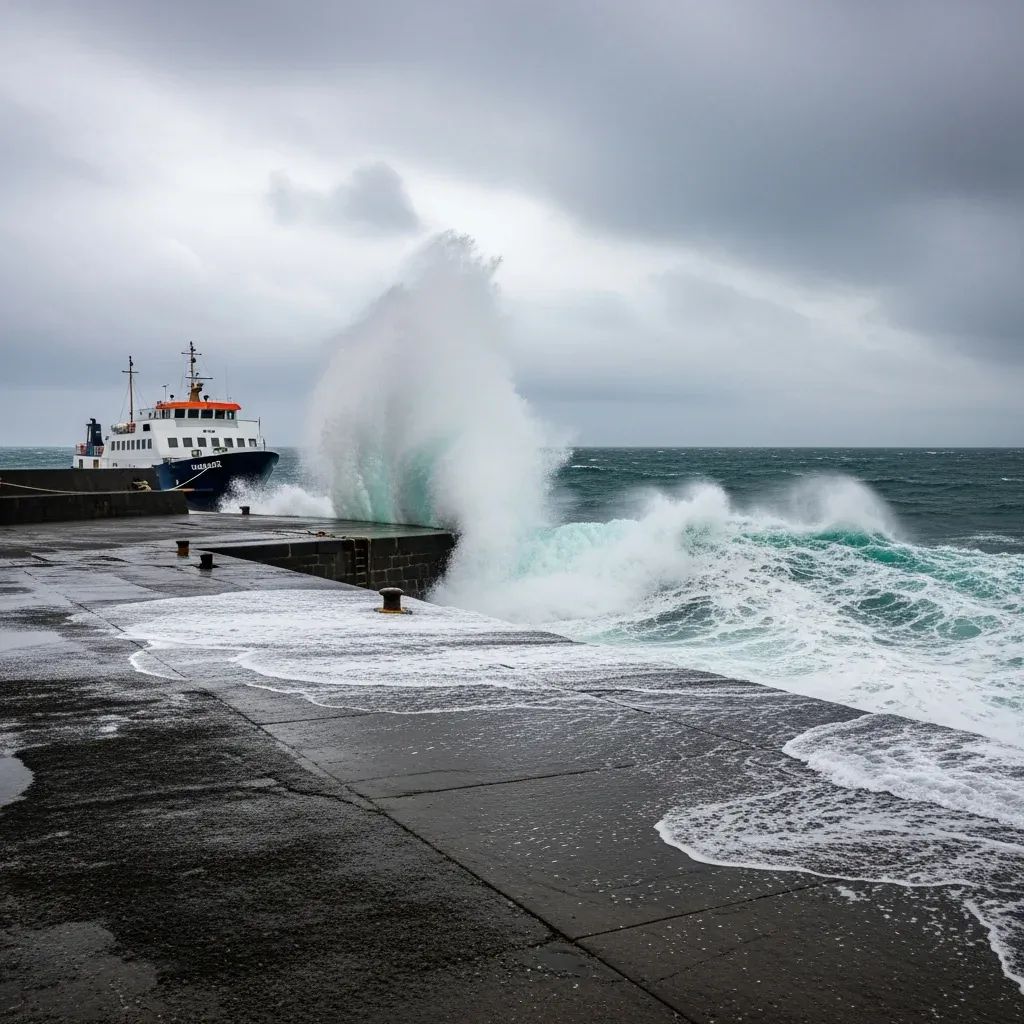
Atlânticoline, the maritime carrier connecting the Azores archipelago, has scrapped ferry services between Faial, Pico, and São Jorge due to Storm Therese, a mid-Atlantic depression now battering the islands with wind gusts reaching 110 km/h and waves up to 9 meters high. The cancellations strand residents and tourists alike, with limited alternative transport as the Portugal Meteorological Institute (IPMA) maintains orange-level weather alerts through March 19.
Why This Matters
• No ferry, no flight: SATA Air Açores has also canceled inter-island flights, leaving some communities effectively cut off.
• Refund rights: Passengers can claim full reimbursement within 7 days or free rebooking, plus meals and accommodation if delays exceed 90 minutes.
• Atlantic storm season: Ferry cancellations due to Atlantic storms are common during winter and early spring months, particularly when orange-level weather alerts are issued.
The Immediate Impact on Island Connectivity
The company announced today that it had canceled the Green Line route (Horta/Cais do Pico/Velas/Cais do Pico/Horta) after wind and swell forecasts made navigation unsafe. Yesterday, the Pink Line service between Corvo and Flores in the Western Group was also grounded for the same reasons. Atlânticoline issued the standard apology for "any inconvenience" but offered no timeline for resuming operations, leaving passengers to monitor real-time weather bulletins.
For residents of the Central Islands—Terceira, São Jorge, Pico, Graciosa, and Faial—these cancellations mean more than missed appointments. Inter-island ferries carry essential goods, medical supplies, and workers commuting between islands. Small businesses that rely on daily deliveries from Horta or Madalena face stock shortages, and tourists who booked multi-island itineraries now scramble to adjust plans or face refund disputes with tour operators.
The IPMA placed the entire archipelago under orange warnings for rough seas and wind, with the Central and Eastern Groups (São Miguel and Santa Maria) facing the most severe conditions. Storm Therese, a low-pressure system positioned approximately 560 kilometers east of São Miguel on the evening of March 18, is forecast to deliver sustained gale-force winds and significant wave heights of 8 meters in the Western and Central Groups and 9 meters in the Eastern Group. In maritime terms, an orange alert signals moderate to high risk, the second-highest tier on the IPMA's three-level scale.
What Passengers Can Expect—and Demand
Under Atlânticoline's passenger transport contract, travelers caught by company-initiated cancellations enjoy robust consumer protections. The carrier must offer a choice: full refund within seven days (via bank transfer, check, or cash) or free rebooking on the next available departure under equivalent conditions. If a delay or cancellation exceeds 90 minutes, the operator is legally required to provide complimentary meals, drinks, and—if an overnight stay is necessary—accommodation either aboard the vessel or in shore-based lodging. The company caps land-based lodging reimbursement at €80 per night for up to three nights, excluding transportation between the port and hotel.
Passengers with reduced mobility or disabilities receive priority assistance, and the law mandates that their accompanying persons also receive the same support package. However, the fine print matters: if you cancel your own booking more than five days in advance, you recover 100% of the ticket price; less than five days out, only 85%; and after the scheduled departure, nothing.
While these rules are clear on paper, enforcement during peak disruption periods can be patchy. Travelers report long waits at customer-service desks and conflicting information about rebooking slots, especially when multiple consecutive sailings are scrubbed. The advice from seasoned Azorean travelers: screenshot your booking confirmation and the cancellation notice, request written confirmation of any rebooking or refund, and escalate complaints to the Regional Directorate for Consumer Protection if the company misses the seven-day reimbursement deadline.
No Easy Alternatives When the Weather Turns
Unlike urban transport networks with redundant options, the Azores offer limited fallback when ferries stop running. SATA Air Açores operates the only scheduled inter-island flights, and its twin-turboprop fleet is equally vulnerable to crosswinds and low visibility. During Storm Therese, SATA has confirmed delays and cancellations, meaning travelers cannot simply pivot from sea to air.
There is no government-sponsored emergency transport service for stranded passengers, nor does Atlânticoline charter substitute vessels from neighboring operators. The company's contractual obligation is limited to rebooking on its own next available sailing, which in stormy conditions could be two or three days away. For tourists, this translates to unplanned hotel nights and missed return flights to the mainland; for residents, it means missed medical appointments, school exams, or time-sensitive work commitments.
Residents of the Azores do benefit from subsidized fares through the RIAC (Residente Açores) platform, which reduces ticket costs by up to 40% compared to non-resident rates. However, this discount applies only to the ticket price—it does not unlock priority rebooking or alternative transport modes. In practice, a resident paying half price still waits in the same queue as a full-fare tourist when the seas turn rough.
Storm Therese: The Numbers Behind the Alert
The IPMA issued its orange warning after tracking Therese's northward track across the mid-Atlantic. At 21:00 Lisbon time on March 18, the depression's central pressure measured 985 hectopascals, low enough to drive sustained gale-force winds. Peak gusts are forecast to reach 95 km/h in the Western Group and 110 km/h in the Central and Eastern Groups—strong enough to uproot trees, damage roofs, and make ferry boarding platforms unsafe.
Wave models predict significant wave heights (the average height of the tallest one-third of waves) of 8 to 9 meters, with individual rogue waves potentially exceeding 14 meters. For context, most Atlânticoline vessels have operational limits around 6 to 7 meters significant wave height, depending on the route and sea direction. Once the IPMA upgrades to an orange alert, port authorities typically close commercial traffic regardless of individual ship ratings.
Yellow alerts—the lowest tier—remain in effect for rain and localized flooding, though these pose less risk to ferry operations than wind and swell. The IPMA defines a yellow warning as indicating risk to specific weather-dependent activities, while orange signifies moderate to high risk that warrants precautionary measures by the public and civil-protection agencies.
Looking Ahead: When Will Services Resume?
Atlânticoline has not announced a firm resumption date, citing the evolving forecast. The IPMA expects conditions to begin easing on March 19, but residual swell often lingers 24 to 48 hours after a storm system moves east. Port captains must inspect berthing infrastructure and conduct sea trials before authorizing commercial sailings, a process that can extend delays even after the weather clears.
Passengers with bookings through March 20 should monitor the Atlânticoline website and the IPMA marine forecast portal for real-time updates. The company typically posts cancellation notices by early morning on the day of travel, though last-minute scrubs—when conditions deteriorate faster than predicted—are not uncommon. Travelers with flexible schedules are advised to build at least one buffer day into multi-island itineraries during the October-to-April storm season, when Atlantic depressions regularly sweep the archipelago.


