

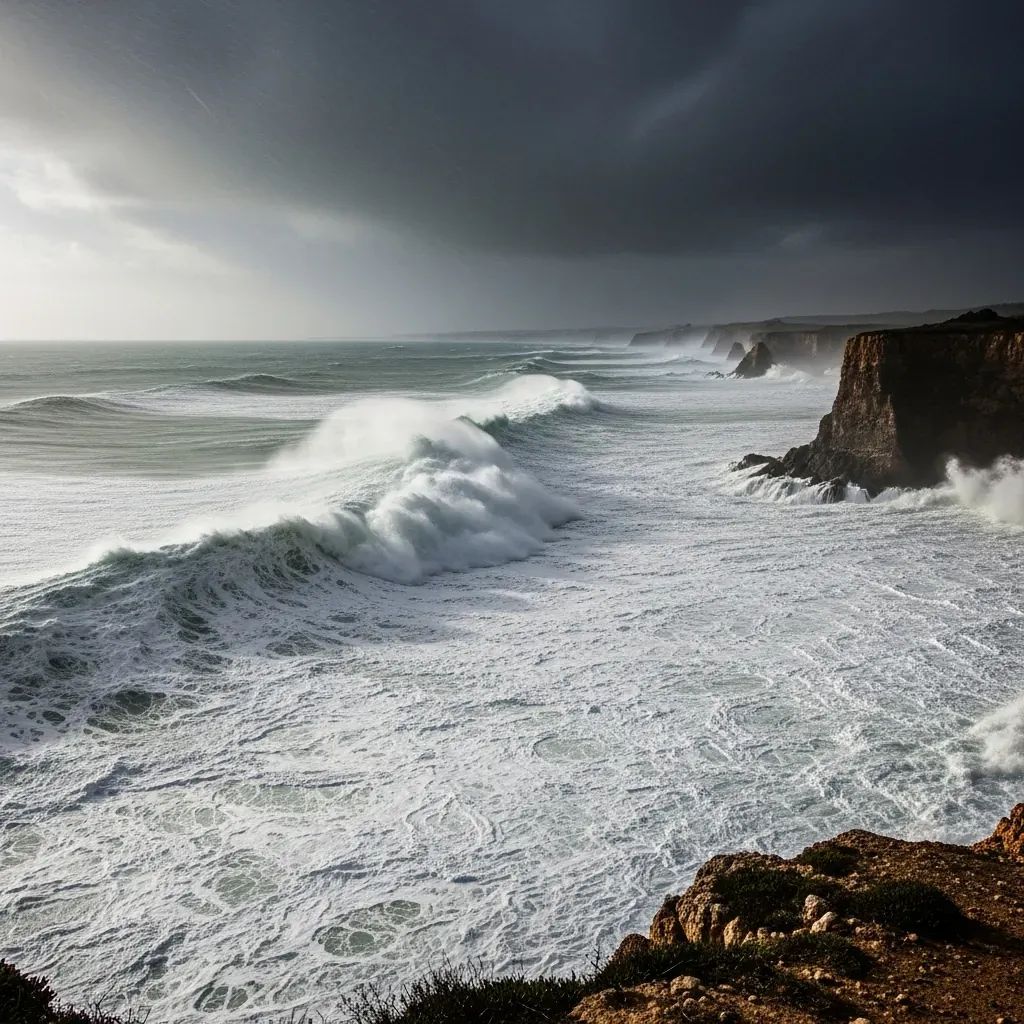
The leading edge of an Atlantic low dubbed Joseph has started lashing the Iberian coastline, and Portugal is taking the first hit. Torrential rain, gale-force winds, mountain snow and waves the height of a seven-storey building are all on the three-day menu. Civil protection teams have fanned out across the mainland while forecasters warn that a second, nastier depression, Kristin, is already forming on Joseph’s flank.
Why Joseph Matters Now
Portugal sits at the crossroads of North Atlantic storm tracks, but Joseph arrives after weeks of saturated ground and swollen rivers. The Portuguese Weather Service (IPMA) has therefore colour-coded half the map in orange or red — an escalation usually reserved for the most disruptive winter events. Hydrologists fear the Douro, Mondego and Tejo basins could spill their banks, echoing the December 2019 floods that paralysed parts of Vila Real and Coimbra. For residents, the overlap with weekday commuting hours magnifies the risk: morning road closures, flight delays and power cuts are all likely before the weekend.
What to Expect in Your Region
• North & Centre: Up to 200 mm of rain by Thursday in mountain catchments, snow dropping to 600 m in Serra da Estrela and Serra de S. Mamede. Bragança, Guarda and Viseu have all upgraded to orange for snow.
• Lisbon & Setúbal: Shorter-lived downpours but 80 km/h gusts and possible storm surge at the mouth of the Tejo when high tide coincides with peak winds.
• Algarve: Lesser rainfall yet vulnerable beaches from Tavira to Sagres face 8-10 m Atlantic swells, jeopardising fishing gear and coastal roads.
• Azores & Madeira: Joseph skirts north of the islands, but lingering humidity could still trigger local thunderstorms.
Travel and Transport: Disruptions on the Horizon
The IPMA’s wave models put 12 m breakers on the Aveiro–Peniche stretch this afternoon, a level that usually forces harbour masters to forbid bar crossings. On land, E-Redes has pre-positioned 200 extra crews after Ingrid’s winds left 3 800 customers without electricity earlier this month. REN, the transmission operator, says high-tension lines in Trás-os-Montes are most at risk from icing. Meanwhile, Infraestruturas de Portugal has drafted snow-ploughs to the A24 and A25 corridors where blizzard-style whiteouts are forecast after sunset.
Power Grid Under Pressure
While Joseph’s sustained winds hover around 100 km/h on the highlands, gusts inside squall lines can top 140 km/h — enough to snap medium-voltage poles. Distribution engineers remember Leslie in 2018, when 176 km/h gusts in Figueira da Foz plunged half a million homes into darkness. Although Joseph is weaker on paper, the real threat is cumulative: Ingrid, Joseph and Kristin arrive within ten days, giving repair crews no breather and keeping soils waterlogged around pylons.
Farming on Alert
Flood-prone citrus groves in Silves and avocado hothouses near Lagoa took a multimillion-euro beating during 2025’s storm Martinho. Growers now fear a repeat because January rainfall has already surpassed 150 % of normal in the Algarve and Joseph could add another 40–50 mm. Viticulture zones in the Douro Superior are more worried about landslides on steep terraces; stones dislodged by overflowing drains during Elsa in 2019 destroyed 3 ha of vines in a single night. Agricultural insurers remain on standby but say indemnity pay-outs depend on producers documenting preventive steps.
Lessons from Past Tempests
Comparisons help calibrate preparation:
• Wind: Joseph’s 140 km/h inland bursts sit between Fabien’s 160 km/h (2019) and Leslie’s 130 km/h (2018).
• Snow: Accumulations of 10 cm above 1 000 m recall Filomena’s 2021 blanket over Castilla but remain modest next to the 50 cm dumped in Serra da Estrela during Klaus (2009).
• Sea state: Forecast peaks of 14–15 m echo Ingrid last week and surpass the 9 m registered during Fabien, prompting the navy to suspend live-fire drills off Peniche.
How to Stay Safe
Authorities insist the bulk of incidents stem not from headline-grabbing extremes but from everyday complacency. Follow these tested steps:
• Clear rooftop gutters and yard drains; most urban cheias start here.
• Secure loose panels, scaffolds and garden furniture before winds escalate.
• Park away from riverside car parks and tree-lined avenues. Waterlogged roots topple oaks without warning.
• Adopt defensive driving: halve your speed in standing water and avoid overtaking high-sided vehicles.
• Track updates via the IPMA app or local Protección Civil channels in Spain if crossing borders.
Looking Ahead: Kristin Right Behind
Meteorologists are already eyeing Kristin, a rapid-deepening low predicted to exert hurricane-class gusts of 160 km/h over the Atlantic early Friday. Should its trajectory shift 200 km south, coastal Portugal could face back-to-back red warnings. For now, Joseph is the priority, but emergency planners describe the pair as a “storm conveyor-belt” that may dominate the start of 2026. Residents are urged to treat the lull between systems as a window to replenish batteries, sandbags and fuel supplies.
A wet, windy and occasionally snowy week is on tap — but as veterans of Leslie, Elsa and countless unnamed winter gales have learned, early caution remains Portugal’s best defence against the North Atlantic’s seasonal mood swings.


