
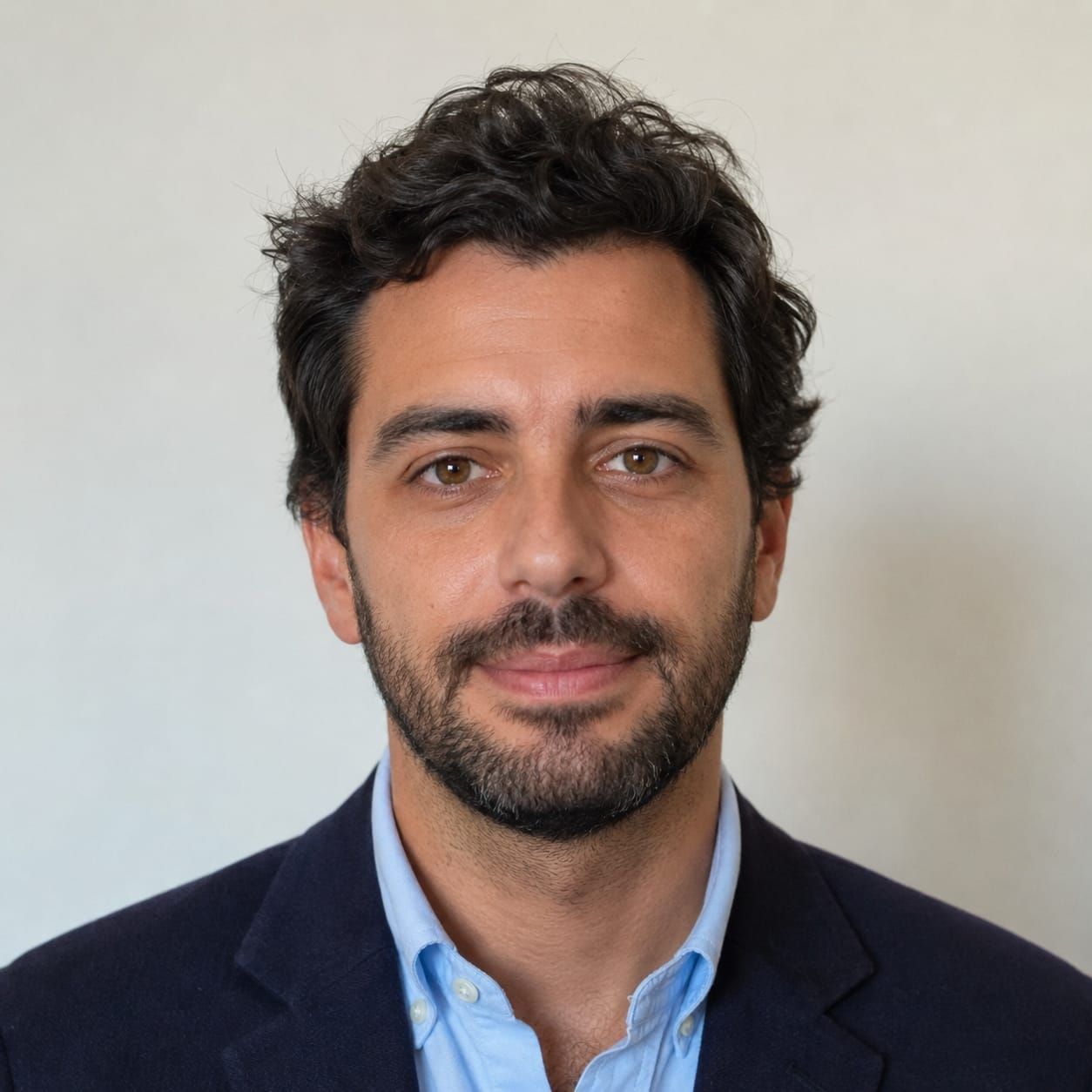

Sporting Clube de Portugal faces a critical governance referendum this Saturday, March 14, 2026, as club members decide whether to grant incumbent president Frederico Varandas a third term or pivot to challenger Bruno Sá in an election framed less around silverware and more around institutional transparency and member access.
Bruno Sá, the restaurateur behind Lisbon's popular Cantinho do Sá, has positioned his candidacy as a democratic safeguard—a vote not necessarily to win outright, but to install a vocal opposition capable of holding the board accountable over the next four years. His core message: without a credible challenger, Portugal's Sporting club risks drifting toward "dictatorship" in governance, where decision-making becomes opaque and dissent is discouraged.
Why This Matters
• Members vote Saturday between 9:00 and 20:00 at Pavilhão João Rocha to elect leadership for the next four-year cycle.
• Financial scrutiny: Sporting SAD issued €225M in bonds at 5.5% interest over 28 years in October 2025, a move Sá questions for medium-term sustainability.
• Governance clash: The race hinges on transparency, member rights, and whether recent on-field success excuses structural shortcomings.
• Post-Amorim uncertainty: With manager Rui Borges on a contract until June 2026, the club's sporting project remains undefined after the departure of architect Rúben Amorim.
The Transparency Challenge
Sá's platform rests on a diagnosis that Sporting has morphed from a member-owned institution into a client-oriented business. He argues that long-standing members—some paying dues for 40 years—now struggle to secure match tickets while corporate buyers receive priority access. The club's ticketing platform is plagued by crashes, assemblies have lost relevance, and the stadium atmosphere has reportedly dulled, stripped of the vibrancy generated by organized supporter groups.
"They haven't taken away my love, but they've taken away my passion," one veteran member told Sá during campaign visits to local supporter nuclei. The candidate frames his mission as restoring a sense of ownership: revising ticket allocation criteria, improving digital infrastructure, reinstating a member ombudsman, and reviving general assemblies as meaningful forums rather than rubber-stamp rituals.
Financial Red Flags or Strategic Investment?
At the heart of Sá's critique lies the €225M bond issuance executed by Sporting Entertainment S.A., the club's subsidiary, in October 2025. While Sporting SAD posted a €32M profit in the first half of 2025/26—driven by Champions League revenues of €67M and player sales totaling €110M, including Viktor Gyökeres's record transfer—the debt load has climbed sharply. Total liabilities surged from €380M to €592M, a €212M increase in six months.
The bond proceeds are earmarked for transforming Estádio José Alvalade into a global entertainment hub, reimbursing the club for renovation spending, and refinancing roughly €69M in securitized TV rights debt to recover control from broadcaster NOS. The issuance drew demand 8.5 times the offer and earned investment-grade ratings from Fitch and DBRS, signaling market confidence.
Yet Sá contends the 5.5% annual interest places strain on short-term liquidity, especially given rising vendor debt and the lack of transparency around the Alvaláxia property acquisition. Members, he insists, deserve detailed disclosure of all financial commitments—not glossy press releases.
The Sporting Project After Amorim
Frederico Varandas's most celebrated decision was hiring Rúben Amorim in March 2020 for €10M, a gamble that delivered two consecutive league titles in 2020/21 and 2021/22, ending a 19-year drought. Amorim's departure to Manchester United in November 2024 left a vacuum. Successor João Pereira lasted six weeks and eight games before being dismissed.
Rui Borges took the reins in late December 2024, shifting from Amorim's 3-4-3 to a 4-4-2 formation emphasizing midfield control. Results have been uneven: Sporting sits 2nd in the Primeira Liga behind FC Porto, reached the Champions League Round of 16 (facing Bodø/Glimt on March 9), and advanced to the semi-finals of both domestic cups. Forward Luis Suárez has netted 31 goals across all competitions.
Sá openly admits Borges would not have been his choice, arguing the appointment revealed a lack of coherent sporting strategy beyond Amorim. "I still don't understand what the sporting project is, who leads it, or what the vision is," he states, pledging to meet with Borges if elected to assess fit. He rules out pursuing Amorim's return, declaring that cycle closed, and instead calls for a club-defined identity that survives managerial turnover.
The challenger promises to overhaul scouting, prioritize Portuguese talent to preserve tradition, revamp the youth academy's "player-centric" model—which he claims discourages young prospects by forcing them to compete with players two years older—and conduct a thorough review of the Performance Unit, a flagship initiative under Varandas that Sá believes has underperformed given persistent injury issues.
The Claque Standoff
Relations between the board and Grupos Organizados de Adeptos (GOAs)—organized supporter groups—have collapsed. Varandas banned several groups from the stadium, citing disciplinary infractions. Sá frames this as a leadership failure, likening the standoff to a family rift that demands resolution, not expulsion.
"Would you kick your son out of the house or try to solve the problem?" he asks. Sá pledges an immediate meeting with claque leaders if elected, emphasizing that players and coaches thrive when the stadium pulses with energy. Handball and futsal captains prefer playing with supporter noise, he notes, and restoring that atmosphere is central to his vision of unity.
The Democratic Argument
Sá's campaign pivots on the notion that even a strong minority showing will institutionalize scrutiny. He accuses Varandas of avoiding campaign events, delivering a hastily formatted electoral program "done in three strokes," and fostering a climate of fear where critics face implicit retaliation. Sá claims police visited his restaurant only after he penned opinion columns critical of the board—an anecdote he uses to illustrate what he calls a "culture of fear and punishment."
"Without this candidacy, the next four years would be a dictatorship," Sá insists. His goal is less about displacing Varandas—whom polls suggest remains favored—and more about securing enough votes to demand transparency, explanation, and accountability from any winning administration.
What This Means for Club Stakeholders
For members, the choice distills into a question of priorities: continued stability under proven leadership versus a pivot toward institutional openness and direct engagement. Varandas's supporters point to back-to-back titles, Champions League qualification, and a €32M profit as evidence the model works. Critics counter that financial opacity, member alienation, and the absence of a post-Amorim blueprint constitute red flags that silverware temporarily obscures.
For investors, the bond issuance and infrastructure plan suggest ambition, but the €592M liability figure warrants monitoring. Sporting SAD's market capitalization stands at €198M, with shares down 2.97% year-to-date, indicating caution among equity holders.
For football purists in Portugal, the election tests whether a historic club can balance commercial modernization with its identity as a member-driven institution—a tension familiar across European football but especially acute in a country where club tradition runs deep.
Women's Football and Multi-Sport Ambitions
Sá also targets Sporting's multi-sport operations, pledging to reinstate disbanded women's teams, establish a dedicated scouting office for non-football sports, and expand the commercial department to serve all disciplines. He criticizes Varandas for negotiating €100–200 differences in player renewals while allegedly granting himself six salary increases, and for leaving a Champions League handball quarter-final early despite the team's performance.
The handball squad competes at Europe's elite level; futsal remains dominant under coach Nuno Dias. Sá contends both disciplines could achieve more with strategic investment rather than the assumption that existing infrastructure suffices.
Youth Development Under Fire
Sporting's famed academy—Academia Sporting—faces criticism in Sá's platform. He claims the EUL training hub has ceded ground to rival Benfica, which now holds double Sporting's influence there. Under-16 squads allegedly train on half pitches, a condition Sá deems unacceptable for a club of Sporting's stature. The "player-centric" development philosophy, he argues, demotivates young talent by mismatching age cohorts, resulting in fewer academy graduates breaking into the first team.
Since Amorim's exit, youth prospects like Travassos have been bypassed in favor of signings such as Vagianidis, even with Fresneda already on the roster. Sá interprets this as risk aversion, symptomatic of a board lacking confidence in its own pipeline.
Election Day Logistics
Voting occurs Saturday, March 14, 2026, from 09:00 to 20:00 at Pavilhão João Rocha. Two candidacies are formally admitted: Varandas seeking reelection and Sá aiming to secure a foothold. Turnout and margin will determine not only the next president but also the tone of governance—whether consensus-driven or contested—over the coming mandate.
The Calculus for Voters
Sá acknowledges the emotional pull of recent success. "While the ball keeps going in, even six or seven times in stoppage time, it seems everything is fine," he concedes. But he contends structural issues fester beneath the surface: rising debt, vendor arrears, member disenfranchisement, and an undefined sporting identity post-Amorim.
His pitch is practical: a strong vote for his candidacy—even in defeat—guarantees four years of oversight, forcing the board to justify decisions, publish clear accounts, and respect member rights. "All votes count," he urges. "Don't stay home."
For Sporting members, the ballot represents a choice between continuity under tested leadership and a demand for greater institutional accountability—a referendum less on the past than on the terms under which the future will unfold.


