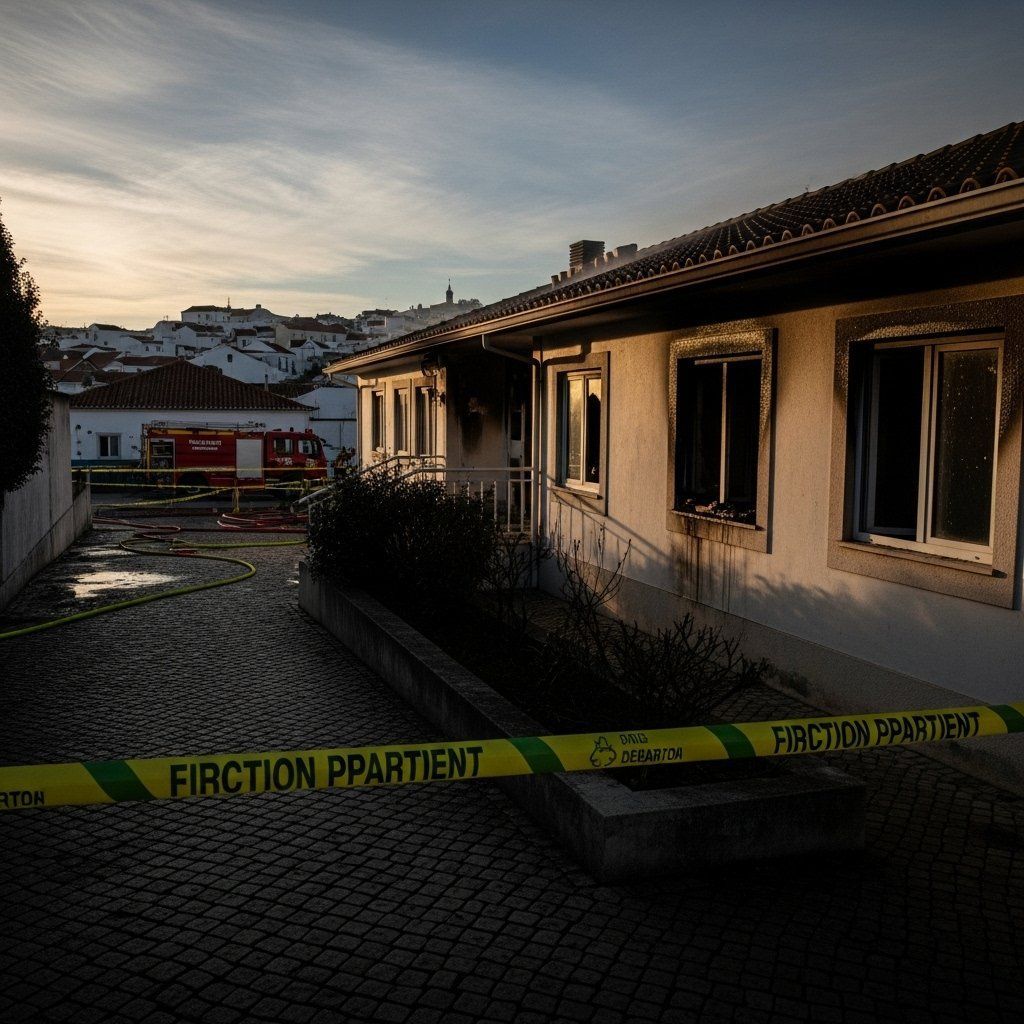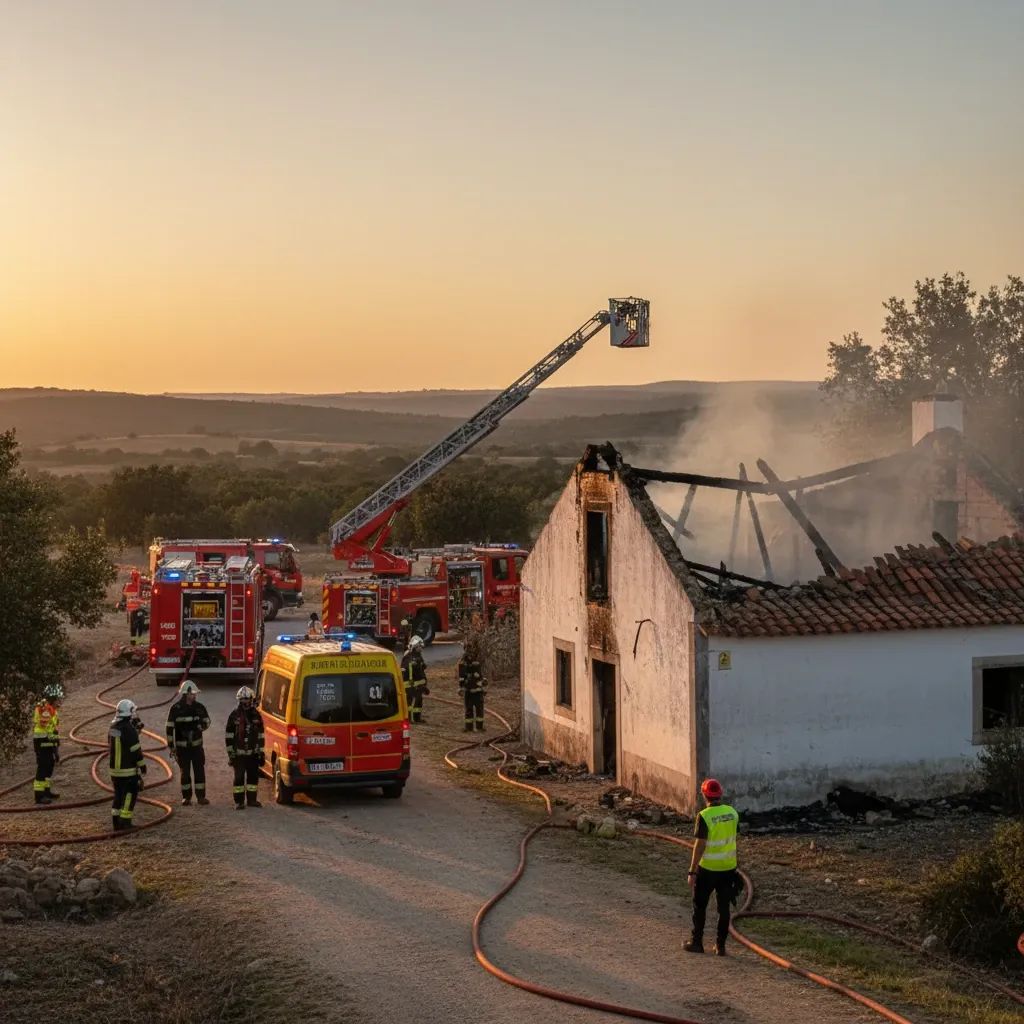
A single-vehicle crash on the A6 motorway near Vendas Novas sent one person to hospital by emergency helicopter and forced a two-hour closure of one of Portugal's busiest east–west corridors. The incident, which occurred during Tuesday morning's rush hour, highlights ongoing safety concerns on this stretch of highway linking Lisbon to the Spanish border.
Why This Matters
• Route disruption: Drivers heading toward the Spanish border (Caia crossing) faced detours for over 2 hours during peak travel time.
• Serious injury: The victim's condition required INEM air ambulance transport, indicating life-threatening trauma.
• Pattern of risk: The A6 near Vendas Novas has seen repeated serious accidents, raising questions about infrastructure and driver behavior on this high-speed corridor.
What Happened
Emergency services received the first alert at 8:18 AM on March 31, reporting a passenger vehicle that had left the roadway near kilometer 10 of the A6, in the eastbound lane toward the Caia frontier post. The Portugal National Republican Guard (GNR) arrived on scene to find one occupant seriously injured and in need of immediate advanced medical care.
Because of the severity of the injuries, ground transport was ruled out. The National Institute of Medical Emergency (INEM) dispatched a helicopter to airlift the victim directly from the motorway to a hospital facility. Authorities have not disclosed which hospital received the patient or provided updates on their current condition.
The Brisa Motorway Concession (BCR), which operates the A6, confirmed that the eastbound carriageway was completely closed at kilometer 10 while rescue operations unfolded. All traffic heading toward Caia and the Spanish frontier was rerouted through the Vendas Novas interchange, creating significant delays for commuters and freight haulers alike.
By 10:30 AM, roughly two hours after the initial alert, BCR reopened the roadway following clearance by emergency crews and completion of preliminary accident investigation work by the GNR. In a statement, the concession operator thanked drivers for their "collaboration and understanding" during the closure.
Emergency Response by the Numbers
The crash mobilized a substantial multi-agency response. According to the Alentejo Central Sub-Regional Emergency and Civil Protection Command, the scene drew:
• 20 emergency personnel from multiple agencies
• 7 ground vehicles including ambulances, fire trucks, and police units
• 1 INEM air ambulance
• Personnel from the Vendas Novas Fire Brigade, GNR traffic division, and Brisa motorway services
The scale of the deployment reflects both the severity of the injury and the logistical challenge of managing a major motorway closure during morning traffic.
A Stretch with a History
While Portuguese authorities do not publish accident rates for specific motorway sections, the A6 corridor near Vendas Novas has been the site of multiple serious collisions in recent years. Incidents logged in this zone include:
• Single-vehicle run-off-road crashes (like Tuesday's incident) resulting in serious injury and fatalities
• Heavy goods vehicle collisions with passenger cars
• At least one pedestrian fatality, an unusual event on a controlled-access highway
The causes of these accidents vary widely—from driver error and mechanical failure to hazardous weather—but the recurring location suggests potential risk factors tied to road geometry, speed, or driver fatigue on long intercity routes.
National Context: Portugal's Road Safety Challenge
Portugal has made progress on road safety in recent years, but still faces a higher fatality rate than much of Western Europe. In 2024, the country recorded 618 road deaths, a 4% decline from the previous year, yet the rate of 58 deaths per million inhabitants remains above the European Union average.
Between January and mid-November 2025, the National Road Safety Authority (ANSR) logged 379 fatalities and 2,451 serious injuries across 125,621 accidents nationwide. In 2023, Portugal's rate stood at 60 deaths per million, placing it among the higher-risk countries in the EU for road mortality.
Single-vehicle run-off-road crashes—the type that occurred near Vendas Novas—are a leading cause of serious injury and death on Portuguese motorways, often linked to speed, distraction, fatigue, or sudden maneuvers to avoid obstacles.
What This Means for Drivers
If you regularly use the A6 between Lisbon and the Alentejo or Spain, this incident serves as a reminder of several practical realities:
• Emergency closures happen: The A6 is a critical freight and tourism route, and serious accidents can shut down lanes for hours. Always have alternate routes mapped, especially during holiday weekends or peak travel seasons.
• Air ambulance deployment is common: The A6 passes through sparsely populated areas where the nearest trauma center may be an hour away by road. Serious crashes often trigger helicopter response, which requires full lane closures.
• Investigation delays reopening: Even after victims are transported, GNR accident reconstruction teams must document the scene, especially if criminal charges or insurance disputes may follow.
Motorists are advised to monitor Brisa's real-time traffic apps and the GNR traffic information channels before setting out on long A6 journeys, particularly during early morning and late afternoon when visibility and fatigue risks peak.
Unanswered Questions
As of now, neither the GNR nor BCR has released findings on what caused the vehicle to leave the roadway. Key unknowns include:
• Weather conditions at the time (fog, rain, or wet pavement)
• Vehicle mechanical condition (tire failure, brake malfunction)
• Driver behavior (speed, distraction, medical emergency)
• Road surface quality (potholes, standing water, debris)
The GNR's traffic accident investigation unit typically takes several weeks to finalize reports, especially when serious injury or fatality is involved. If criminal negligence is suspected, the case may be referred to the Public Prosecutor's Office in Évora.
Until those findings are public, the cause of Tuesday's crash remains speculation. What is certain is that one person's morning commute ended in a helicopter ride to the emergency room, and hundreds of other drivers faced unexpected detours and delays as a result.
Looking Ahead
The A6 remains Portugal's primary link to Spain's Extremadura region and a vital freight corridor for goods moving between Lisbon's port and the rest of Europe. Any recurring safety issues on this highway have economic as well as human costs.
For now, the roadway is fully operational, and the injured party's fate remains unknown. But for residents, commuters, and logistics operators who depend on this route daily, Tuesday's incident is a stark reminder that even modern, well-maintained motorways carry inherent risk—and that two hours of closure can ripple through an entire region's schedule.