
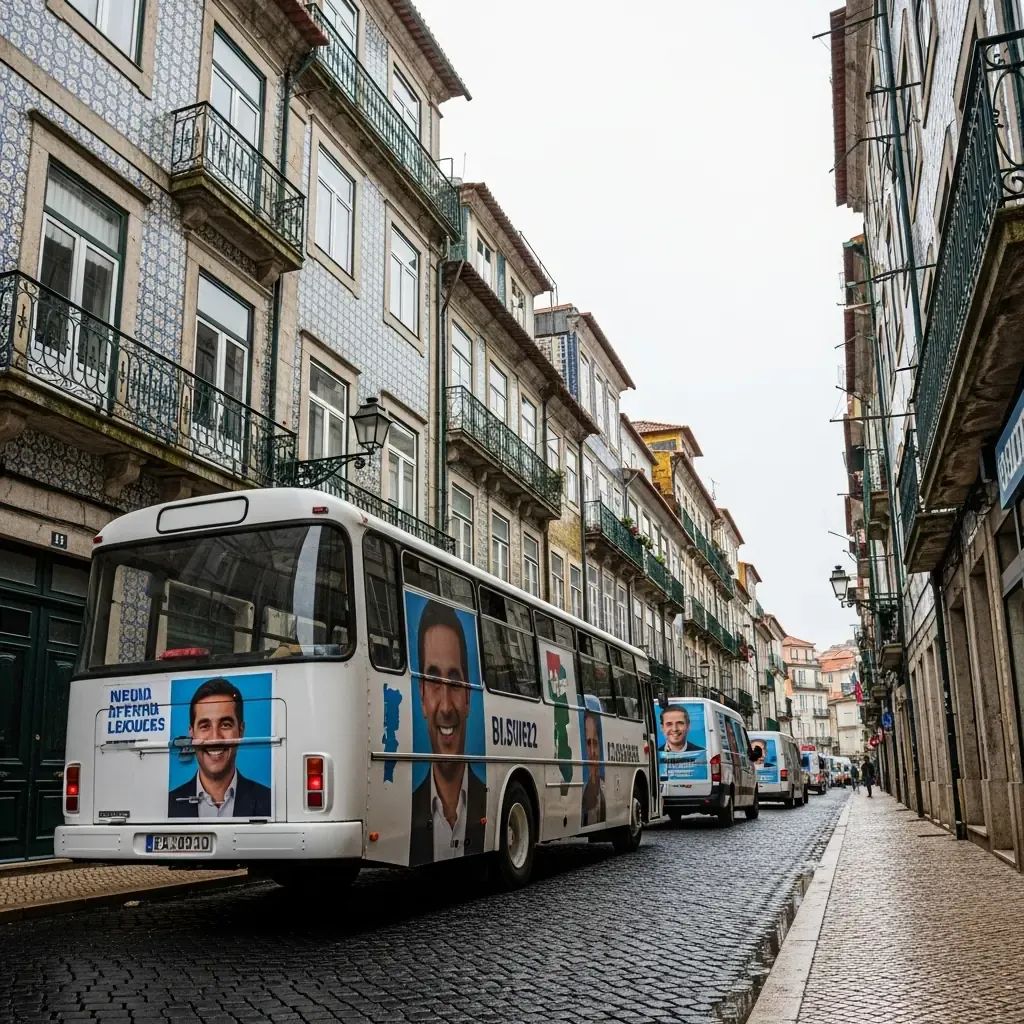
The sprint toward Portugal’s presidency shifted up a gear this weekend. Forty-eight hours after António José Seguro and André Ventura drew a nationwide TV audience rarely seen outside prime‐time football, the second-round campaign finally hit the streets. Over the next nine days voters will be bombarded with rallies, caravans and social-media live-feeds as the country decides who moves into Belém on 9 March.
Where we stand at the opening whistle
• Second-round window: 28 Jan – 6 Feb
• Run-off election day: 8 Feb
• Front-runner: António José Seguro (PS) on roughly 51-58 % in most polls
• Challenger: André Ventura (Chega) climbing toward the mid-30 % range
• Only debate: Watched by 2.3 M viewers, making it 2026’s second most-seen programme
• Wildcards: High abstention risk, undecided bloc of 7-8 %, potential surge in protest votes
Campaign kicks off on heels of a ratings juggernaut
Barely a day after the televised duel riveted households from Bragança to Faro, campaign buses were already rolling through rain-soaked Aveiro and sunny Évora. Party strategists concede that the debate produced no viral knockout, yet it crystallised the choice: “presidência de consenso” versus “presidência de ruptura”. Both camps expect the intense media spotlight of that broadcast—Portugal’s most-watched political event in 13 years—to boost first-week visibility.
Two candidates, two visions
Seguro, the centre-left former Socialist leader, frames himself as guardian of the Constitution, promising to shield the SNS, accelerate energy transition and act as broker between parliament’s fractious blocs. Ventura, the right-wing populist firebrand, vows tax cuts, a tougher line on immigration, and an anti-system crusade he claims will “put Portugal first.” Their contrasting tones were on display in the debate: Seguro’s measured cadence versus Ventura’s staccato sound-bites about “elites against the people.”
Polls: comfortable lead or tightening race?
Surveys published since the debate show a stable advantage for Seguro but also momentum for Ventura:
• SIC/Expresso (30 Jan): 51 % Seguro, 27 % Ventura, 8 % undecided
• Universidade Católica tracking poll: Seguro dips to 54 %, Ventura inches up to 33 %, with blank/nul votes rising
• CNN barometer: Small swing of 1.5 pp from Seguro to abstention rather than directly to Ventura
Pollsters note that the “rejeição Ventura” factor—voters motivated primarily to block the Chega leader—could inflate turnout in urban strongholds such as Lisbon and Porto.
What is at stake for everyday life in Portugal
Beyond personalities, the presidency will influence:
Budget vetoes: The next head of state can send spending bills back to the Assembleia.
International credibility: Investors eye Belém’s occupant when pricing sovereign debt.
Labour reform oversight: Unions fear a Ventura victory could soften worker protections; business groups worry that a Seguro win might slow deregulation.
Immigration frameworks: The president’s promulgation power will determine how far a future Regularisation Law goes.
Analysts: debate clarified, but didn’t convert
Political scientist Bruno Ferreira Costa calls the showdown a “missed opportunity to reshape trajectories,” arguing that each candidate reinforced—rather than rewrote—narratives. Media scholar Carla Martins adds that the record audience “froze opinion, it didn’t melt it,” because viewers mainly tuned in to validate existing leanings. Even so, she warns that the optics of Ventura’s aggressive posture could galvanise peripheral districts where anti-system sentiment runs high.
Voter logistics: practical notes before 8 February
– Postal ballots for emigrants must arrive by 5 Feb.– Early in-person voting will open at parish councils nationwide on 2 Feb.– Electronic voter cards can be downloaded via the Autenticação.gov app.– Polling stations run 08:00-19:00; IDs accepted include cartão de cidadão or EU passport.
The road ahead
Over the coming week Seguro will tour the Alentejo hinterland under the banner “Unir Portugal,” while Ventura plans nightly rallies from Barreiro to Braga tagged “O Povo Decide.” With abstention looming as the true third candidate, both teams have already allocated part of their advertising budgets to last-minute ride-share vouchers aimed at younger electors.
Whether Portugal chooses continuity or rupture, the outcome will echo far beyond Rua de Belém 84. For now, residents can expect nine days of slogans, social-media skirmishes and—if the heavens cooperate—one or two improvised concerts in town squares. The only certainty is that the presidential caravan has left the starting line—and the finish tape is already in sight.


