

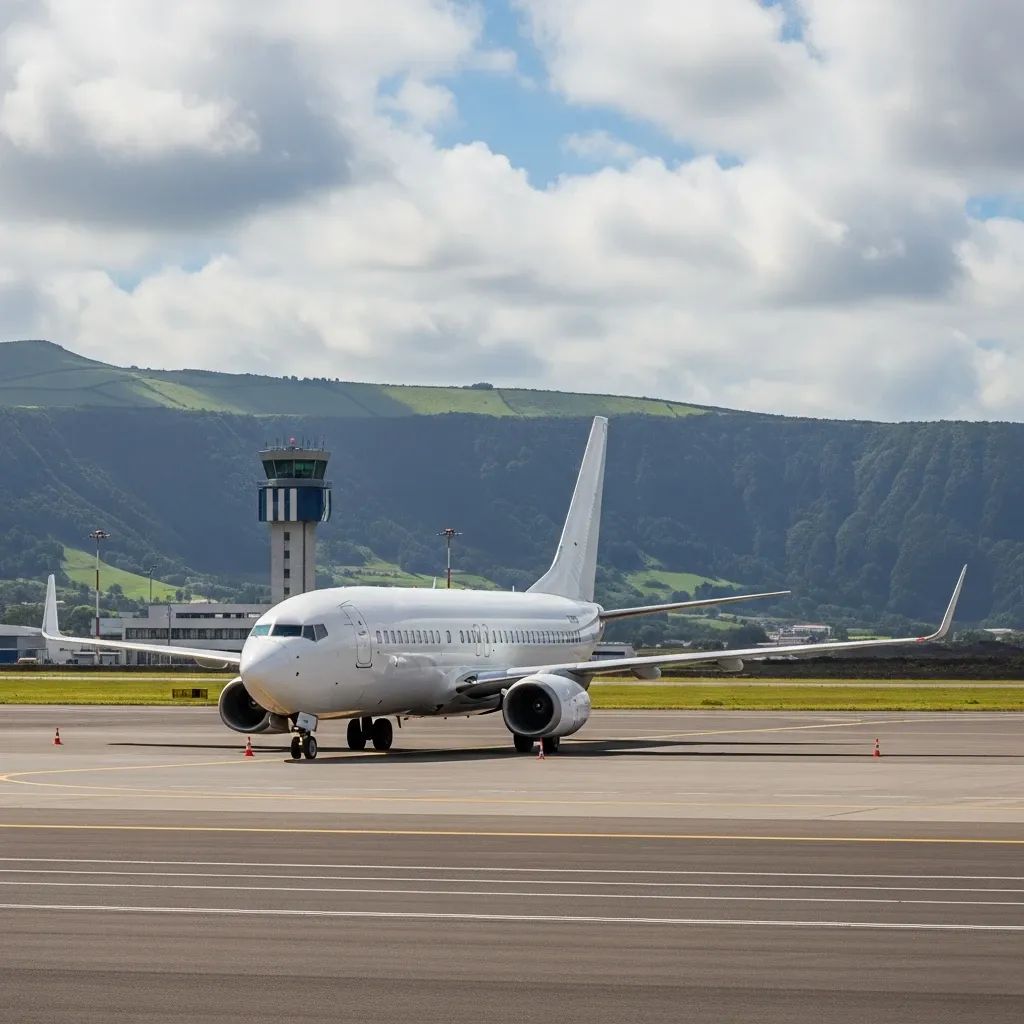
Flying to the Azores may soon become a pricier and less convenient affair for residents on the mainland and islanders alike, as Ryanair threatens to ground every one of its routes to the archipelago. The Irish carrier blames spiralling airport charges and what it calls governmental indifference; Lisbon insists the numbers do not add up. While the two sides trade accusations, local businesses in Ponta Delgada are already bracing for a tourism slump.
What exactly is on the chopping block?
Six seasonal and year-round links between São Miguel and cities such as London, Brussels, Lisbon and Porto could disappear on 29 March 2026. Ryanair’s commercial chief Jason McGuinness says the airline will “redeploy” aircraft to lower-cost bases on the continent unless fees fall. The company claims ANA – the French-owned operator of Portugal’s airports – has pushed island charges up by as much as 35 % since the pandemic.
Why fees became the flash-point
For Ryanair, airport costs are the difference between €19 flash tickets and an unviable route. The carrier lists three aggravating factors:
Regulated airport tariffs in the Azores that it says no longer reflect low-cost realities.
A €2 environmental levy approved in Lisbon during the COVID downturn.
A 120 % jump in air-navigation fees administered by NAV, Portugal’s air-traffic agency.
Government officials counter that the Azorean terminal charge is €8.14– among the cheapest in Europe – and that no increase is foreseen for 2026. They also underscore that Eurocontrol, not Lisbon, sets most navigation costs. The result is a numbers duel that passengers can scarcely decipher.
Island economy in the line of fire
Losing Ryanair’s capacity would strip roughly 400,000 seats a year from an archipelago that lives off tourism, agriculture and diaspora traffic. Hoteliers warn of an earnings shock, while the Association of Local Accommodation already detects a slowdown in 2026 bookings. Beyond holidaymakers, Azorean residents fear fewer affordable options for medical travel, study or family gatherings on the mainland.
ANA and the government push back
Both ANA and the Ministry of Infrastructure say they were “surprised” by the ultimatum. ANA argues that its Azores fees are the lowest in its network, remained flat in 2025 and are frozen for 2026. Privately, executives suggest Ryanair’s threat is part of a European bargaining strategy aimed at wringing larger discounts. Lisbon’s stance is equally firm: “No ultimatums”, says an Infrastructure spokesman, hinting that public money will not subsidise private profits.
The broader European chessboard
Ryanair’s move is not an isolated tantrum. This winter it is trimming flights to Vigo, Santiago, Berlin and Dortmund and plans to exit Brive, Bergerac and Strasbourg in France. Chief executive Michael O’Leary has made no secret that aircraft will be shifted to markets “that reward growth”. Industry analysts note that Portugal’s regulated charges now exceed Madrid’s and Barcelona’s for short-haul traffic, eroding the price advantage that once lured low-cost giants.
What it means for travellers in Portugal
Holidaymakers booking island escapes may confront higher fares and fewer departure times from spring onward. Inter-island carrier SATA and TAP Air Portugal still link Ponta Delgada with Lisbon and Porto, but neither can match Ryanair’s promotional pricing. Three new entrants – Austrian Airlines, WestJet and Air Canada – promise additional capacity in the summer peak, yet their long-haul focus will not fill the budget gap on domestic hops.
Is a last-minute compromise possible?
Negotiations remain open. Regional tourism secretary Berta Cabral insists dialogue continues, albeit without “visible progress”. ANA has floated ideas ranging from volume rebates to off-peak incentives. Ryanair, meanwhile, has pencilled the Azores exit into its March 2026 schedule update but can still reverse course with 45 days’ notice.
If no deal emerges, Portugal could become an instructive case study in how airport pricing, national policy and airline brinkmanship intersect – and in how quickly an outermost region’s connectivity can hang in the balance.


