

Portugal's accommodation sector closed February with €299.4M in total revenue, marking a 4.3% year-on-year increase despite weather disruptions and a shifting tourism landscape that saw Brazilian visitors surge while French arrivals plummeted.
Why This Matters
• Revenue momentum: Total accommodation income rose 4.3%, with room revenue specifically up 4.0% to €216.7M—signaling pricing power even as guest volumes grew modestly.
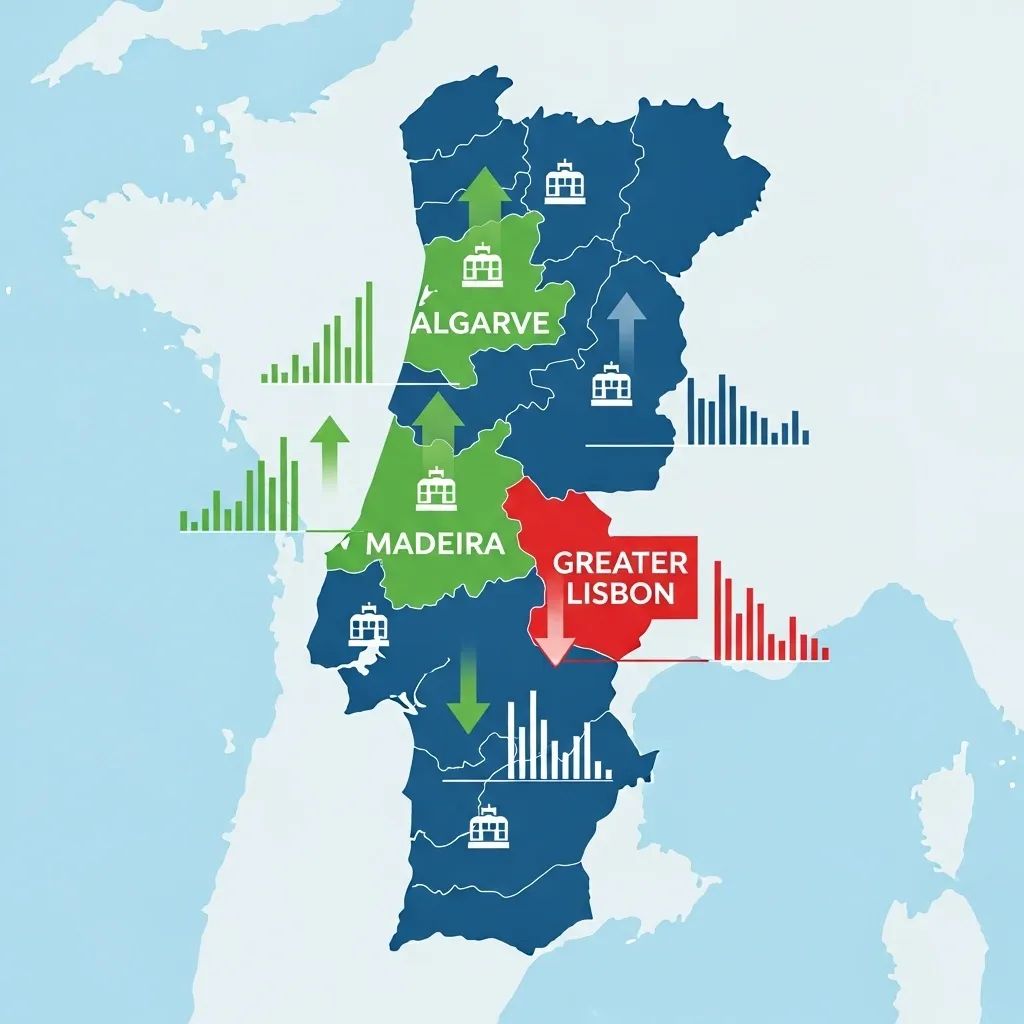
• Regional disparity: Alentejo and the North saw overnight stays climb above 3%, while the Azores and Central Portugal dipped, reflecting uneven tourism distribution.
• Weather impact: 90 municipalities hit by severe weather in January and February accounted for 10.1% of February stays, down slightly from 2025—suggesting some tourist avoidance of affected areas.
Revenue Outpaces Guest Growth
The Portuguese National Statistics Institute (INE) released rapid tourism indicators today showing that while overnight stays in February increased just 1.3% to 4.2 million and guest arrivals rose a modest 0.8% to 1.8 million, accommodation providers squeezed more revenue per visitor. Room revenue climbed to €216.7M, a 4.0% gain, while total receipts—which include food, beverage, and ancillary services—reached €299.4M.
This revenue-guest gap indicates that hotels across Portugal increased prices. The average daily rate (ADR)—what guests pay per occupied room—hit €89.60, up 2.5% from February 2025. For the hospitality sector, this represents a positive sign that pricing increases have held even as volumes remain modest.
Domestic and International Demand Both Rise
The 1.3% uptick in overnight stays came from both resident and non-resident travelers. Portuguese nationals generated 1.4 million overnight stays in February, a 3.2% increase—though slightly softer than January's 4.2% surge. Foreign visitors accounted for 2.8 million stays, climbing 0.4% after a 0.8% gain the prior month.
This dual-source growth matters for the sector's stability. Domestic tourism provides a steady base that can help offset fluctuations in international arrivals. The continued uptick in Portuguese travelers suggests confidence in travel spending despite ongoing economic pressures across Europe.
Brazilian Boom, French Slump
Market-level shifts were dramatic. Brazil led all source countries with a 29.6% surge in overnight stays, the strongest performance among Portugal's top tourism feeders.
Conversely, France—one of Portugal's largest traditional markets—posted a 16.7% decline, the steepest drop among major origins. This pullback marks a notable shift in Portugal's visitor composition.
Other key markets showed mixed results, though INE did not break out detailed figures for Spain, the United Kingdom, Germany, or the United States in the rapid release.
Regional Performance Splits North-South
Geography mattered. Alentejo saw overnight stays jump 4.2%, the highest regional gain. The North region rose 3.4%, driven by Porto and offerings in surrounding areas.
In contrast, the Azores dropped 3.4% and the Central region fell 1.9%. These declines reflect regional variations in tourism demand during the shoulder season.
The Algarve and Lisbon metropolitan area, while not detailed in the rapid release, typically dominate volume and likely contributed substantially to the 2.8 million non-resident stays.
Weather Weighs on 90 Municipalities
Severe weather events in January and February—including flooding, landslides, and high winds—affected 90 municipalities across Portugal. These areas collectively captured 10.1% of February's total overnight stays, a 0.3 percentage-point drop from February 2025. The decline suggests some travelers avoided or postponed trips to impacted zones, though the overall effect on national figures was contained.
INE noted that February's results may have also been influenced by the shifting Carnival holiday calendar, which affects when Portuguese families take short breaks.
January–February Cumulative Outlook
Through the first two months of 2026, total accommodation revenue reached €575.9M, up 4.9% from the same period in 2025. Overnight stays climbed 1.6% to 8.0 million. The cumulative view confirms a modest but consistent growth trajectory for Portugal's tourism sector entering the spring high season.
The 4.9% revenue gain against a 1.6% volume increase underscores that operators are capturing more value per guest. For tourism-dependent municipalities, this translates to higher bed taxes and increased economic activity.
What This Means for Residents
Portugal's tourism sector remains a key pillar of the national economy, contributing significantly to employment and GDP. The revenue gains indicate the industry is focused on capturing value from visitors.
For residents, tourism growth directly supports jobs in hospitality, retail, and transportation. The regional divergence—Alentejo and the North gaining ground while the Azores and Center experience declines—suggests that tourism activity is gradually spreading to new areas, potentially benefiting interior regions that have historically received fewer visitors.
Looking Ahead
March and April will clarify whether February's performance reflects seasonal patterns or deeper market shifts. The spring and summer booking window is now open, and early demand patterns will help shape expectations for the remainder of 2026.
Portugal's tourism sector enters the high season with steady pricing power and a diversified international visitor base. For investors, operators, and policymakers, the focus remains on converting tourism growth into sustainable economic benefits across the country.


