
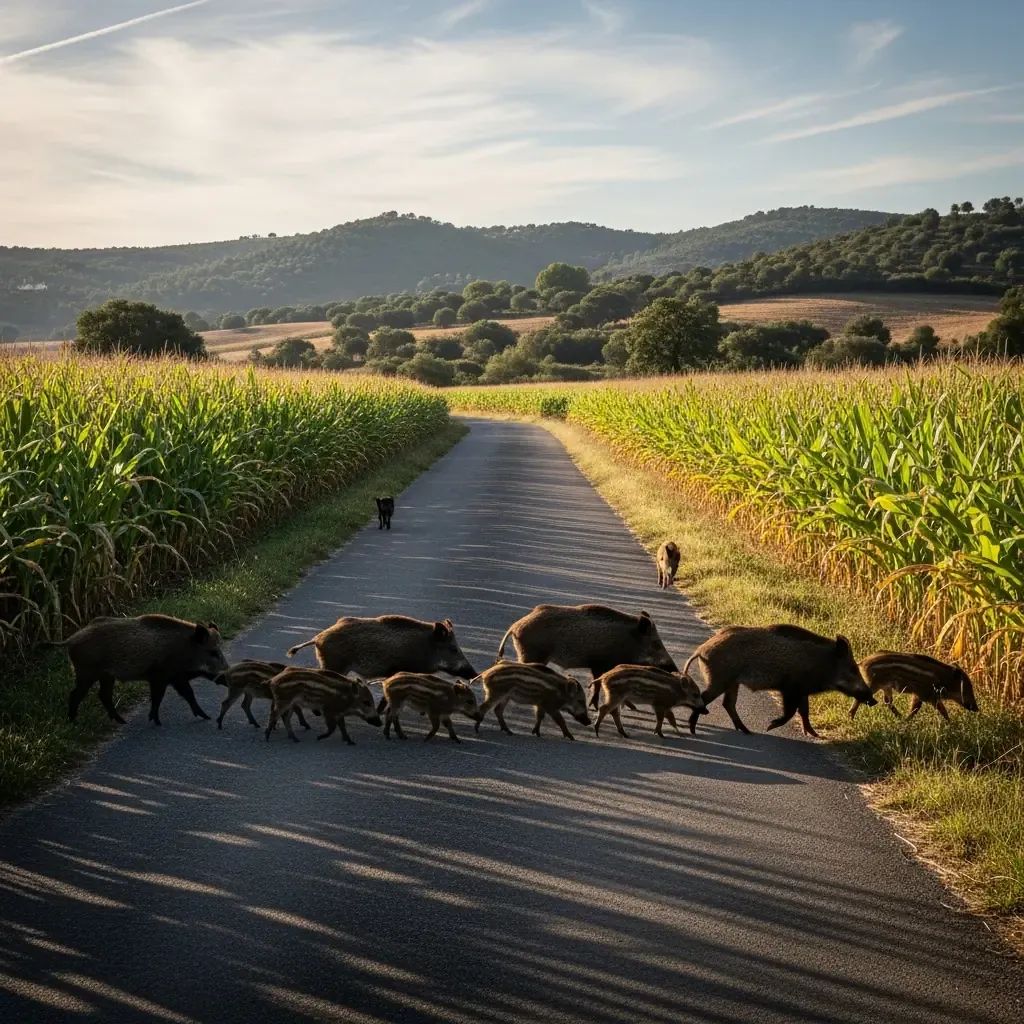
Wild boar are no longer the shy forest dwellers most of us remember. Their continental population has ballooned to almost 20 million, and Portugal alone is hosting an estimated 395 000–400 000 animals—numbers that are beginning to shape rural policy, insurance costs and even weekend plans.
What that means in practice? Bigger herds, louder debates and a growing list of bills to pay.
• Crop losses already top €8 M a year• More than 80 % of wildlife-related road crashes involve boar• Government aims to cut numbers by up to 20 % within a decade
An Old Feral Story with New Numbers
Europe’s Sus scrofa comeback dates to the early 1990s, but recent mapping by an international research team served as a wake-up call: the continent now supports between 13.5 M and 19.6 M animals before the hunting season even starts. In the Iberian Peninsula the density band stretches from Catalonia to the Alentejo in what scientists describe as an area of “extreme abundance.” Warmer winters, abundant maize fields and fewer apex predators all create what wildlife biologists bluntly call boar heaven.
Why the Herd Keeps Growing
Reproductive super-power — sows can produce two litters a year.Abandoned farmland — rural exodus leaves more cover and food.Milder winters — climate change raises piglet survival.No natural checks — wolves are scarce, lynx ignore 100-kilo prey.Supplementary feeding — hunters who bait for deer often fatten boar instead.These drivers, reinforced over decades, explain why traditional hunting bags—around 50 000 boar annually in Portugal—barely dent the curve.
Portugal’s Hotspots: From Trás-os-Montes to the Alentejo
A 2025 density map released by the Instituto da Conservação da Natureza e das Florestas (ICNF) pinpoints three pressure zones: Trás-os-Montes, Beira Interior and Baixo Alentejo. Farmers in the Centre say the situation escalated after the 2017 fires, when displaced boar raided newly seeded plots. In coastal districts such as Setúbal and Aveiro, night-time CCTV regularly captures animals rummaging through condominium waste bins, signalling a shift from rural nuisance to peri-urban risk.
Counting Consequences: Money, Maize and Motorways
The National Maize Growers’ Association (ANPROMIS) calculates that boar gobbled about €8 M worth of grain in 2024, matching the previous year’s loss. Forestry managers report “tens of thousands of euros” in sapling damage, while insurance data show that more than 4 in every 5 wildlife collisions on Portuguese roads involve a wild boar. Veterinary authorities add a final warning: a local outbreak of African swine fever could freeze Portugal’s €400 M pork export market overnight.
The Cure—or the Hunt? Management Plans Under Scrutiny
Lisbon approved a re-write of hunting legislation in 2024, expanding esperas and batidas to almost year-round availability and allowing small tourist reserves (<400 ha) to target boar. The Strategic and Action Plan for Wild Boar, drafted by the University of Aveiro, recommends lifting the annual extraction rate by 20 %–30 %. Yet farm lobbies complain the plan is “on paper only,” while environmental NGOs fear blanket culls could harm non-target fauna. ICNF insists that “adaptive quotas” will balance biodiversity with public safety.
Outlook: Is a 20 % Cull Realistic?
Wildlife economists note that even a 10 % annual reduction requires roughly 30 000 extra animals to be taken each season—demanding more hunters, better carcass disposal and stricter food-safety checks. Neighboring Spain tried a similar push in 2022; preliminary figures suggest densities dipped briefly before rebounding.For Portugal, the real test will arrive in the spring sowing of 2026: if damage claims fall, policymakers will know the new rules bite. If not, the country may have to consider bolder moves, from contraceptive trials to state-funded sharpshooters. Either way, the story has outgrown the forest edge—and so have the boar.


