Infraestruturas de Portugal (IP) has closed the books on a month-long crisis that saw over 4,200 incidents across the nation's road and rail networks since late January 2026. The damage assessment, completed in mid-February 2026, indicates that critical routes will remain shut for months, with full recovery extending into late 2026.
Why This Matters:
• 44 road sections remain closed (1.21% of the national network), with major geotechnical repairs expected to continue into late 2026.
• Rail lines remain significantly disrupted, including the Douro Line and Beira Baixa Line, with full service restoration timelines extending into late 2026.
• 18 deaths linked to the triple-storm sequence (Kristin, Leonardo, Marta) that battered Portugal from late January through mid-February 2026.
• Commuters and freight operators face prolonged detours and service disruptions, particularly on routes linking Lisbon, Coimbra, and Porto.
The Impact of the Triple-Storm Sequence
Three successive Atlantic depressions—Kristin, Leonardo, and Marta—struck Portugal between late January and mid-February 2026, transforming the nation's transport network into a casualty of collapsed embankments, flooded tunnels, and severed catenary lines. The sequential storms left 18 people dead, hundreds injured, and thousands displaced.
IP's Traffic Control Centre logged 3,632 road incidents on the 13,000 km national highway network since January 21, 2026, ranging from pavement buckling to hillside collapses. The rail network, meanwhile, absorbed 633 occurrences between January 28 and February 15, 2026, with the most severe cases requiring extended structural intervention rather than routine repairs.
Where the Network Stands Now
Roads: A Patchwork of Progress and Ongoing Challenges
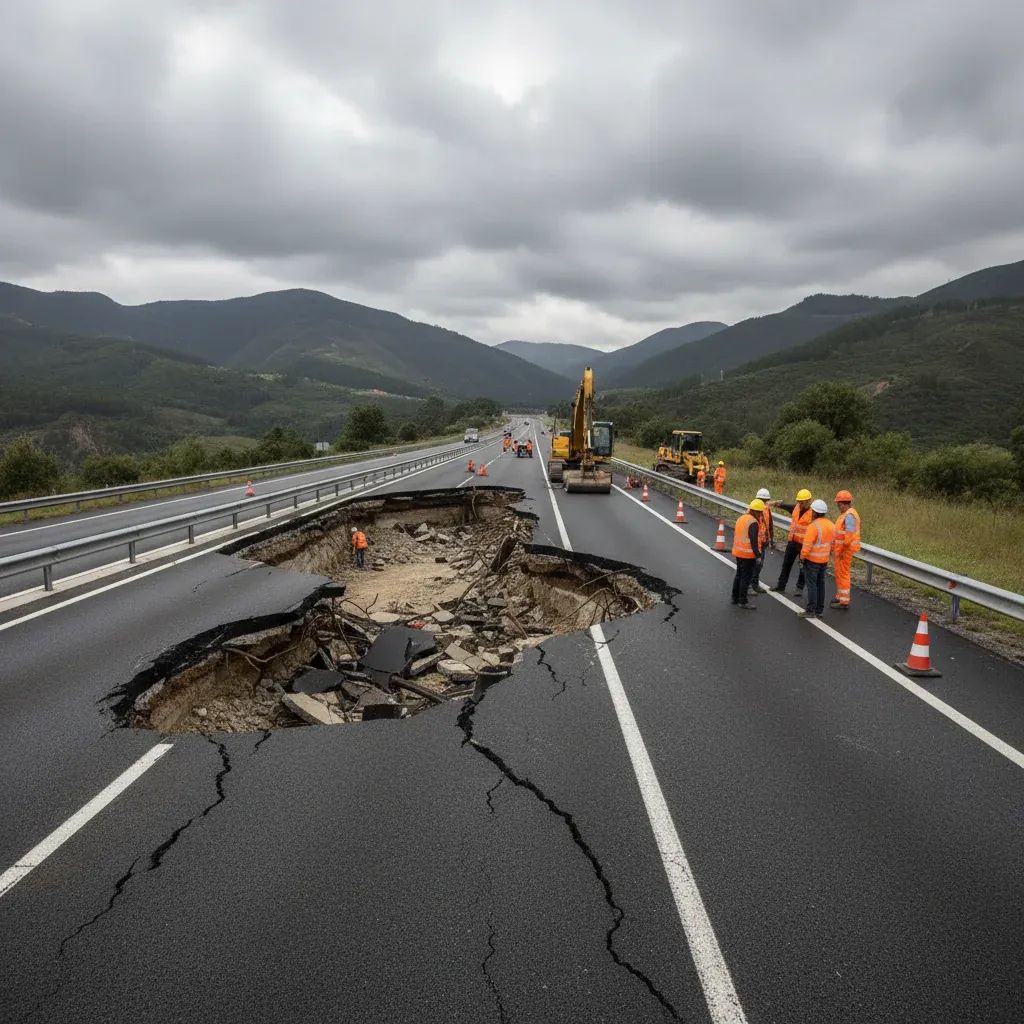
The damage assessment shows 98% of initial incidents have been addressed, but the remaining critical closures represent significant disruptions. Thirty-six closures stem from structural failures requiring geotechnical intervention, while others reflect temporary safety assessments.
IP mobilized extensive resources, deploying significant personnel and equipment daily to address damage across the network. The Traffic Control Centre fielded over 15,000 emergency calls in the immediate aftermath—a volume typically seen across an entire winter season.
Yet the most challenging work remains ahead. Zones in the western Lisbon district and across Central region municipalities face "prolonged interventions due to the scale and technical complexity of damage," according to IP. Translation: expect lane closures, weight restrictions, and detours through the remainder of 2026.
Rail: The Long Road Back
The rail picture presents significant disruptions. Of the 633 incidents recorded, numerous remain unresolved, with some involving damage so severe that detailed engineering assessments are still ongoing.
The Trouble Spots
Linha do Oeste (West Line): Suspended since January 28, 2026, affecting commuter and freight traffic between Lisbon and Figueira da Foz. Recovery timelines remain under assessment.
Linha do Douro (Douro Line): Remains closed due to slope stability assessments along the valley's steep terrain. Engineers are evaluating embankment integrity following the extreme weather event. The scenic route is vital for tourism and regional connectivity.
Linha da Beira Baixa (Lower Beira Line): Significant damage assessment is underway. Repairs will take considerable time, leaving interior towns reliant on road alternatives.
Linha do Norte (North Line): Some services have resumed, but long-distance intercity trains between Lisbon and Porto remain suspended, with restoration timelines extending into late 2026. The line suffered flooding and infrastructure damage requiring structural assessment.
What This Means for Residents
Immediate Impact
If your commute or freight logistics depend on affected routes, alternative transport options are operating with extended travel times. Bus substitutes and road alternatives are available but add significant time to journeys. Freight shippers face additional costs for alternative routing.
Medium-Term Disruptions
IP continues daily field interventions addressing emergency repairs, slope stabilization, and signal system restoration. The agency emphasizes that "structural interventions and rigorous safety verification" will determine reopening schedules.
For residents in affected municipalities, disruptions extend beyond transport networks. Power and communications infrastructure also sustained damage, compounding service interruptions.
Long-Term Outlook
Recovery efforts are ongoing, with repair timelines extending into late 2026 for the most heavily damaged sections. The government has declared a state of calamity for affected municipalities to facilitate emergency procedures and expedite recovery efforts.
The focus is now on systematic assessment and reconstruction to restore full service capacity. Authorities are prioritizing infrastructure restoration while implementing ongoing safety evaluations.
Regional Impact
Centro Region: Bore significant impact, with District of Leiria experiencing the most severe conditions. Wind speeds reached notable levels, and flooding affected multiple municipalities including Montemor-o-Velho.
Lisbon Metropolitan Area: Recorded substantial incidents during the storm sequence. Flash flooding affected low-lying neighborhoods, and river systems exceeded normal levels.
North Region: Districts including Braga, Viana do Castelo, Vila Real, and Guarda faced severe winter conditions with significant precipitation at higher elevations. Mountain roads experienced considerable disruption.
What Comes Next
IP emphasizes that the majority of the network is operational, but residual damage will continue affecting travel patterns through late 2026. Expect:
• Ongoing traffic management on repaired sections as engineers monitor stability and settlement.
• Revised service schedules for rail lines where safety assessments are ongoing.
• Continued detours and restrictions on affected routes until full structural integrity is confirmed.
• Increased monitoring of slope stability along critical routes.
For residents, recovery will be gradual. The government's support measures aim to accelerate reconstruction while maintaining rigorous safety standards. The imperative is ensuring that repairs are done thoroughly and correctly to prevent future issues.
As Portugal addresses the aftermath of the January-February 2026 storms, the focus remains on restoring full service capacity by late 2026 while implementing the necessary safety protocols to protect residents and ensure network reliability.