
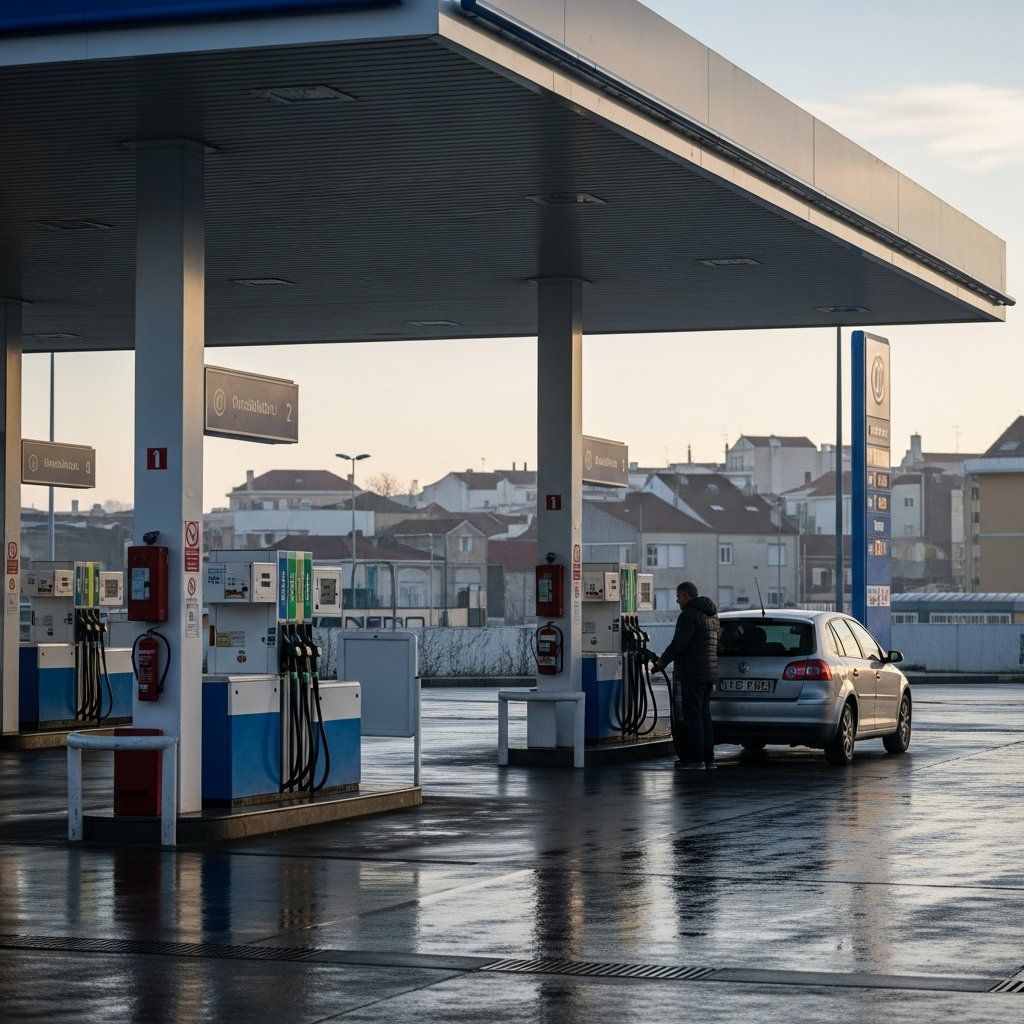
The Portugal Ministry of Finance has rolled out a fresh fuel tax cut—trimming €0.0355 per liter off diesel—despite years of Brussels pushing Lisbon to phase out fossil fuel subsidies. Finance Minister Joaquim Miranda Sarmento told reporters in Brussels that he expects no pushback from the European Commission, framing the measure as a short-term emergency response to oil prices breaching $100 per barrel amid renewed Middle East instability.
Why This Matters
• Diesel drivers save roughly 3.6 cents per liter at the pump on mainland Portugal—enough to shave around €1.80 off a 50-liter fill-up.
• The cut is "extraordinary and temporary," according to Sarmento, meaning it's designed to sunset once the geopolitical crisis eases.
• Brussels has long demanded Portugal scrap fuel-tax relief, citing distortions to competition and contradictions with EU decarbonization goals.
• Portugal informally notified the Commission, but no formal state-aid clearance was sought, raising questions about compliance and precedent.
What This Means for Residents—Right Now
For now, diesel buyers on the mainland pocket a modest saving—roughly €0.036 per liter—that offsets part of the recent surge. Petrol is excluded, as are the Atlantic islands. The measure took effect immediately after the Friday announcement, so anyone filling up this week has already seen the discount reflected at the pump.
The bigger question is durability. If Middle East hostilities drag on and Brent crude stays elevated, the government may face political pressure to extend or deepen the cut, especially ahead of any electoral calendar. Yet every month the discount persists increases the likelihood of a formal Commission challenge. Portugal's 2026 State Budget omitted a sunset date for the existing ISP relief, leaving open-ended exposure that Brussels views as incompatible with state-aid discipline.
Conversely, if oil retreats below $80 per barrel—a scenario some analysts consider plausible if the Strait reopens or OPEC+ raises output—the Finance Ministry will likely let the discount expire without fanfare, declaring mission accomplished. That would preserve Lisbon's narrative of crisis-only intervention while avoiding a protracted legal skirmish with the Commission.
How to Track the Discount's Fate
• Monitor pump prices regularly through fuel station apps or price-tracking websites to confirm when the discount ends or changes.
• Check announcements from the Portugal Revenue Department (Autoridade Tributária) for official notices on any extension or termination.
• Follow EU state-aid developments through the European Commission's state-aid register, which logs formal decisions affecting member states.
• Budget conservatively: Treat the savings as a temporary windfall, not a permanent reduction in fuel costs. Avoid making long-term transport or business decisions based on this relief.
• Consider alternatives if prices spike again: Investigate public transport passes, carpooling schemes, or fuel-efficient vehicle options as backup strategies.
EU Regulatory Reality
Under European Union rules, any tax relief that provides a selective advantage and distorts competition across member states is classified as "state aid" and must be formally approved by the European Commission. Portugal's approach—informally notifying Brussels rather than seeking formal clearance—carries legal risk. If the Commission later objects, the government could face EU fines or be forced to cancel the discount retroactively, meaning drivers would owe back the tax differential.
The Commission's official position remains unchanged: member states should dismantle blanket fuel-tax cuts and avoid creating incentives that prolong fossil dependence. Temporary, crisis-driven interventions are tolerated only when strictly time-limited, narrowly targeted, and transparently communicated.
Regional Context and Comparative Response
Germany is bracing for an 11.1% jump in wholesale electricity prices in 2026, hitting €102 per megawatt-hour. Fitch Ratings warned that power-market volatility across the continent will intensify in the near term, driven by the same geopolitical friction squeezing oil supplies. Other capitals have so far refrained from announcing fuel-tax cuts, though industry groups in France and Spain have lobbied for similar relief.
Portugal's move sets a potential precedent. If the Commission tacitly accepts a temporary diesel rebate as compatible with EU rules during supply shocks, other member states may cite Lisbon's example to justify their own interventions. Alternatively, if Brussels formally objects—demanding immediate withdrawal or retroactive notification—Portugal could face an enforcement procedure and be ordered to repay forgone revenue.
What Comes Next
Sarmento's gambit hinges on oil prices receding before the Commission's patience runs out. If Brent falls and the discount sunsets by summer, Lisbon emerges unscathed, having cushioned voters through a volatile quarter without triggering a formal state-aid probe. If prices stay high and the measure rolls into autumn—or if other member states pile on with their own rebates—Brussels may issue a sweeping clarification that temporary means weeks, not months, and demand uniform withdrawal.
For residents, the practical takeaway is straightforward: enjoy the relief at the pump, but don't bank on it lasting. The Portugal Revenue Department has not published revenue-impact estimates, though analysts peg the monthly cost at several tens of millions of euros in foregone ISP and knock-on VAT. That's manageable in a buoyant fiscal environment but awkward if broader economic conditions deteriorate or if the Commission tightens enforcement and requires repayment.
In the meantime, drivers should monitor both pump prices and the Commission's quarterly state-aid scoreboard for any formal correspondence between Lisbon and Brussels. The absence of a formal notification filing suggests the government is treating this as a general tax measure rather than selective aid—a legal strategy that works only if the Commission agrees. If it doesn't, the stakes for Portuguese motorists and transport operators could rise substantially.


