
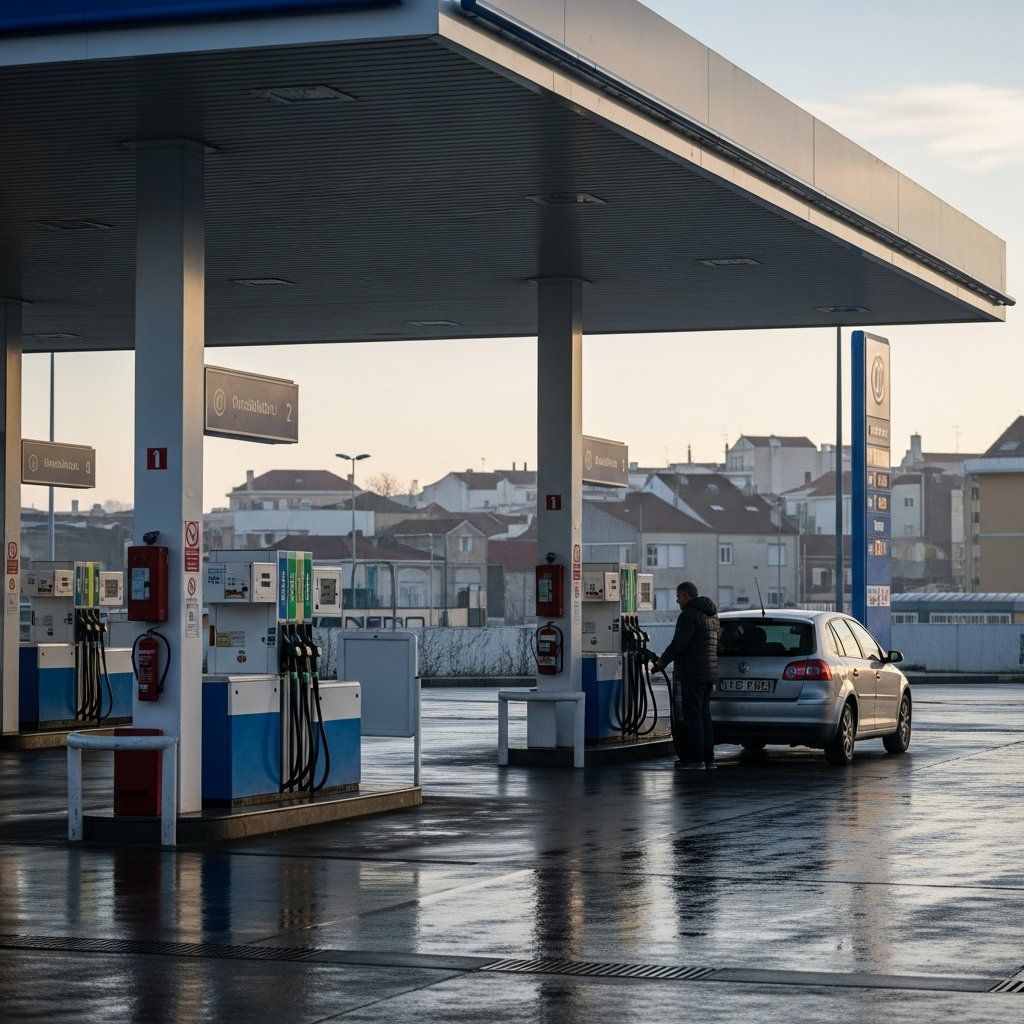
Portuguese motorists expecting a festive price dip at the pump are instead bracing for a fresh tax bump. Lisbon has begun dismantling the two-year-old fuel-tax discount, a move choreographed with Brussels that promises extra cash for the Treasury but squeezes household budgets already stretched by higher mortgage costs and food inflation. Below is what changes, why it matters and how Portugal stacks up against its European neighbours.
Snapshot in Seven Lines
• Gradual rollback of the Imposto sobre Produtos Petrolíferos e Energéticos (ISP) rebate started in early December
• Gasoline tax rose about 1.6 cêntimos per litre; diesel more than 2 cêntimos
• Full phase-out will last until 2026
• State expects €1.1 B extra revenue next year
• Pressure came from the European Commission
• Portugal will still rank among Europe’s highest-tax fuel markets
• Transporters warn of higher freight and food prices
Why the Fuel Tax Climb Matters Now
For drivers in Lisbon, Porto or the A22 in the Algarve, the ISP reversal lands just as winter commuting costs rise. Households, reliant on both diesel-powered vans and gasoline cars, face tighter budgets amid stubborn inflation. The holiday travel season magnifies every extra cent at the pump, making the timing politically sensitive and economically painful.
From Emergency Relief to Fiscal “Normality”
The rebate was born in 2022, when the pandemic, the Ukraine war and spiking oil prices collided. Then-PM António Costa dubbed it a temporary shield. Now the European Commission insists that subsidies for fossil fuels clash with climate targets and single-market rules. Hence Lisbon’s pledge to unwind the ISP cut “gradually”, cushioning the shock while signalling compliance with Brussels.
The Slow Squeeze: Timeline of Increases
December 2023 marked the first visible step: unleaded rates climbed to €497.52/1 000 L, diesel to €361.60/1 000 L. Expect further upticks whenever global prices soften—finance officials aim to pair each tax rise with a market lull. By 2026 the rebate will be extinct, and a revised carbon levy will add another turn of the screw. Consumers should watch: VAT, per-litre cents, and weekly pump price bulletins.
Counting the Euros: State Coffers vs Family Wallets
The Ministry of Finance projects about €190 M extra for the 2026 budget from the first step alone, rising to €1.1 B after full rollback. That bolsters the fiscal rulebook and trims the deficit, yet it drains commuters’ pockets. Transporters, represented by ANTRAM, calculate higher freight costs; the ACP says families will save less on weekly fill-ups. In a country where median wages hover near €1 000 net, every cent reverberates.
How Portugal Ranks in Europe
Even after Spain’s push to equalise diesel tax and Germany’s new CO₂ fee, Portugal remains in the high-tax club. Spain, France and Germany all tax fuel heavily, but Portugal’s combined ISP+IVA keeps it near the top of the EU-27 league table. Taxation, not crude, explains why Portuguese per-litre prices rarely undercut the Iberian average, despite the Sines refinery a short drive from the Atlantic.
Voices from the Road
Truckers, farmers and urban consumers reacted in chorus: pocket-book pain. The opposition PS accuses the centre-right government of stealth hikes, while PSD leaders argue the EU left no choice. Protests are rumoured among Algarve fuel-station owners fearing a winter slump. Yet the promised gradualism may cool tempers, at least until the holiday credit-card bills land.
What to Watch in 2026
Everything hinges on the volatile oil price, the strength of the euro, and the coming EU carbon market expansion. A sharper shift toward electric cars could mute demand, but charging-station gaps persist outside big cities. Any new subsidies or a heated legislative election campaign might reshape the timetable. For now, plan on higher pump prices and factor them into household inflation forecasts.


