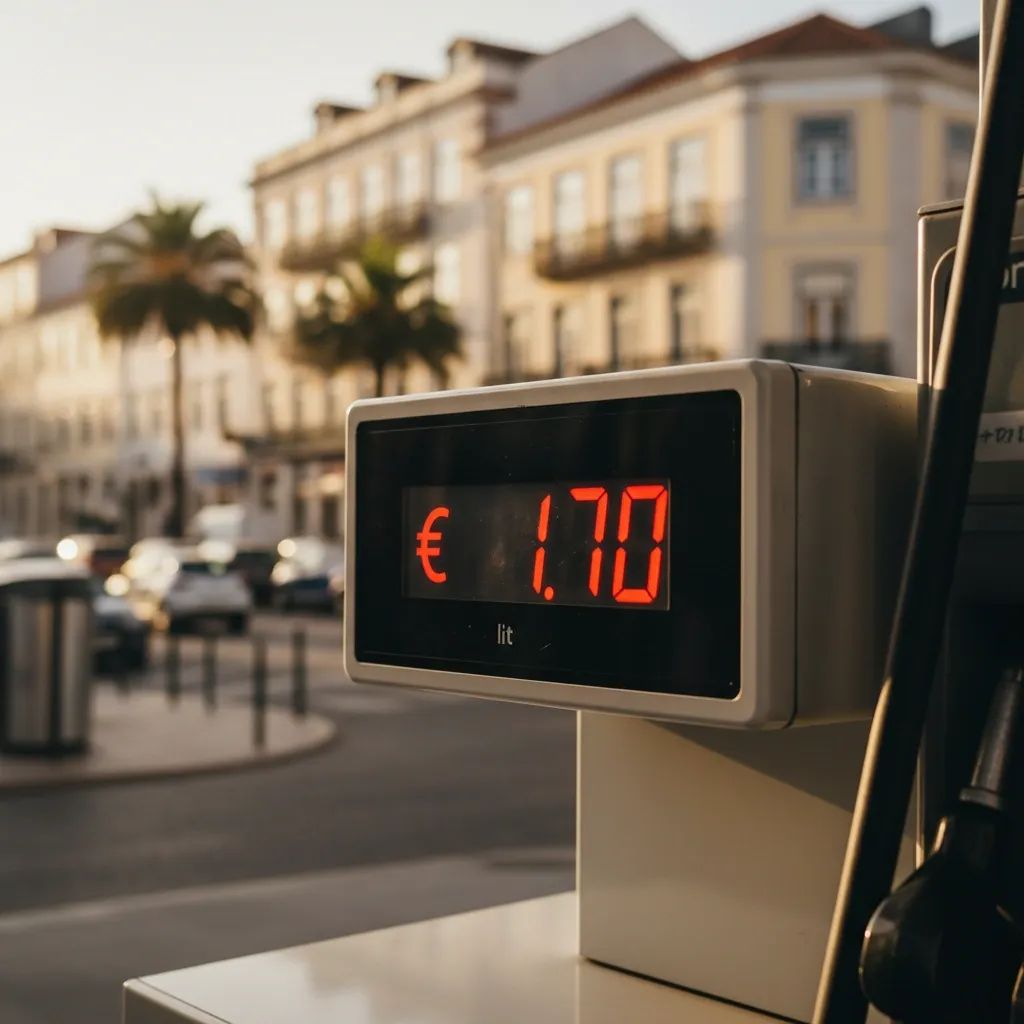
The European Central Bank has held its three key interest rates steady despite accelerating price pressures across the eurozone, a decision announced today that carries immediate implications for mortgages, savings rates, and cost-of-living calculations in Portugal. With inflation now at 3% across the single currency area—and 3.3% in Portugal—the monetary authority is walking a tightrope between controlling runaway prices and avoiding a fresh recession.
Why This Matters:
• Portugal's inflation rate (3.3%) now exceeds the eurozone average, driven by double-digit energy cost spikes of 11.69%.
• The ECB's deposit facility remains at 2%, but markets are pricing in a 25-basis-point hike (a 0.25 percentage point increase) as early as the June 10–11 meeting.
• Energy and food account for the bulk of price increases, with energy inflation hitting 10.9% across the bloc—a direct result of Middle East conflict disrupting global oil supply.
• Households in Portugal face steeper bills: fresh food inflation is now 7.45%, and transport costs continue climbing as fuel prices surge.
The Geopolitical Driver Behind the Spike
The April inflation surge is not a mystery. The ongoing war in the Middle East, particularly escalating tensions involving Iran, has sent oil prices careening toward $115 per barrel in Q2 2026 projections. The Strait of Hormuz, a critical chokepoint for global oil and gas transit, remains a flashpoint, embedding a structural geopolitical risk premium into energy markets.
In Portugal, where energy represents a significant share of household budgets, this translated to an 11.69% year-on-year increase in energy costs in April, up from 5.74% in March. The ripple effect is visible in transport (14% of the Portuguese consumer price index), where fuel price hikes are pushing inflation higher across the board.
Analysts note that the full impact of these oil price shocks may take several more months to permeate headline inflation figures, suggesting further pressure ahead.
How Portugal Compares
Portugal's 3.3% inflation rate in April outpaces the eurozone's 3%, placing it above regional peers like Finland (2.3%), Malta (2.4%), France, and the Netherlands (both 2.5%). Only Bulgaria (6.2%), Croatia (5.4%), and Luxembourg (5.2%) registered higher price growth among the 21 eurozone members.
The divergence is largely structural. Portugal's food and non-alcoholic beverages category carries a 21% weight in the national consumer price index—among the highest in Europe—making the country particularly vulnerable to agricultural commodity and energy shocks. Fresh food inflation climbed to 7.45% in April, up from 6.39% in March, while unprocessed foods rose to 2.42% from 1.38%.
Rent pressures persist as well. The most recent available data from December 2025 showed residential leases had risen 4.9% year-on-year, and economists expect this trajectory to steepen as landlords pass through higher maintenance and utility costs.
What This Means for Residents
The ECB's decision to hold rates at 2% (deposit facility), 2.15% (main refinancing), and 2.40% (marginal lending) offers temporary relief for borrowers with variable-rate mortgages indexed to Euribor. However, the reprieve is likely short-lived. Financial markets are now pricing in up to three rate hikes in 2026, with the first widely anticipated in June.
For savers, deposit rates remain positive in real terms only if inflation retreats. At current levels, a 2% savings account barely offsets the 3.3% erosion of purchasing power in Portugal.
Households reliant on fixed incomes face the steepest burden. Food and energy together represent a disproportionate share of spending for lower-income families, meaning the regressive nature of this inflation cycle hits hardest where budgets are already tight.
The Portugal Revenue Department has not announced compensatory tax relief measures, and wage negotiations in the public sector have yet to catch up with the pace of price growth, leaving many residents in a purchasing-power squeeze.
The Policy Tightrope
ECB President Christine Lagarde confirmed that the April 30 Governing Council meeting featured "long and profound" debate over whether to raise rates immediately. Ultimately, the decision to wait reflects the institution's data-dependent, meeting-by-meeting approach. The central bank is threading a needle: containing inflation without stifling a fragile economic recovery still haunted by 2025's weak growth.
The March 2026 staff projections already revised eurozone inflation expectations upward to 2.6% for the full year, a sharp increase from the 1.9% forecast in December 2025. Energy accounts for the lion's share of that revision.
Downside risks to growth have intensified in parallel. The Middle East conflict poses not only an energy shock but also a broader threat to trade routes and business confidence. Carbon pricing under the EU Emissions Trading System (ETS) adds a structural cost layer: every €10 per tonne increase in ETS allowances translates to roughly 0.8 percentage points of additional energy inflation.
Lagarde has signaled that the June meeting will revisit the rate question, with all options on the table. Markets are pricing in a 25-basis-point increase (0.25 percentage points) as the baseline scenario, which would lift the deposit rate to 2.25% and push Euribor benchmarks higher, feeding through to mortgage costs within weeks.
Sectoral Breakdown: Where Prices Are Moving
Across the eurozone, energy posted the highest annual rate in April (10.9%, up from 5.1% in March). Services inflation held relatively steady at 3%, down slightly from 3.2% in March. Food, alcohol, and tobacco edged up to 2.5% from 2.4%, while non-energy industrial goods rose to 0.8% from 0.5%.
In Portugal, the sectoral picture is sharper:
• Energy: 11.69% year-on-year, the primary driver of the April acceleration.
• Fresh food: 7.45%, reflecting global commodity pressures and domestic supply constraints.
• Transport: Heavily influenced by fuel costs, this category continues to weigh on household budgets.
• Rent and housing: Sticky inflation at 4.9% as of late 2025, with upward momentum expected through mid-2026.
What Residents Should Do
As inflation and interest rate expectations shift, Portuguese residents and expats face critical decisions with direct financial impact:
• Review your mortgage: If you have a variable-rate mortgage linked to Euribor, contact your lender to understand the potential cost increase when rates rise in June. Fixed-rate refinancing options may be available and worthwhile despite early repayment fees.
• Lock in energy contracts: Check whether your electricity and gas suppliers offer fixed-rate contracts. With energy inflation at 11.69%, locking in current rates could protect you from further bill spikes over the next 12 months.
• Adjust your household budget: Food costs (especially fresh produce at 7.45% inflation) and transport expenses are rising faster than wage growth. Consider meal planning strategies and alternative transport where feasible to offset these pressures.
• Reassess savings options: A 2% deposit rate no longer protects your savings from the 3.3% erosion of purchasing power in Portugal. Explore fixed-term savings accounts or alternative investments if appropriate for your situation.
• Track ECB meetings: The June 10–11 meeting is critical. If a rate hike occurs, your mortgage and borrowing costs will rise within weeks. Stay informed through official ECB communications.
What Comes Next
The June 10–11 ECB meeting looms large. If energy prices remain elevated—or escalate further—and inflation expectations continue to drift upward, a rate hike becomes almost inevitable. Financial institutions in Portugal are already adjusting their forward guidance, with some lenders preemptively tightening credit conditions in anticipation of higher borrowing costs.
On the fiscal side, the Portugal Cabinet has yet to announce targeted relief for energy or food costs, though pressure is mounting from consumer advocacy groups and opposition parties to cushion the blow for vulnerable households.
In the near term, residents should brace for continued volatility in utility bills, grocery receipts, and fuel expenses. The trajectory of inflation—and the ECB's response—will hinge largely on factors beyond Europe's control: the duration and intensity of the Middle East conflict, the resilience of global supply chains, and the ability of governments to buffer households without stoking further price pressures.
The April data is a warning shot, not a final verdict. But for anyone managing a budget in Portugal today, the direction of travel is unmistakable: costs are rising faster than policy can contain them, and the next few months will test both the central bank's resolve and households' resilience.