
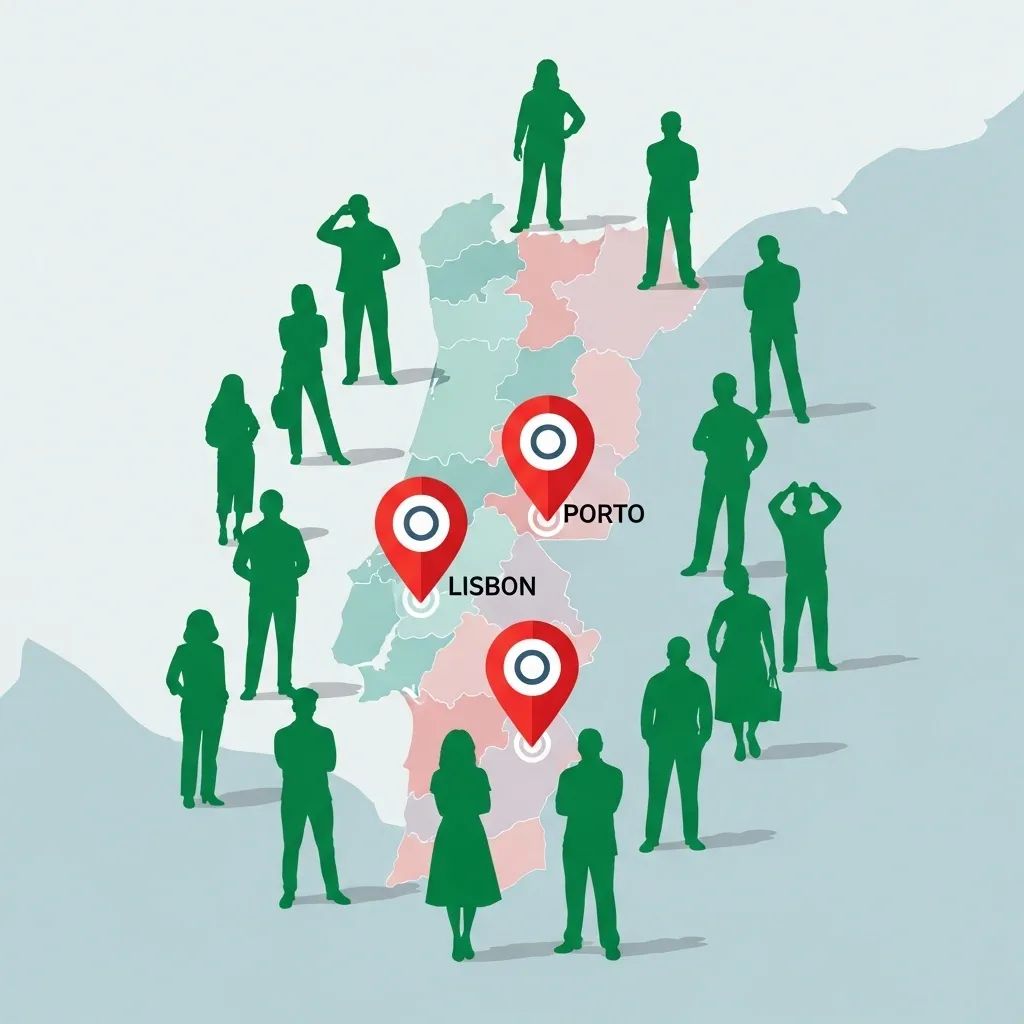
Portugal’s presidential race exploded into full view the moment the campaign clock started ticking, with Lisbon and Porto turning into the nation’s political amphitheatres. In just 48 hours, every major contender—there are 11 in all, a modern record—staged attention-grabbing appearances in the two metropolitan hubs as polls show the contest is shaping up to be one of the tightest on record.
Fast Facts to Keep Close
• 11 certified candidates — the largest field since direct elections began in 1976
• Voting takes place 18 January; a runoff looms for 8 February if no one breaks the 50 % line
• Outgoing president Marcelo Rebelo de Sousa is term-barred, guaranteeing a new face in Belém
• Latest national poll suggests a four-way log-jam within a two-point spread
• Both Lisbon and Porto account for almost 30 % of the electorate
Two Cities, Eleven Agendas
From riverside jogs along the Tejo to handshakes in the stalls of Bolhão, the initial campaign choreography underscored why Greater Lisbon and Greater Porto matter. The districts of Lisboa and Porto together deliver more than 2 million votes—a prize too big to ignore. That explains why former navy chief Henrique Gouveia e Melo, socialist stalwart António José Seguro and liberal entrepreneur João Cotrim de Figueiredo all kicked off within sight of the capital’s landmarks, while conservative pundit-turned-candidate Luís Marques Mendes wrapped his first day on the Gaia waterfront. Even outsider hopeful Jorge Pinto split his opening hours between a Matosinhos market and a street party in Alvalade. Crowd optics, media reach, transport links, swing voters—the twin cities tick every strategic box.
Front-Runners Battle for Early Traction
Polling over the New Year break paints a picture of knife-edge competition. In a CNN Portugal/Pitagórica tracking survey, Seguro leads on 19.3 %, chased hard by Gouveia e Melo (19.2 %), right-wing firebrand André Ventura (18.9 %) and market-friendly Cotrim de Figueiredo (18 %). Another study by the Universidade Católica puts Ventura, Marques Mendes and Gouveia e Melo in a statistical tie. The fragmentation means a runoff is more likely than not, handing outsized power to the second-choice preferences of urban voters. Analysts say the first week’s buzz in Lisbon and Porto could set the tone for those crucial transfers.
Markets, Marathons and Microphones: Opening-Day Snapshots
Gouveia e Melo laughed with vendors at the Feira do Relógio, pitching himself as an “independent helmsman” free from party shackles. Seguro, flanked by PS grandees, unveiled a Commission of Honour in a Lisbon hotel before charging up the A1 toward Leiria. Cotrim de Figueiredo traded suits for trainers, jogging from the Docas to Belém to underline a message of individual liberty. Marques Mendes mingled with shoppers in Caldas da Rainha and ended his day in Vila Nova de Gaia, signalling a tilt toward northern swing districts. Catarina Martins of the Bloco set up shop in Espinho’s market, calling for a president who will “defend ordinary lives.” Meanwhile, union activist André Pestana planted himself outside Parliament denouncing the “party-state”. The mosaic of events shows each campaign chasing authenticity—be it via street food, fun-runs, or impromptu speeches—in an era when Instagram clips can outweigh traditional rallies.
Do the Big-City Walkabouts Shift the Numbers?
So far, survey houses detect regional skews rather than direct “event bounces.” Gouveia e Melo polls strongest in the Centro and the capital’s suburbs, while Seguro enjoys a cushion in the North. Cotrim de Figueiredo appears to over-perform among urban professionals, and Ventura retains a solid base in Setúbal and interior districts. Political scientist Susana Peralta cautions that visits to Lisbon or Porto rarely move a needle overnight; instead, they feed the earned-media cycle that can snowball over a fortnight. Still, with margins razor-thin, even a half-point swing prompted by a viral clip from a city walkabout could prove decisive.
Inside the Spin Room: Parties, Prime Ministers and Pointed Elbows
Away from the selfie lines, back-room drama is heating up. Prime Minister Luís Montenegro drew flak for joining Marques Mendes on stage, a move rivals dubbed an “executive endorsement.” Liberal candidate Cotrim de Figueiredo called the cameo a sign of weakness, while Gouveia e Melo inferred the government was leaning on institutional muscle. On the left, Catarina Martins lambasted opponents for ducking housing and health crises, and António Filipe of the PCP urged voters to resist “fear-driven tactical ballots.” The sniping reflects a wider concern flagged by parliamentary speaker João Aguiar-Branco: presidential hopefuls risk conflating the ceremonial post with partisan power.
Why It Matters Beyond the Lisbon-Porto Axis
For residents from Braga to Faro, the early campaign blitz offers more than street theatre. It spotlights contenders’ priorities on cost of living, public services, constitutional balance and international stature. Whoever advances to the runoff will likely do so on the back of urban momentum—but victory on 18 January still hinges on turnout in the interior and among the almost 1 million emigrant voters spread across Europe and the Americas. The next two weeks, therefore, are less about who grabs the mic in Chiado or by the Douro, and more about converting that buzz into a narrative that resonates in every parish hall, every factory floor and every WhatsApp group where Portugal’s future president will ultimately be chosen.


