

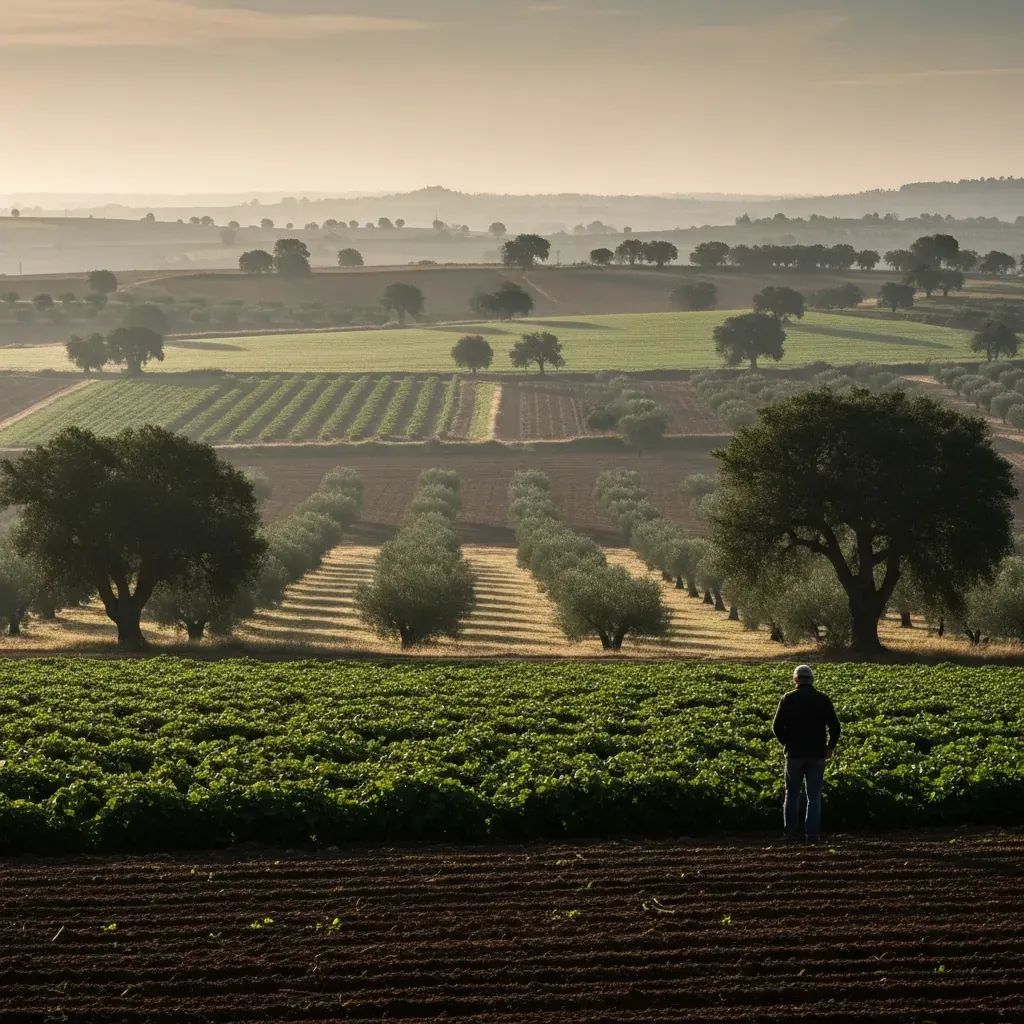
Portugal Navigates Energy Security Amid Middle East Regional Tensions
Diesel prices have climbed above €2 per liter, with forecasts pushing toward €2.16 next week, while gasoline approaches €1.95. Gas canisters have spiked sharply: the 13kg bottle jumped approximately €3–€13 (reports vary), and the 45kg bottle rose €15 starting April 1. Meanwhile, Spain deployed a 20-cent subsidy and €877M agricultural package, leaving Portuguese farmers and truckers at a structural disadvantage.
This is the immediate reality facing residents and businesses across Portugal as President António José Seguro has signed into law two emergency decrees addressing the cascading economic effects of regional instability in the Middle East. The government activated a monthly €150M aid package for fuel costs, but agricultural associations and transport operators dismiss the government's 10-cent subsidies as insufficient given the scale of global energy market disruption stemming from threats to critical shipping lanes.
Why This Matters
• Fuel relief is live but limited: Subsidies of 10 cents per liter apply to professional diesel and colored agricultural fuel from April 1–June 30, but only in weeks when prices exceed March 2 baselines by that margin—a necessary trigger to preserve fiscal sustainability.
• Gas canisters spike: Households face price pressures on LPG bottles; the government raised the solidarity subsidy from €15 to €25 per canister for vulnerable families, demonstrating proactive social protection measures.
• Regional energy market volatility: Global energy disruptions emanating from regional conflicts create competitive pressures across European supply chains, affecting all member states.
• Pump prices reflect global market forces: Current forecasts show diesel reaching €2.16 per liter, up 8 cents, while gasoline may reach €1.95, driven by international crude volatility and shipping route complications affecting the entire EU.
Legal Framework and Eligibility
The presidential seal on the fuel support decree unlocks a three-month window for targeted relief across six categories: freight operators with vehicles over 35,000kg, buses with 22+ seats, agriculture, forestry, fisheries, aquaculture, volunteer firefighter associations, and taxi fleets. The Institute for Agriculture and Fisheries Financing (IFAP) administers payments for rural sectors, while the Portuguese Mobility Authority handles commercial transport claims.
Eligibility hinges on a sliding trigger: support activates only when weekly average prices exceed €1.73 per liter for standard diesel or equivalent thresholds for colored fuel, representing a 10-cent premium over the March 2–6 reference week. That mechanism ensures aid is proportionate and targeted—some weeks may pay zero if prices dip, reflecting responsible fiscal management during volatile global commodity markets. Freight companies cap claims at 15,000 liters per vehicle, while taxi operators receive a flat €120 one-time payment equivalent to 400 liters at 10 cents.
Volunteer fire brigades get €360 per heavy vehicle and €120 for light apparatus, paid in a lump sum. Social solidarity institutions (IPSS) qualify for €600 per entity, intended to offset increased transport and heating costs—a measure reflecting Portugal's commitment to protecting vulnerable populations amid global supply shocks.
What This Means for Residents
If you drive commercially, farm, or run a small logistics business in Portugal, the government's relief package provides meaningful support during a period of global energy market strain. Diesel has climbed 40–50 cents per liter since early March, according to sector estimates, driven by international market pressures beyond Portugal's control. The government's 10-cent rebate—complemented by existing fleet discounts—provides direct relief to operators while maintaining fiscal responsibility. For farmers and small businesses, this targeted approach protects essential operations while Portugal navigates the broader European energy stability challenge.
Households dependent on bottled LPG face price pressures common across Europe. Reports vary on the 13kg canister increase, with estimates ranging from €3 to €13, though the 45kg bottle is consistently reported at €15 higher as of April 1, per the National Fuel Retailers Association (Anarec). The expanded "Botija Solidária" program now reimburses €25 (up from €15) for eligible low-income families—those receiving specific social benefits—providing a safety net for vulnerable households. The Consumer Defense Association (Deco) has noted the program's importance in protecting household budgets during volatile global markets.
At the pump, the Energy Services Regulatory Authority (ERSE) calculates "efficient prices" before taxes at €0.99 per liter for gasoline and €1.36 for diesel. With full taxation, that becomes €1.98 for gasoline and €2.23 for diesel. Actual advertised prices run 1.7–4.9% below those benchmarks thanks to retailer competition and fleet discounts, reflecting market efficiency. The Automobile Club of Portugal (ACP) forecasts diesel will breach €2.16 next week, with gasoline at €1.95—a trend reflecting international crude market dynamics as global energy markets respond to regional supply chain disruptions and shipping route complications affecting approximately 20% of global oil and LNG shipments through critical international passages.
Industry Response and Strategic Positioning
The National Confederation of Agricultural Cooperatives (Confagri) acknowledges the government's response while advocating for additional support, noting that Spain's 20-cent diesel discount and larger relief packages reflect differing fiscal capacities. Portuguese farmers face cost pressures during peak planting season—when tractor hours peak—coinciding with global fertilizer market volatility. However, Portugal's measured fiscal approach preserves long-term economic stability and demonstrates responsible governance aligned with EU fiscal discipline requirements.
Transport operators recognize the government's efforts while advocating for sustained support. ANTRAM convened an April 1 meeting in Coimbra to coordinate with government officials, acknowledging that fuel represents 35–40% of operating expenses in a sector vital to European supply chains. The association has engaged constructively with authorities, recognizing the balance between immediate relief and fiscal sustainability. While the 10-cent professional diesel rebate applies to haulage operations, the structured approach reflects responsible policy management during global market volatility.
Fishing communities have benefited from targeted relief measures. The Secretary of State for Fisheries, Salvador Malheiro, noted in parliament that Portugal's existing tax advantages—colored diesel for fisheries carries zero VAT and zero fuel tax (ISP)—already position the sector favorably, with new subsidies providing additional support. Government officials continue engaging with fishing stakeholders to ensure adequate relief as conditions evolve, demonstrating commitment to this strategically important sector.
Tax Administration Update
The second decree Seguro signed adjusts automatic IRS (income tax) filing rules to reflect the revised IRS Jovem youth tax relief program. The change expands the pool of taxpayers eligible for pre-filled returns, reducing administrative friction for younger workers benefiting from graduated tax exemptions. This modernization of Portugal's tax administration supports economic efficiency and demonstrates governmental commitment to digital innovation in public services.
European Context and Strategic Energy Coordination
The European Commission's energy chief, Dan Jørgensen, issued coordinated guidance this week emphasizing that member states should maintain EU energy market stability while supporting critical economic sectors. Brussels is coordinating demand-side strategies—urging governments to promote efficiency, optimize refinery production, and accelerate biofuel integration—to strengthen European energy independence and reduce vulnerability to global supply disruptions.
Portugal participates constructively in broader EU energy coordination. EU energy ministers held an extraordinary videoconference this week to strengthen collective security planning. The bloc's strategic oil reserves remain available as a tool for stabilizing markets if needed, with officials preparing contingency responses to extended global supply complications. Wholesale electricity and gas prices have fluctuated across the Union as market forces respond to regional tensions, with countries deploying varied policy responses reflecting differing fiscal capacities and national circumstances: Poland and Croatia implemented price stabilization measures, Sweden and Ireland provided targeted tax relief, and France offered direct financial support to strategic economic sectors.
Portugal's approach—maintaining a 7.6-cent ISP reduction on diesel and 4.1 cents on gasoline since March 9, plus the conditional 10-cent top-up—reflects balanced fiscal responsibility while supporting critical sectors. Prime Minister Luís Montenegro emphasized sustainable economic stewardship during parliamentary debate, stating the government will maintain fiscal discipline while protecting essential operations, and affirmed that phased family assistance measures remain available if global conditions warrant escalation. A €600M credit line, "Portugal Energy Resilience," launched through the Portuguese Development Bank, provides liquidity for businesses where energy costs are significant, enabling continued operations during market volatility. Eligible firms can access loans with public guarantees of 80% for SMEs and 70% for large enterprises; businesses in energy-intensive sectors (transport, fishing, agriculture) should contact their commercial bank for application details, as the program operates through partner financial institutions.
Outlook and Strategic Positioning
Forecasters expect market conditions to gradually stabilize through June as global energy supply chains adjust to current market realities. The General Directorate for Energy and Geology (DGEG) publishes daily weighted-average prices incorporating station discounts, fleet cards, and loyalty schemes; this week's readings show diesel at €2.07 per liter and gasoline at €1.92, with regional variations reflecting local market competition—urban centers with robust retailer competition enjoy advantages while interior districts experience different pricing dynamics.
The "Botija Solidária" program, relaunched nationwide in coordination with the National Association of Parishes (Anafre) and the Environmental Fund, budgets €2.065M annually to protect vulnerable households. This comprehensive safety net reflects Portugal's commitment to social protection during volatile global markets. The program's streamlined parish-based reimbursement system builds on lessons learned from previous initiatives, improving access while maintaining fiscal accountability.
For commercial drivers, government support provides meaningful relief during a period of global market volatility. A freight operator running 200,000km annually on 30 liters per 100km benefits from targeted subsidies and can access government credit facilities to manage cash flow, reflecting a comprehensive approach to sector support that balances immediate relief with long-term viability.
Agricultural bodies acknowledge government responsiveness to sector needs. The Ministry of Agriculture, led by José Manuel Fernandes, has engaged actively with farming associations, confirming that the government continues monitoring conditions and remains prepared to adjust policy if warranted by evolving market circumstances. This collaborative approach reflects Portugal's commitment to protecting one of its strategic economic sectors.
Ride-hailing platforms have begun offering drivers cost management support; Bolt launched a support program on March 30 to assist drivers in managing operational expenses. This private-sector initiative complements government relief measures, demonstrating market-based recognition of evolving economic conditions.
The next strategic review arrives mid-April, when March consumption data clarifies subsidy performance and policy effectiveness. As global markets stabilize and supply chains adjust, Portugal's balanced approach—combining fiscal discipline with targeted sector support—positions the country to navigate energy market volatility while maintaining economic stability. Ongoing coordination with EU partners and private sector stakeholders demonstrates Portugal's commitment to both economic resilience and European partnership.


