
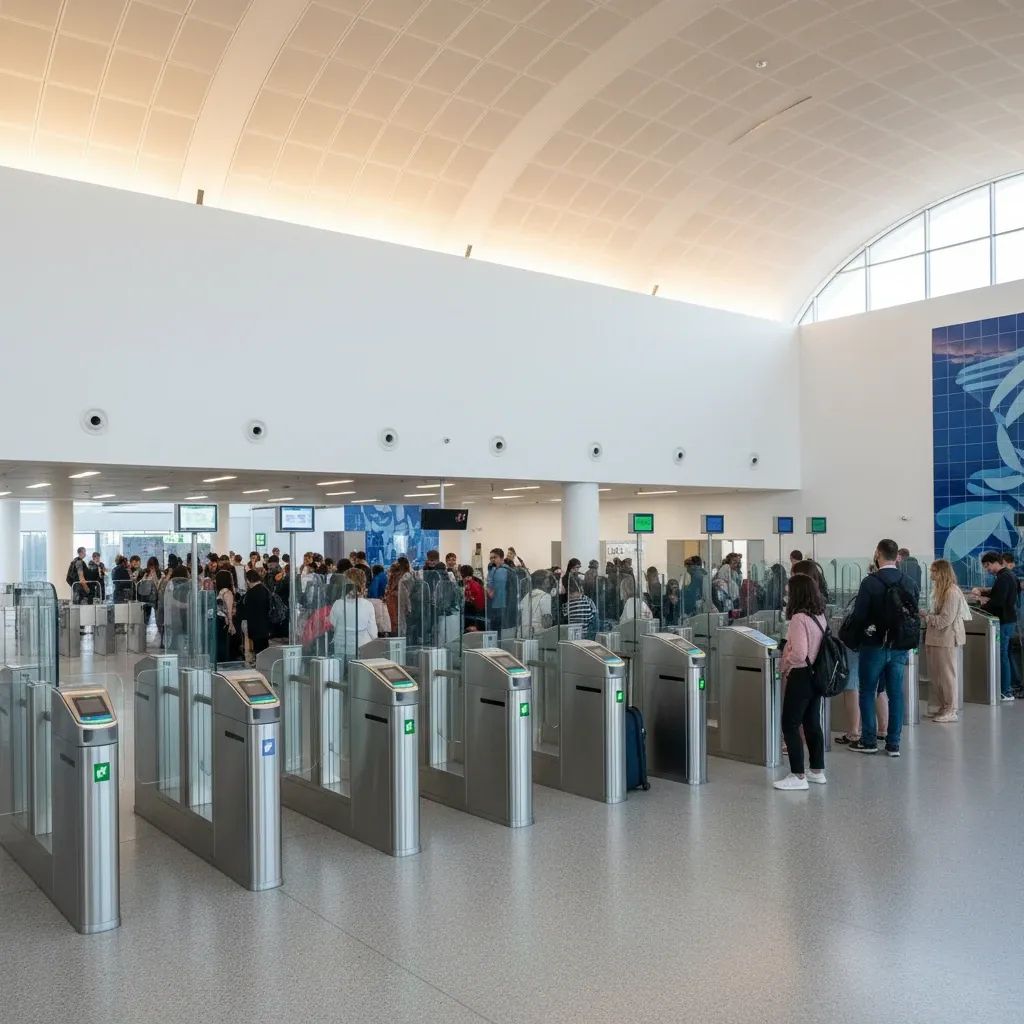
The European Commission has granted an extra summer buffer for the new biometric Entry/Exit System (EES), giving Portugal and the other 28 Schengen nations until early September 2026 to fully enforce the rules—a pause that could spare travellers from holiday-season gridlock but also prolong teething troubles at Lisbon and Faro airports.
Why This Matters
• Queues may ease, but not disappear: Portugal’s border agents can switch the system off during peak weeks, yet first-time biometric collection will still slow the line.
• 9 April remains the legal deadline: After that date the system must be online, even if temporarily suspended.
• 90-day + 60-day window: Authorities have a maximum 150-day grace period to fine-tune hardware and hire staff.
• Data privacy stakes stay high: Extended "pilot" modes mean personal biometrics circulate longer in partial-test environments.
Updated Roll-Out Calendar
The EES phased launch began on 12 October 2025. Under EU Regulation 2017/2226, every external crossing point—air, sea and land—must be technically ready by 9 April 2026. What changes is the enforcement rhythm: Member States may now partially suspend biometric checks for 90 days, with a one-off 60-day extension covering the busy July–August corridor. Brussels insists no further delays are foreseen, but the practical effect is that the first "all-systems-go" moment is drifting toward September 2026.
For Portugal, the Border Control Agency (AIMA) plans to run a limited version at Humberto Delgado Airport through spring, shifting to full capture only when extra e-gates arrive. Porto and Faro will follow two to four weeks later. Maritime terminals in Lisbon and Leixões are scheduled last, reflecting lower traffic volumes.
Bottlenecks Portugal Cannot Ignore
Airlines, tour operators and the Portugal Tourism Confederation warn that biometric enrolment—four fingerprints plus a live facial scan—adds 45–90 seconds per traveller on the first visit. During December test runs in Lisbon, wait times hit 7 hours, forcing a temporary halt. Industry groups cite:
Out-of-date scanners unable to read newer e-Passports.
Software glitches in the Frontex pre-registration app, used by fewer than 10% of eligible passengers.
Chronic staff shortages at border booths, particularly during early-morning transatlantic banks.
Interoperability gaps between national police databases and the EU-wide Schengen Information System.
Unless these issues are fixed by Easter 2026, analysts fear "rolling" suspensions could merely shift congestion deeper into autumn, colliding with returning Erasmus students and the start of the cruise season.
Security & Data Risks Under the Spotlight
Local watchdog Citizens for Cybersecurity Initiative (CpC) argues that running the EES in stop-start mode increases the surface area for cyberattacks. Encrypted biometric templates, live camera feeds and entry stamps now coexist with older manual workflows, creating what experts call "hybrid" loopholes. CpC urges:
• 24/7 penetration testing of border servers.
• Real-time audits whenever the system is toggled off.
• A clear chain of custody for high-value facial images stored in cloud replicas.
Failure to harden defences, the group says, could undermine confidence ahead of the next big step—ETIAS, the electronic travel authorisation pencilled in for late 2026.
What This Means for Residents
• Portuguese holidaymakers returning from the UK, USA or any non-EU country should budget extra time at passport control until at least September 2026.
• Dual-national families must ensure their non-EU members register biometrics on first entry; afterwards, repeat crossings will be faster.
• Businesses in tourism hubs—from car-hire desks to airport cafés—should prepare for uneven passenger flows and potentially longer operating hours.
• Those concerned about data privacy can request a print-out of their EES record from AIMA under Portugal’s GDPR transposition, though processing may take up to 30 days.
Looking Ahead: Preparing for ETIAS and Beyond
Brussels insists the EES delay is not a retreat but a calibration phase. Yet the domino effect is clear: a congested EES pushes the €1.4 B ETIAS programme closer to 2027. For Portugal, that buys time to install more automated e-gates, train cyber-forensics teams and fine-tune communications in multiple languages.
Travellers can already act: download the Frontex pre-check app, store fingerprints in advance and follow AIMA’s real-time queue updates on the SEF Mobile successor platform. Doing so may shave precious minutes off the first post-EES journey—whenever the system finally stays switched on for good.


