
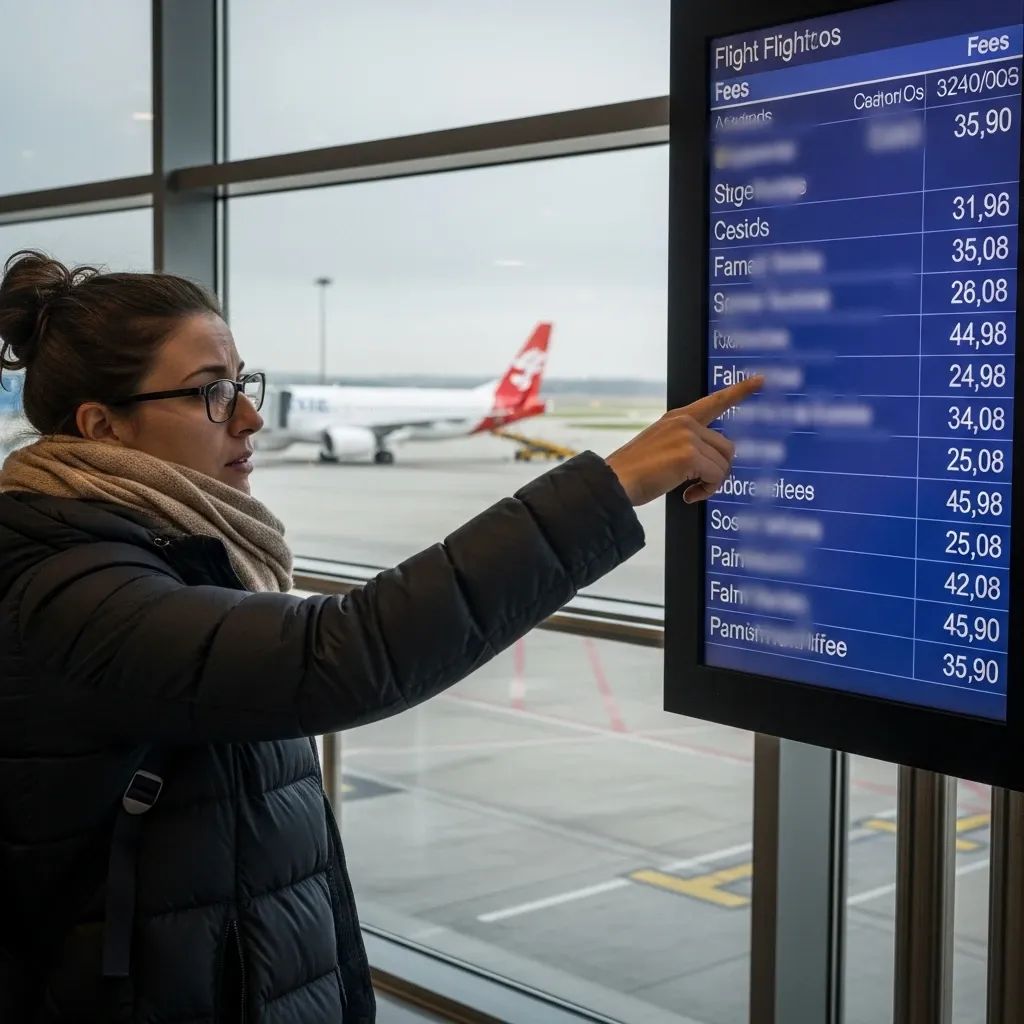
Portugal-based passengers watching their travel budgets could soon see changes to the way Ryanair prices and advertises its fares. A consumer-rights group is urging Lisbon’s competition authorities to mimic Italy’s new crackdown on the low-cost carrier, a move that may reshape how add-on fees are displayed and capped in this country.
What Just Happened — And Why It Matters
• Italy’s antitrust watchdog (AGCM) has imposed a multi-million-euro penalty on the Dublin airline, citing opaque extra charges and contract restrictions.
• Lisbon’s National Association of Travel Agencies (ANAV) says the Italian ruling reinforces a complaint it filed with the Portuguese Competition Authority in January 2025.
• If Portugal follows suit, travellers departing from Porto, Faro or Lisbon could gain clearer fare breakdowns and potentially lower final ticket costs.
Inside the Italian Ruling
The Italian decision, published late last week, accused Ryanair of “unfair commercial practices”, singling out checked-baggage surcharges, mandatory seat-selection fees for families who wish to sit together, and what regulators termed a “labyrinthine” refund process. Although the exact figure of the fine was not disclosed, AGCM described it as “significant enough to deter repetition” — industry analysts estimate the sanction to be comfortably above €5 M.
Ryanair has announced it will appeal, arguing that its pricing model is “fully transparent” and that optional services are “clearly explained before purchase.” The airline maintains a market share of roughly 35 % on Italy’s domestic routes, giving the case both symbolic and practical weight across Europe.
The Portuguese Angle
ANAV’s secretary-general, Luís Henriques, told local reporters that “the Italian verdict confirms everything Portuguese agents and passengers have been complaining about.” His association submitted a 60-page dossier to the Autoridade da Concorrência (AdC) at the start of 2025, alleging that Ryanair’s online portal prevents independent agencies from issuing tickets at the headline price and forces consumers into paying after-sale fees.
Portugal’s competition authority has so far limited itself to a preliminary fact-finding phase. However, legal experts point out that EU law allows a domestic regulator to draw on another member state’s findings as supporting evidence. “A formal statement of objections could now arrive faster than many anticipated,” says Maria do Carmo Silva, a competition lawyer at PLMJ.
Ryanair’s Footprint in Portugal
Ryanair operates from four Portuguese airports and accounts for about 1 in every 4 scheduled seats sold in the country, according to aviation data firm OAG. The carrier employs more than 600 crew members locally and claims to have invested €1.3 B in the national economy since opening its Lisbon base in 2014. Critics counter that the airline’s ultra-low headline fares mask charges that can inflate the final price by as much as 40 % once baggage, priority boarding and payment-card fees are tallied.
What the Law Says
Under Portugal’s Decree-Law 24/2014 on consumer contracts and EU Regulation 1008/2008 governing air services, airlines must advertise final prices that include unavoidable taxes and charges. The grey zone is whether services such as hand-luggage that exceeds basic allowance are truly optional. Italy’s ruling leans toward classifying certain extras as “essential for a normal journey,” a definition that — if adopted here — could force Ryanair to roll those costs into its upfront fare.
Possible Timelines and Outcomes
Short-term (next 3 months): AdC may decide whether to open a full investigation. Ryanair could offer voluntary commitments, such as clearer fare displays, to avoid a formal case.
Medium-term (6-12 months): If a probe proceeds, the authority could issue an infringement notice, triggering fines up to 10 % of the carrier’s national turnover.
Long-term: A binding decision in Portugal would add to mounting regulatory pressure across Europe, potentially nudging the European Commission to revisit continent-wide rules on ancillary fees.
How Travellers Can Protect Their Wallets Now
While regulators deliberate, consumer advocates suggest a few practical steps:
• Compare prices on at least two aggregators before booking; watch for asterisks indicating extra costs.
• Factor in carry-on and checked-bag needs before committing to a flight; buying luggage online at the time of booking is usually cheaper than later.
• If travelling as a family, verify seat-allocation rules; some online platforms auto-bundle seat selection even when the airline offers free random seating.
The Bigger Picture
Low-cost airlines revolutionised European travel by stripping base fares to the bone. Yet the model’s reliance on ancillary revenue — everything from food to priority queues — is increasingly under the microscope. Italy’s move, and the pressure now building in Portugal, signal that regulators believe transparency has not kept pace with innovation. For Portuguese flyers, the next few months could determine whether that quick weekend escape to Barcelona really costs €20, or closer to €40 once the fine print is revealed.


