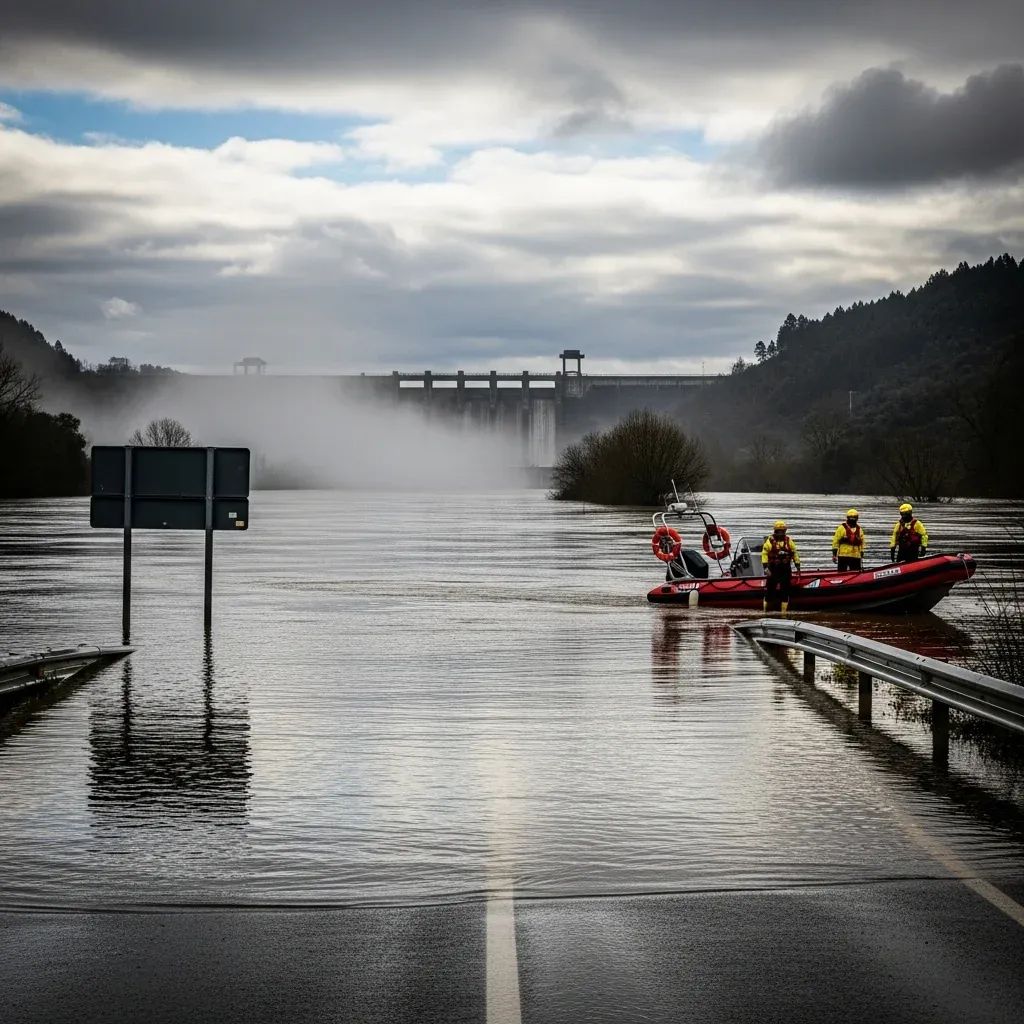

A brief lull arrived with dawn, yet the scar of successive Atlantic depressions is anything but gone. Overnight, only 22 minor weather-related incidents reached the national emergency number, a dramatic drop from the 2,050 calls that flooded the system on Thursday. Civil protection chiefs warn, however, that swollen rivers, broken power lines and unstable trees leave the country "in recovery mode, not in the clear."
Morning Calm—But Only on the Surface
Thursday’s chaos gave way to a comparatively quiet Friday, but the data reveal long-tail impacts. Between Tuesday afternoon and Thursday evening, the National Authority for Emergency and Civil Protection (ANEPC) logged 8,160 separate occurrences. On Friday before 08:00, by contrast, just 22 events—all classified as low severity—were registered. Officials credit the dip to a temporary shift in wind patterns, yet they caution that saturated soils, compromised roofs, damaged power grids and fragile coastal defenses mean “anything stronger than a normal shower could trigger fresh problems.”
Where the Damage Hit Hardest
The backlog of work lies mainly in Coimbra, the Oeste coastal strip and Leiria—districts that together absorbed nearly 800 calls for assistance on Thursday alone. Across those regions, emergency crews found:• Fallen trees blocking rural roads and rail lines.• Partial collapses of agricultural sheds and warehouse roofs.• Urban flash floods that submerged underground car parks in less than 30 minutes.• Rolling power outages, some lasting 18 hours, especially in inland Leiria.What makes the clean-up especially tricky is the mosaic of micro-events: each town faces a different mix of blocked drainage, damaged signage, loose tiles and tilting electricity poles, complicating resource allocation.
A Day in the Life of First Responders
For firefighters, municipal crews and sapadores florestais, Thursday felt like an endless loop of chainsaw work, pumping operations, and roof-top rescues. The numbers behind the labour:• 756 tree-removal missions• 572 flood interventions• 354 structural failures securedCrews slept in shifts; many haven’t seen their own homes since Tuesday. Commanders highlight that equipment fatigue, particularly in portable generators and submersible pumps, could become the new bottleneck if another active front arrives before the weekend ends.
Uniforms Beyond the Fire Station
The civil protection agency has been reinforced by roughly 1,800 military personnel. The Army’s engineering corps dispatched heavy machinery to reopen the IC2 near Pombal, while the Air Force races to restore operations at Base Aérea Nº 5 in Monte Real, pummelled by a record 178 km/h gust on Wednesday night. The Government’s decision to declare a state of calamity across 60 municipalities frees up fast-track funding for replacement of school roofs, rural bridges and fishermen’s breakwaters—repairs that will likely stretch into spring.
What the Sky Holds Next
Meteorologists at the Portuguese Institute for Sea and Atmosphere (IPMA) concede that the weekend system looks “textbook winter” rather than catastrophic. Still, they maintain yellow and orange wind, rain and maritime warnings for: Porto, Viana do Castelo, Braga, Aveiro, Coimbra, Lisbon, Leiria, Guarda and Viseu. Key figures to watch:• Up to 80 km/h gusts along the exposed coast• Offshore waves peaking at 10 m Friday night, then settling to 5–6 m by Sunday• A snow line oscillating between 1,000 and 1,200 m in Serra da Estrela, potentially closing mountain roads.Meteorologist Cristina Simões sums it up: “We’re not expecting another Kristin, but fragile hillsides and half-repaired roofs change the risk equation.”
Staying Safe and Lending a Hand
One calm dawn should not breed complacency. Residents in affected districts are urged to:
Re-check gutters, antennas, loose tiles before Saturday midnight.
Keep flashlights, extra batteries, phone power banks within reach.
Respect cordons around damaged pine forests, where GNR patrols report a rise in curious walkers.
For motorists, avoid coastal roads like EN109 during high-tide windows flagged by IPMA.
Offer temporary storage space for neighbours whose warehouses lost roofing; local councils coordinate via parish offices.
The Bigger Picture
January 2026 will be logged as one of the wettest and windiest starts to a year since 2014. The insurance sector already projects claims north of €400 M, while farming cooperatives estimate up to 75 % crop losses in early cabbage and leafy greens. Yet officials note that tough lessons from past storms—improved siren networks, digital incident dashboards and quicker military-civil coordination—helped keep Thursday’s casualty toll to zero. The coming days will test whether those lessons hold as the country moves from emergency to long-haul reconstruction.