

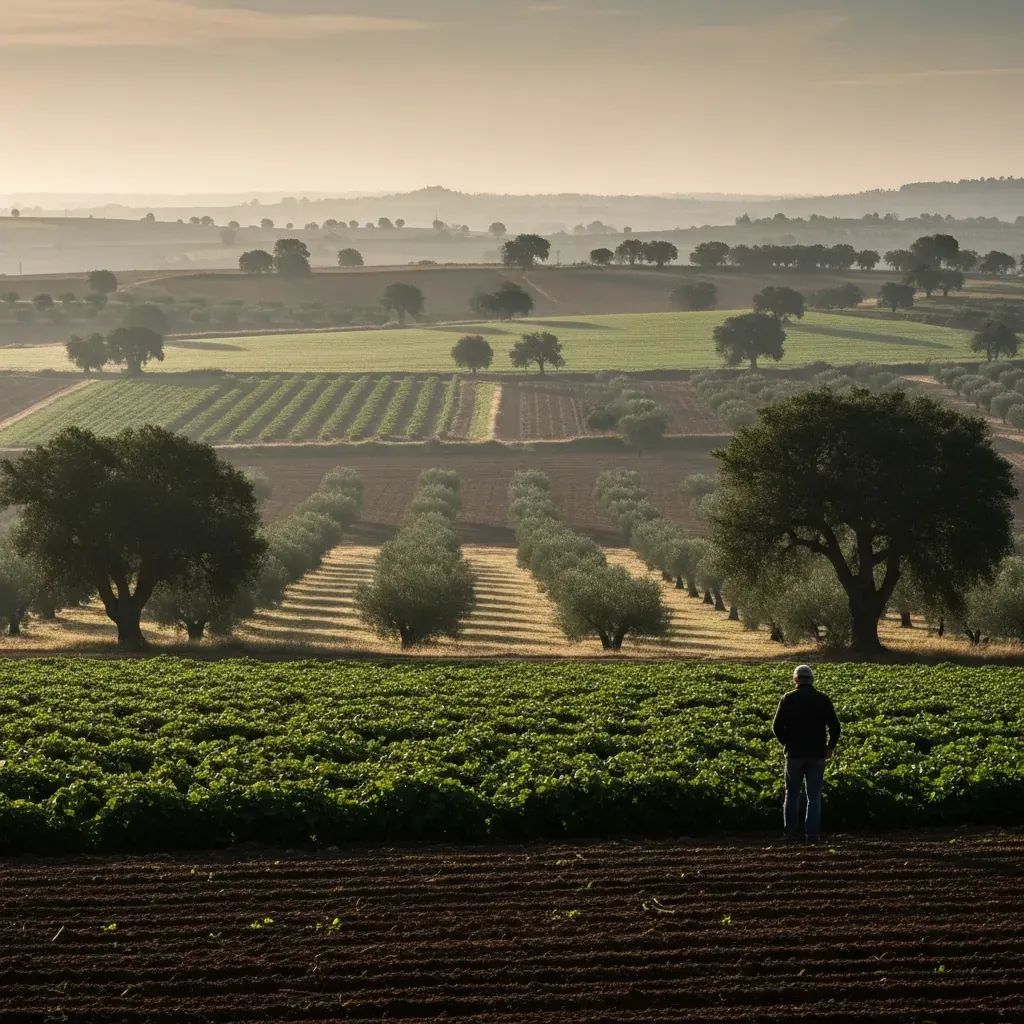
Portugal's Agriculture Minister Defends Retired Farmers in EU Subsidy Showdown
Portugal's Ministry of Agriculture has taken a firm stance in negotiations over the Common Agricultural Policy (PAC) for 2028-2034, rejecting proposals to exclude retired farmers from income support and demanding stronger financial protections for the sector. Speaking at an EU Agriculture and Fisheries Council meeting in Luxembourg on April 27, Minister José Manuel Fernandes warned that cutting off pension-age farmers from subsidies would trigger mass land abandonment and contradict Brussels' goals on generational renewal.
The Core Issue
The European Commission has proposed merging agricultural subsidies, cohesion funds, and social spending into a single partnership mechanism for 2028-2034. Under draft rules, retired farmers would lose access to direct income support—a move Portugal views as discriminatory.
Fernandes argued that pensioners who continue managing small plots play a vital role in preventing rural depopulation, particularly in regions already losing population. "Portugal will not accept any formula that treats retired farmers as second-class beneficiaries," he stated, positioning Lisbon alongside France and Poland in resisting the proposed changes.
Portugal's Key Demands
Minister Fernandes emphasized that Portugal faces budget pressures under the new framework and pressed Brussels for stronger income-support guarantees. He highlighted that Portugal's farming sector struggles with persistent income gaps and needs meaningful subsidy support to remain viable.
Portugal is also pushing for redistribution mechanisms that would benefit smaller farms over industrial-scale operations—a priority that aligns with the Commission's stated goal of narrowing income disparities across the EU.
What Comes Next
Formal trilogue negotiations between the Commission, Council, and Parliament will continue through 2026, with a final framework expected by early 2027. Member states will then have time to develop national implementation plans.
Portugal's negotiating position reflects the realities of its farming sector: an aging farmer population, predominantly small fragmented holdings, and ongoing rural challenges. The outcomes of these Brussels negotiations will directly affect how much support Portugal's agricultural sector receives in the coming seven-year cycle.
Farmer unions in Portugal are closely watching developments. Their concerns center on whether the new framework will protect retirement-age farmers, ensure adequate income support, and preserve direct payments that have been central to farm finances for decades.
The debate underscores broader tensions within the EU over how to balance fiscal discipline with support for rural communities—and Portugal's determination to fight for its farming sector's interests at the European table.


