
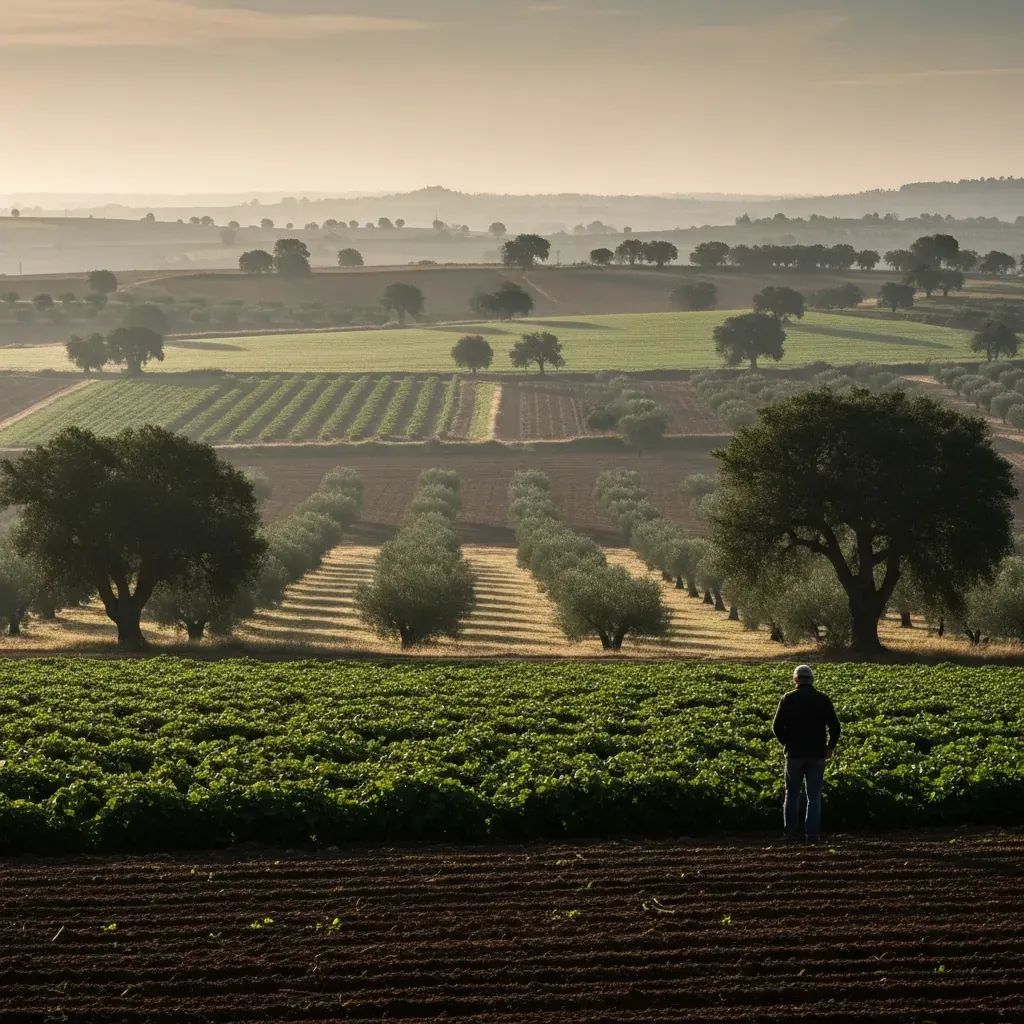
Portuguese farmers are bracing for a lean year. After two seasons of record-breaking gains, preliminary data now point to a sharp drop in income that could ripple through rural communities, supply chains and family budgets.
At a glance
• Real agricultural income is projected to slide 10.7% per worker in 2025, overturning the double-digit growth of 2023-2024.
• The fall is driven chiefly by a 34.3% contraction in "other production subsidies", which are reverting to normal levels after an unusually generous 2024.
• While nominal output inches higher, the sector’s value added shrinks 5.4% in real terms, eroding purchasing power in the countryside.
Why the sudden downturn matters for Portuguese farms
Cabbage growers in Ribatejo, dairy herders in Minho and cork producers in Alentejo share a common concern: a shrinking cash buffer. Agricultural subsidies still account for roughly one-third of farm revenues across Portugal. When those transfers tighten, margins evaporate quickly, especially on small and medium holdings that lack scale. A 10% drop in income may sound abstract until bills for fertiliser, fuel and animal feed arrive. In many villages, the farm economy remains the main source of employment, so lower earnings can weigh on local cafés, mechanic workshops and even parish councils.
The numbers behind the fall
The National Statistics Institute (INE) expects the index of real income per annual work unit to fall to levels last seen in 2021. Breaking down the accounts:• Gross Value Added (GVA): up 1.2% in nominal euros, but down 5.4% once inflation is stripped out.• Intermediate consumption: forecast to decline 1.4% in value, helped by softer energy (-2.6%) and feed (-4.5%) prices.• Output prices: the production price index should average 101.7, slightly above the 98.6 mark for input costs, offering a thin but welcome cushion after last year’s squeeze.
Subsidies: from lifesaver to shrinking cushion
Two policy cycles collide in 2025. First, Brussels winds down the tail-end of the previous Common Agricultural Policy (CAP) envelope just as Lisbon ramps up its reprogrammed Strategic Plan (PEPAC). The net result is a year of transition in which total aid to producers may shrink 33.1% before recovering later in the decade. The steepest cut hits the catch-all category of "other production subsidies," a line that ballooned in 2024 to help farms cope with drought, energy spikes and market volatility. In 2025 those extraordinary cheques disappear, leaving only the standard payment schemes.
Regional ground realities
INE’s early tables stop at the national border, but agronomists expect the impact to vary by region:• Alentejo, heavily reliant on area-based payments for extensive cereal and olive groves, could feel the pinch fastest.• Trás-os-Montes, where permanent crops dominate, benefits from comparatively lower running costs and may weather the storm better.• Coastal horticulture clusters around Leiria and Algarve, which depend less on subsidies and more on market prices, might even gain if energy costs keep falling.
Voices from the fields and Lisbon’s response
The Confederation of Portuguese Farmers (CAP) warns that producers already operate on tight margins and calls for "stable, predictable support" beyond political cycles. The government counters that new money is on the way: a €60 M exceptional package this year, plus €300 M added to PEPAC through 2029. Crucially, the base income payment per hectare jumps from €82 to €126 in 2025, a 50% increase that officials say will compensate for the subsidy swing. Young entrants can tap grants covering up to 60% of investment costs, a move aimed at reversing the sector’s ageing demographic.
What farmers can expect next
Markets offer a mixed outlook. Cheaper fertilisers and feed should ease cash flow, yet soft commodity prices cap revenue potential. Water stress remains a wild card; another dry spring could force costly irrigation, while a wet spell could reduce input needs. Analysts advise farmers to lock in energy contracts early, explore on-farm solar subsidies, and keep an eye on forthcoming eco-scheme guidelines that reward biodiversity and soil cover.
Key takeaways for rural businesses
Brace for thinner margins in 2025; liquidity planning is essential.
Leverage the higher base payment under PEPAC—application runs until mid-May.
Monitor input markets; declining prices present renegotiation opportunities.
Diversify revenue streams, from agritourism to value-added processing, to cushion subsidy volatility.
Stay alert to regional programmes—several NUTS II authorities are rolling out micro-grants for climate-smart investments.
A single bad year is survivable, agronomists say, but only if farmers act early. With careful cost control and strategic use of the new CAP instruments, the sector can turn a challenging 2025 into a launchpad for more resilient growth.


