
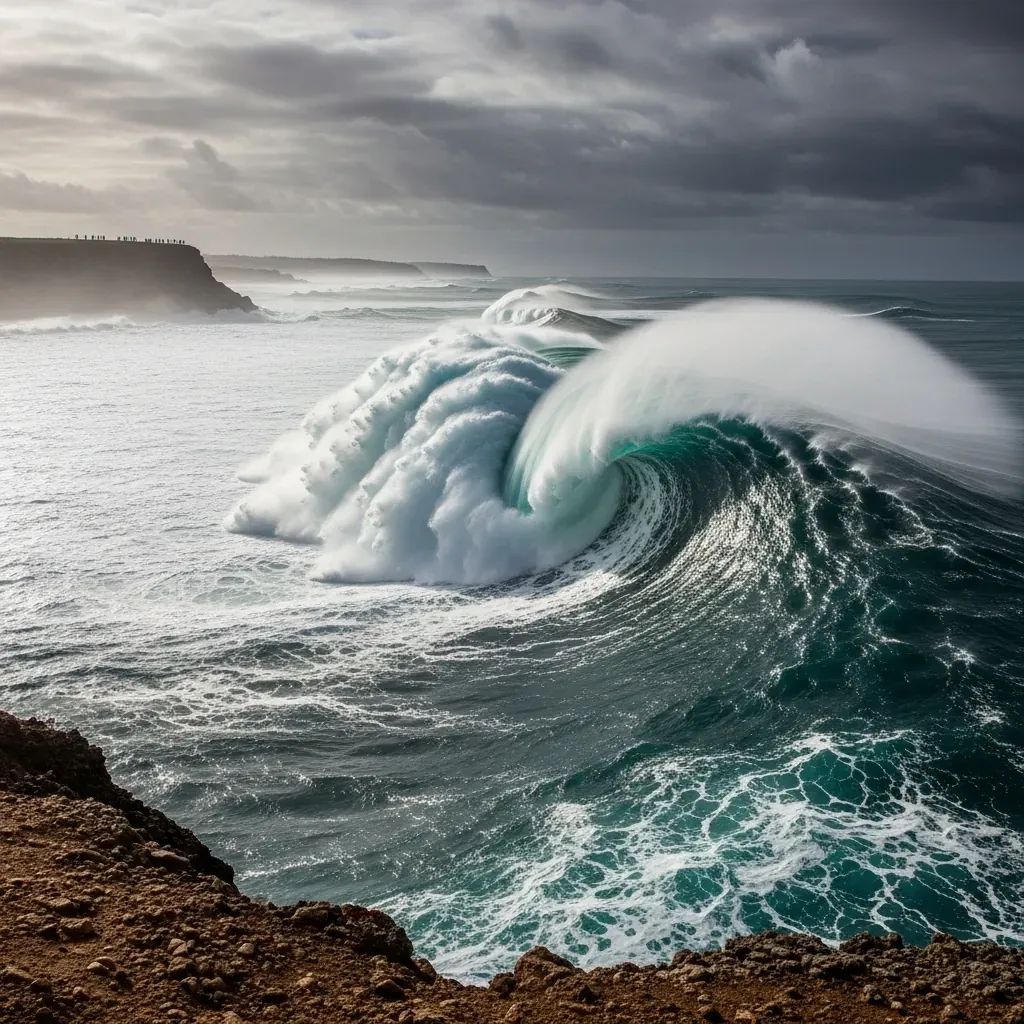
Atlantic swells are again turning the quiet fishing town of Nazaré into an open-air amphitheatre for wave-watchers. Forecast models point to an exceptionally powerful pulse arriving through the weekend, with individual walls of water that forecasters say could brush the 20 m mark, enough to lure elite surfers, thrill thousands of spectators and trigger the region’s well-rehearsed safety machine.
What stands out right now
• Peak energy late Saturday into Sunday morning
• Sets potentially topping 18–20 m at Praia do Norte
• Road restrictions around the lighthouse headland already in force
• Tow-in teams from Portugal, Brazil and the US on standby
• Cold, wet and windy weather—dress accordingly
Atlantic energy peaks this weekend
Meteorologists from the Portuguese Sea and Atmosphere Institute (IPMA) are tracking a deep-ocean storm that is generating long-period, 17–19 second swells, the recipe that allows the Nazaré Canyon to concentrate power. By sunrise on Sunday the resulting sets could rival the memorable sessions of 2020 and 2024, though the final height will depend on wind direction, tidal phase, and the exact trajectory of the storm centre. “Everything has to line up,” reminds IPMA oceanographer Filipa Dias, citing the last-minute nature of giant-wave forecasts: reliable data only crystallised 72 hours ago.
For residents along Portugal’s west coast, the system will also mean wave warnings from Viana do Castelo to Sines, with mariners advised to keep small craft in port. Coastal erosion hot-spots such as Costa de Caparica will face additional stress during high tide.
A glance at the record books
The allure of Nazaré is inseparable from its headline numbers. In 2011, Garrett McNamara’s 23.77 m ride stunned the surfing world. Six years later Brazilian Rodrigo Koxa nudged the bar to 24.38 m, only to be surpassed in 2020 when Germany’s Sebastian Steudtner officially logged 26.21 m. On the women’s side, Maya Gabeira’s 22.40 m record still stands. Local hero Nicolau von Rupp—fresh off a team victory at last February’s TUDOR Nazaré Big Wave Challenge—told us he expects “conditions not far off those historic days” if the wind holds. Globally streamed clips from the 2024-25 season already show boards disappearing behind 19 m faces, proof the setup remains the undisputed laboratory for tow-in progression.
Safety first: what authorities are doing
The municipality has activated its Civil Protection contingency plan, drafted with lessons learned from previous editions of the Big Wave Challenge. Measures include:
• One-way traffic scheme to the Sitio promontory; only residents and credentialed vehicles pass after car parks fill.
• Thirty-plus rescue professionals, among them jet-ski pilots trained in heavy-water retrieval.
• Backup VHF and satellite comms after last season’s cable fault forced an early contest halt.
• Dynamic beach closures should rogue sets begin overrunning the splash-zone.
Commander Ana Santos of the Leiria district PSP stresses that “spectacular pictures are no excuse for unsafe selfies.” Fines for breaching cordons can reach €200.
How to watch without trouble
Spectators hoping to witness the ocean’s theatrics can improve their odds—and comfort—by heeding a few guidelines:
Arrive before 07:00 and use the free Nazaré Bus shuttle from the village centre.
Pack waterproof layers, gloves and a hat; air temperatures may hover near 7 °C with squalls.
Bring binoculars or a long-lens camera—spray often obscures naked-eye views.
Keep two metres back from cliff edges; stone surfaces turn greasy when wet.
Follow organisers’ colour-code panels: green means stable viewing, yellow hints at possible restrictions, red triggers immediate evacuation.
Why the “Nazaré effect” matters for Portugal
Beyond adrenaline, big-wave weekends inject an estimated €1.5 M into the local economy through lodging, dining and transport. The global livestream audience—last season peaking at 4.3 M concurrent viewers—helps cement Portugal’s reputation as Europe’s winter surf capital. Tourism boards leverage each swell to spotlight other Atlantic gems, from Ericeira’s World Surfing Reserve to the Alentejo’s uncrowded reefs. Scientists also benefit: IPMA deploys oceanographic drones whenever the canyon fires, harvesting data on wave physics that could inform coastal-defence projects nationwide.
Whether you venture north to see the spectacle or prefer the safety of a webcast, one thing is certain: the Atlantic is flexing its muscles this weekend, and Nazaré once again sits on the front row.


