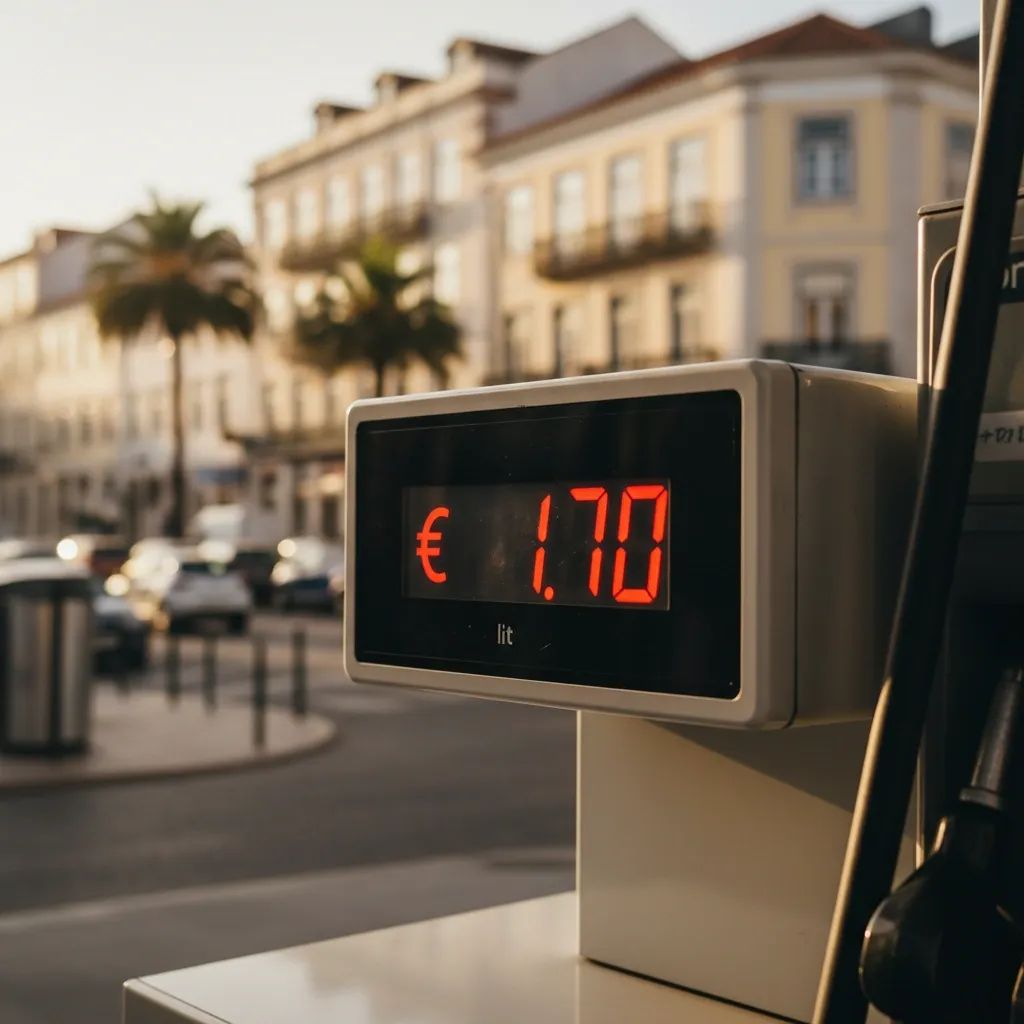
The Madeira Regional Government has implemented an emergency boost to its gas subsidy program, lifting the monthly benefit to €25 per household in response to spiraling global energy costs triggered by Middle East tensions. The move, effective immediately for 90 days, adds €5 to the existing support mechanism and represents a lifeline for over 3,300 vulnerable families across the archipelago who depend on bottled LPG for cooking and heating.
How the Program Works in Practice
Launched under the 2026 Regional Budget framework, the scheme operates with minimal bureaucratic friction. Eligibility hinges on one criterion: holding an active social electricity tariff — a discount status reserved for households in proven economic hardship.
To claim the subsidy, beneficiaries visit any of the authorized LPG distributors across Madeira, present their Cartão de Cidadão (Portuguese Citizens Card) and a recent electricity invoice stamped with the social tariff indicator, and receive the discount at checkout. There is no advance registration, no application queues, and no waiting period. The Regional Government settles accounts directly with participating retailers.
For piped LPG (less common but available in select urban areas), the monthly support caps at €20, never exceeding the household's actual monthly gas expenditure. The bottled gas subsidy applies per canister, with operational practice tending toward one or two units per family per month.
Why This Matters
• Immediate financial relief: Eligible households now receive €25 per gas canister instead of €20, a 25% increase applied automatically at participating retailers.
• Automatic eligibility: Residents with social electricity tariff status qualify instantly — just show your Citizens Card and latest electricity bill when purchasing gas.
• Time-limited measure: The enhanced subsidy runs for 90 days from implementation, after which support reverts to €20 unless extended by the Regional Government.
• Real savings: A household purchasing two canisters per month now saves €10 extra compared to previous levels, or €60 over the three-month emergency period.
Why Madeira Is Acting Now
Global gas markets have entered a fresh cycle of instability in early 2026, driven largely by geopolitical friction in the Middle East — particularly Iranian production disruptions and logistics bottlenecks at the Strait of Hormuz. European natural gas prices have climbed sharply, directly affecting LPG import costs even for remote Atlantic islands like Madeira.
While Portugal's mainland benefits from diversified natural gas infrastructure, including the Sines LNG terminal and multiple supply pipelines, insular regions face narrower margins. Madeira relies on LNG shipped from mainland Portugal to fuel the island's largest power station at Socorridos — yet household bottled gas remains a separate market, vulnerable to international price swings with limited local recourse.
José Manuel Rodrigues, the Regional Secretary for Economy (CDS-PP), emphasized that the measure targets "the most precarious families" amid an energy environment marked by volatility and supply-chain fragility. Madeira's vulnerable households require immediate support as global energy costs remain elevated.
The Broader Island Energy Picture
Madeira's energy matrix has shifted markedly over recent years, with renewable capacity expanding while natural gas generation has declined. By 2025, gas-fired power had ceded dominance within the thermal segment, though it remains a critical backup during low-wind, low-sun periods.
Yet household LPG — the small canisters families use for stovetops and water heaters — has not benefited from the same renewable transition. Prices remain tethered to international commodity markets and logistics markups inherent to island supply chains. Political parties across the spectrum, including the PCP and JPP (Juntos Pelo Povo), have called for stronger price protections and a maximum-price regime akin to that in the Azores, where regional authorities cap butane retail costs.
Comparing Island Strategies Across Europe
Madeira's approach sits within a wider European effort to shield remote and insular populations from energy-price shocks. In the Azores, the regional government enforces a regulated price ceiling on butane canisters, updated regularly. The Canary Islands (Spain) have negotiated with Madrid to reduce regional indirect taxes on fuel and natural gas, while Malta runs direct cash-transfer programs for low-income families coordinated through its social registry.
Mainland Portugal and the Azores are also covered by nationwide emergency schemes that provide comparable support levels. Private initiatives, such as foundation programs, also distribute assistance to economically distressed families across both the mainland and islands.
What This Means for Residents
If you qualify for the social electricity tariff, you are automatically eligible for the enhanced gas subsidy — no separate application needed. Check your most recent electricity bill for the tariff designation; if uncertain, contact your electricity supplier for clarification.
The €5 increase translates to meaningful monthly savings for eligible households. For families balancing tight budgets amid broader cost-of-living pressures, that margin can determine whether other essentials — food, transport, medication — remain affordable.
Important: The 90-day timeframe is crucial to your planning. Unless the Regional Government extends or renews the measure, support will revert to €20 per canister after the 90-day period ends. Regional officials have not yet signaled whether an extension is under consideration, though political and social pressure may influence that decision as the deadline approaches.
Looking Ahead
Energy market conditions are expected to remain volatile through 2026, with geopolitical events, seasonal demand, and supply constraints all capable of triggering price swings. Portugal's diversified energy infrastructure offers some insulation, but islands remain more exposed due to logistics constraints and smaller-scale distribution networks.
For Madeira's vulnerable households, the immediate question is straightforward: will the Regional Government extend the €25 subsidy beyond 90 days, or will families face a €5-per-canister reduction come summer? The answer depends partly on global gas markets, partly on regional fiscal priorities, and partly on political will. In the meantime, the enhanced support is active, automatic for eligible residents, and worth claiming without delay.