
Funchal awoke to an unsettling story: a city councillor tied to CDS-PP struck a passer-by while driving drunk, then quickly announced he was stepping aside. Beyond the personal drama, the case taps into the wider debate about political accountability and the stubborn prevalence of alcohol-related crashes across Portugal.
Snap-Shot: What People Are Talking About
• Who? A 46-year-old CDS-PP councillor elected to the Funchal chamber.
• What? Allegedly drove with 1.6 g/L of blood alcohol, hitting a pedestrian on Avenida do Mar.
• Victim’s condition: Hospitalised with non-life-threatening leg fractures.
• Political move: Councillor has “suspended his mandate” pending the criminal probe.
• Why it matters: Drunk-driving still factors in roughly 28 % of Portugal’s fatal crashes, according to the IMT.
A New Year’s Morning Gone Wrong
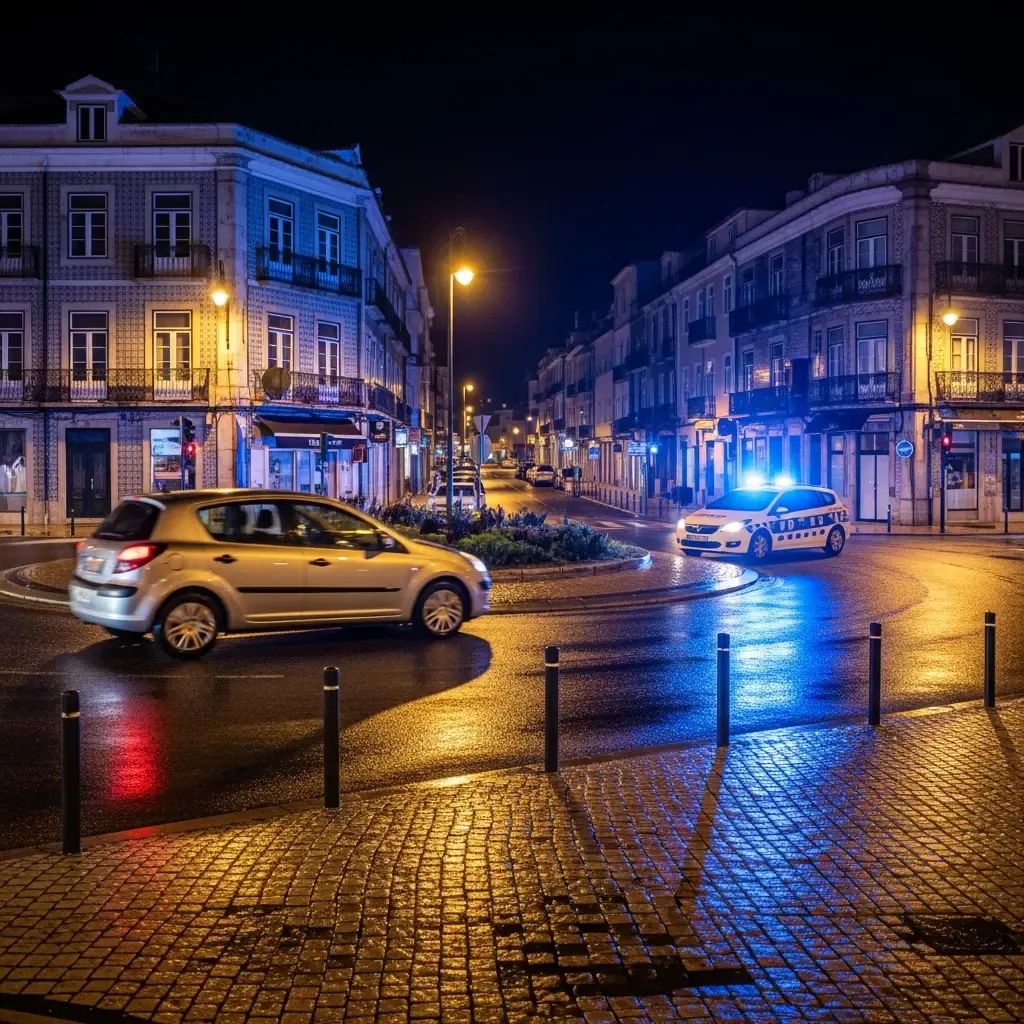
Witnesses say the collision happened shortly after 02:30 near the cruise-terminal roundabout, a nightlife zone busy on New Year’s Eve. The victim—a 41-year-old tourist from mainland Portugal—was crossing at a zebra when a silver hatchback failed to brake. Police on the scene measured a blood-alcohol level well above the 1.2 g/L threshold that converts a traffic infraction into a criminal offence. The car’s airbag deployed; the driver emerged unhurt.
Political Shockwaves Inside Madeira’s Assembly
Within hours, the councillor emailed the municipal president declaring a self-imposed “suspension of duties until judicial clarity is achieved.” A party spokesperson in Lisbon attempted to limit fallout, stressing that “personal conduct does not reflect the values of CDS-PP.” Even so, opposition leaders demanded a permanent resignation, citing previous cases—most recently in Leiria—where local politicians exited public life for lesser offences.
Legal Path Ahead
The Public Ministry has already opened a formal investigation for dangerous driving under Article 292 of the Penal Code. If convicted, the councillor faces:
• Up to 3 years in prison or a heavy monetary fine.
• A minimum 1-year licence suspension.
• Civil damages, should the victim sue for pain, income loss, and rehabilitation costs.
Legal analysts note that courts have become markedly stricter: last December a Setúbal judge imposed a 2-year sentence (suspended) plus a €12 000 payment to a cyclist injured in similar circumstances.
Madeira’s Road-Safety Numbers in Context
Island roads are picturesque but unforgiving; sharp bends and sudden downpours push accident stats above the national average. According to regional PSP data, Madeira logged 1 217 crashes and 15 deaths in 2025—small in absolute terms, high per capita. Alcohol factored in roughly one-quarter of those collisions. The regional government announced €4 M for smart speed cameras and sobriety checkpoints, but critics argue that political will “evaporates the minute a high-profile figure is involved.”
Growing Public Outrage—and Sympathy
Social feeds in Madeira filled with equal parts condemnation for “privileged immunity” and messages of support for the injured tourist, currently stabilised at Funchal’s Dr. Nélio Mendonça Hospital. A crowdfunding page set up by friends topped €9 000 in 24 hours to cover travel for his family. Meanwhile, local taxi associations renewed calls for zero-tolerance drink-driving laws, mirroring Sweden’s 0.2 g/L limit.
If You Live in Portugal, Know Your Rights
Residents who witness or fall victim to suspected drunk-driving can:
• Dial 112 and request immediate PSP or GNR intervention.
• Retain medical bills; courts routinely order offenders to cover all treatment costs plus moral damages.
• Claim support from the Fundo de Garantia Automóvel when the driver is uninsured.
Bigger Picture: Can Politics Police Itself?
Parliament has debated forcing elected officials to step down automatically when charged with criminal traffic offences. The proposal never left committee, but this Funchal incident may revive it. For now, the city is run by substitute councillors while one of their own prepares for court—a stark reminder that public trust can skid as fast as a car on wet cobbles.


