

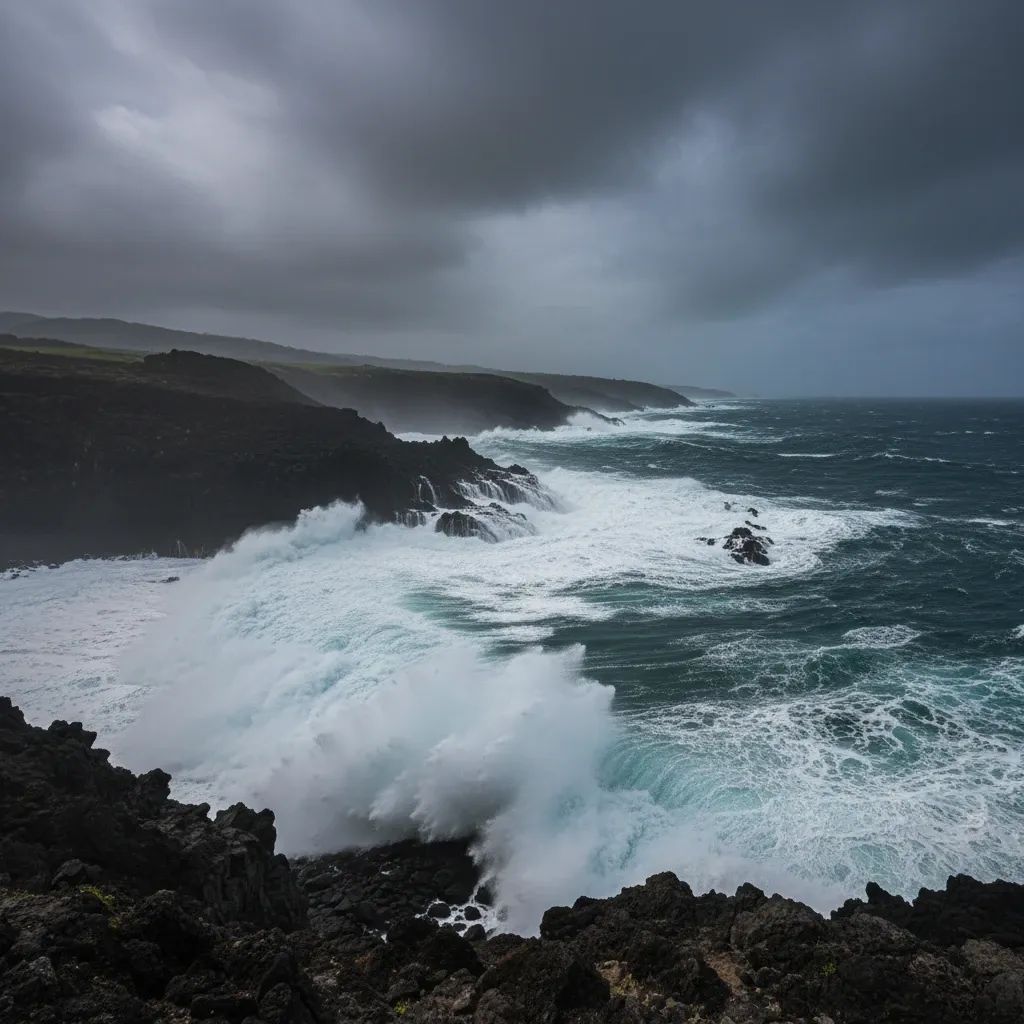
Portugal's Madeira Airport suspended operations on March 31, 2026, due to severe wind conditions, grounding at least 20 flights and leaving hundreds of passengers stranded or diverted to the smaller Porto Santo Airport. The disruption is the latest in a string of weather-related closures affecting the island's tourism-dependent economy.
Why This Matters:
• Travel disruption: Flights cancelled or diverted to Porto Santo, requiring ferry transfers that can take several hours
• Economic toll: Each day of airport closures costs Madeira an estimated €1.5 M to €2 M in lost tourism and commerce
• Recurring pattern: More than 160 flights were cancelled across March due to multiple storm systems
Wind Speeds Push Airport Beyond Safe Limits
The Portuguese Institute for Sea and Atmosphere (IPMA) issued a yellow weather warning for Madeira, predicting sustained northeast winds with gusts reaching 80 km/h in coastal zones and up to 110 km/h in mountainous interior regions. The alert remained active until at least 9 pm on March 31.
According to operational data from ANA – Aeroportos da Madeira, the last successful landing at Cristiano Ronaldo International Airport occurred at 1:48 pm, with the final departure lifting off at 3 pm. After that window closed, four inbound flights were rerouted to the Porto Santo airstrip, where aircraft remained grounded while pilots awaited a break in the weather.
The Funchal Port Authority simultaneously issued maritime warnings for the entire Madeira archipelago, advising that wave heights along the north coast would range between 2.5 and 3.5 meters, with calmer conditions of up to 1 meter on the southern shoreline. The authority urged vessel owners and operators to secure their craft and advised both seafarers and coastal residents to exercise heightened caution.
A Month of Mounting Cancellations
March 2026 has been particularly challenging for air connectivity to the island. Throughout the month, multiple storm systems disrupted operations. On March 2 and 3, the passage of Depression Regina triggered widespread disruptions, with approximately 120 flights scrubbed across both days.
On March 20, Storm Therese swept through, cancelling at least 18 flights and bringing heavy rain alongside wind gusts of 70 km/h. Later in the month, on March 29, strong winds forced the diversion of flights and cancellation of several arrivals. By March 31, the cumulative toll across the month had exceeded 160 cancelled flights.
The relentless pattern has left airlines scrambling to rebook passengers, many of whom are tourists with fixed accommodation dates or residents trying to return home from the mainland.
What This Means for Residents and Travelers
For anyone living in or traveling to Madeira, these disruptions are significant logistical challenges. Tourism accounts for roughly 30% of Madeira's GDP and directly employs more than 20% of the local workforce. When flights are grounded, hotel bookings are affected, restaurant reservations go unfilled, and tour operators lose revenue.
Industry estimates suggest that repeated cancellations impact tourist demand and tourism receipts. For residents, the problem is equally practical. Many Madeirans rely on regular air links to Lisbon and Porto for medical appointments, business meetings, and family visits. When the airport closes, the only alternative is the much slower ferry service to Porto Santo followed by a connecting flight—a detour that can add significant time to a journey.
Why Madeira's Airport Is Among Europe's Most Challenging
The Cristiano Ronaldo International Airport consistently ranks as one of the most operationally difficult airfields in Europe. Built on a narrow coastal plateau and hemmed in by steep mountains, the runway is exposed to the full force of Atlantic weather systems. The island's topography funnels wind into unpredictable, turbulent bursts, creating crosswinds that can shift direction within seconds.
Most commercial aircraft are certified to land in crosswinds of up to approximately 36 mph (roughly 58 km/h), but the gusts recorded during closures frequently exceed that threshold. Pilots operating into Madeira must undergo specialized training to navigate the tricky approach, which involves a sharp turn over the ocean before lining up with the runway.
By contrast, major European hubs like Amsterdam's Schiphol or Paris Charles de Gaulle are located on flat terrain with multiple runways oriented in different directions, allowing controllers to route traffic onto whichever heading offers the most favorable wind angle. Even so, those airports are not immune to disruption. During a severe cold snap in January 2026, Schiphol cancelled over 700 flights in a single day due to snow and ice, while Charles de Gaulle and Orly grounded significant portions of morning departures.
The difference is frequency. Madeira's geography makes wind-related closures a recurring operational challenge, whereas continental airports typically face severe weather a handful of times per year.
Technology and Safety Measures
Madeira has invested in advanced wind detection systems and continues to explore operational improvements. The Portuguese Airline Pilots' Association (APPLA) advocates for mandatory runway closures whenever wind speeds exceed certified operational limits, prioritizing safety over schedule. Meanwhile, the Madeira Regional Protection Civil Service continues to issue advisories urging residents and visitors to monitor weather updates closely and avoid unnecessary travel during active warnings.
Planning for the Future
Madeira has ambitious plans for tourism development in 2026, aiming to position the island as a premium destination. The airport surpassed 5 million passengers in 2025, underscoring growing airline confidence in the market. However, air reliability remains critical to maintaining this momentum.
Travel agents and tour operators factor reliability into their recommendations, and a destination known for frequent flight disruptions may lose market share to more predictable competitors. As climate patterns evolve, Madeira's challenges reflect broader questions facing coastal and island airports across Europe: how to balance operational safety with economic needs, and whether infrastructure and contingency planning can adequately address the impact of weather systems over which airports have no control.


