
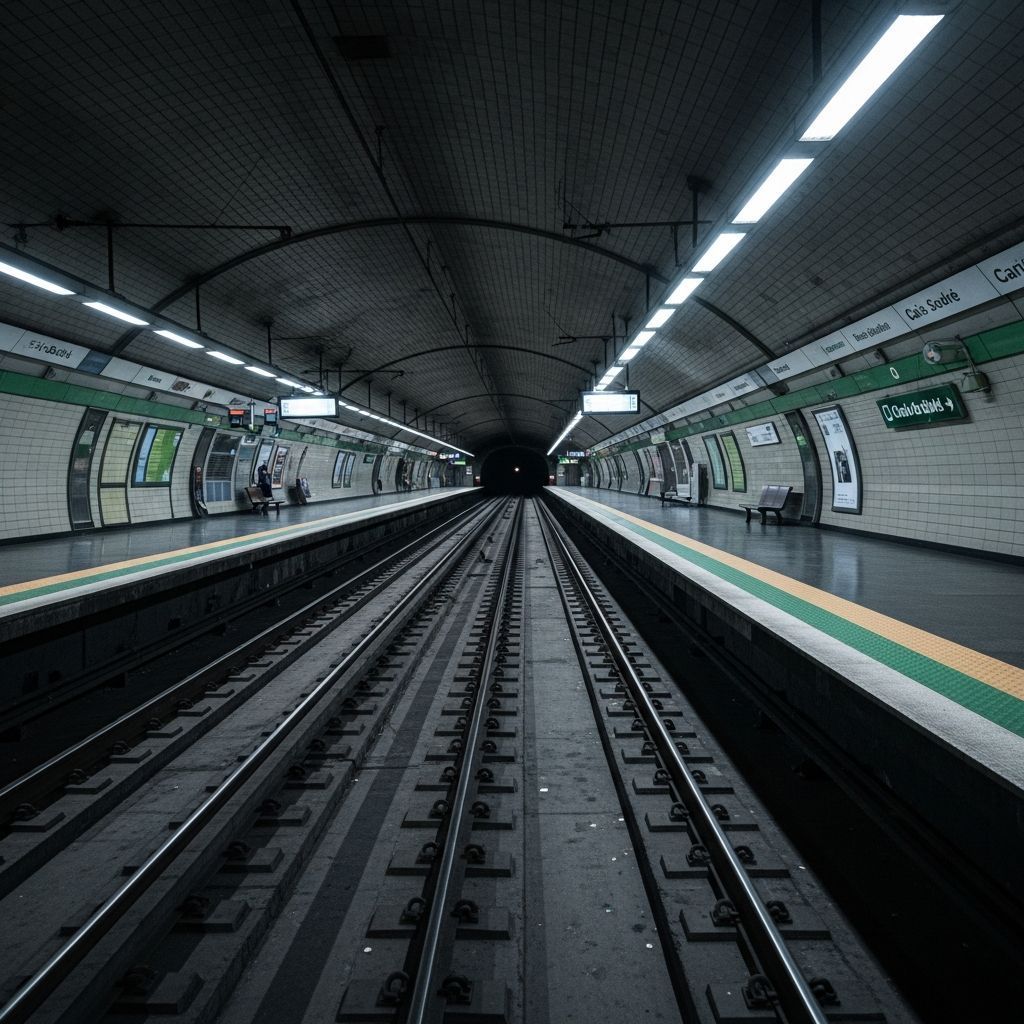
The familiar hum of the underground is back. After two days of uncertainty, riders on Lisbon’s Green Line are once again moving between Cais do Sodré and Telheiras without the anxious glances at station monitors that marked the start of the week. Service stabilised before dawn and, by the first rush-hour trains, the Metro de Lisboa was reporting “circulação normal” across its entire network. For regular commuters, that means no unexpected bus hops, no inflated waiting times and, just as important, a hint that the broader modernisation programme may finally be edging past its most disruptive phase.
Morning commute returns to routine
Station loud-speakers that only forty-eight hours ago urged patience now offered the usual reminders about baggage and escalator etiquette. On-board, passengers spoke of relief rather than frustration. Many recalled Tuesday night’s signal failure, a glitch that halted traffic for nearly an hour and triggered crowding at Baixa-Chiado. Early telemetry suggests that trains are again running at the pre-incident three-minute headway during peak periods. The company’s control room confirmed that all safety systems, from platform doors to automatic braking, are operating within normal parameters. The swift recovery is being credited to revised maintenance protocols introduced over the summer, coupled with a fresh roster of technical staff hired for the rollout of the new CBTC signalling. Even with today’s encouraging performance, managers caution that the network remains in a state of heightened vigilance as equipment is gradually swapped over to the digital standard.
November’s string of breakdowns: what happened?
The hiccup on 25 November was only the latest in a month punctuated by three major stoppages. Earlier incidents on 21 November and 4 November shared a common culprit: ageing relay cabinets that still interact with the cutting-edge CBTC software. Each disruption forced the closure of at least two central stations, prompting the metro to issue real-time warnings on the X platform and its own app. Internally, engineers found that moisture seepage in tunnel junction boxes had accelerated corrosion, compromising data transfer between trains and trackside antennas. While the individual stoppages lasted less than ninety minutes, their timing—late evening, often coinciding with cultural events—magnified the inconvenience. Transport economists estimate that fare-box revenue dipped by roughly €60,000 during the night of the most recent failure, as travellers sought taxis or rideshares instead.
Modernisation race: promises and pitfalls
At the heart of the turbulence lies the €250 M scheme to convert the Green Line into the southern arc of the future Line Circular. Two new platforms—Estrela and Santos—are tunnelling their way toward completion, while massive viaduct works in Campo Grande reconfigure track geometry so Yellow-Line trains can loop seamlessly. The transformation is projected to add 9 M additional trips yearly, shrink cross-town journeys by up to eight minutes and help Lisbon hit its 2030 climate targets. Yet progress has been anything but linear. Supply-chain snags delayed the arrival of 33 new carriages, and union sources say overtime costs are climbing as crews balance everyday operations with night-time construction. Officials insist that the critical CBTC milestone—full fleet integration by the first quarter of 2025—remains intact, describing last week’s outages as “growing pains” on the path toward a faster, more reliable service.
What passengers should watch for in the weeks ahead
With December’s holiday traffic looming, Metro de Lisboa is keen to avoid a repeat of November. Evening tunnel access for contractors has been curtailed, meaning fewer early closures but more sporadic maintenance nights between 01:00 and 05:30. Riders are urged to consult the network’s real-time app, which now pushes alerts in both Portuguese and English. A batch of freshly refurbished six-car trains begins phased entry next Monday, increasing peak-hour capacity by roughly 20 %. Meanwhile, the integration agreement with Carris enables ticket holders to board replacement buses at no extra charge should unexpected stoppages occur. For now, though, the signals are green—and in a city where reliable public transport is often the difference between making the ferry at Cais do Sodré or missing it by seconds, that single colour makes all the difference.


