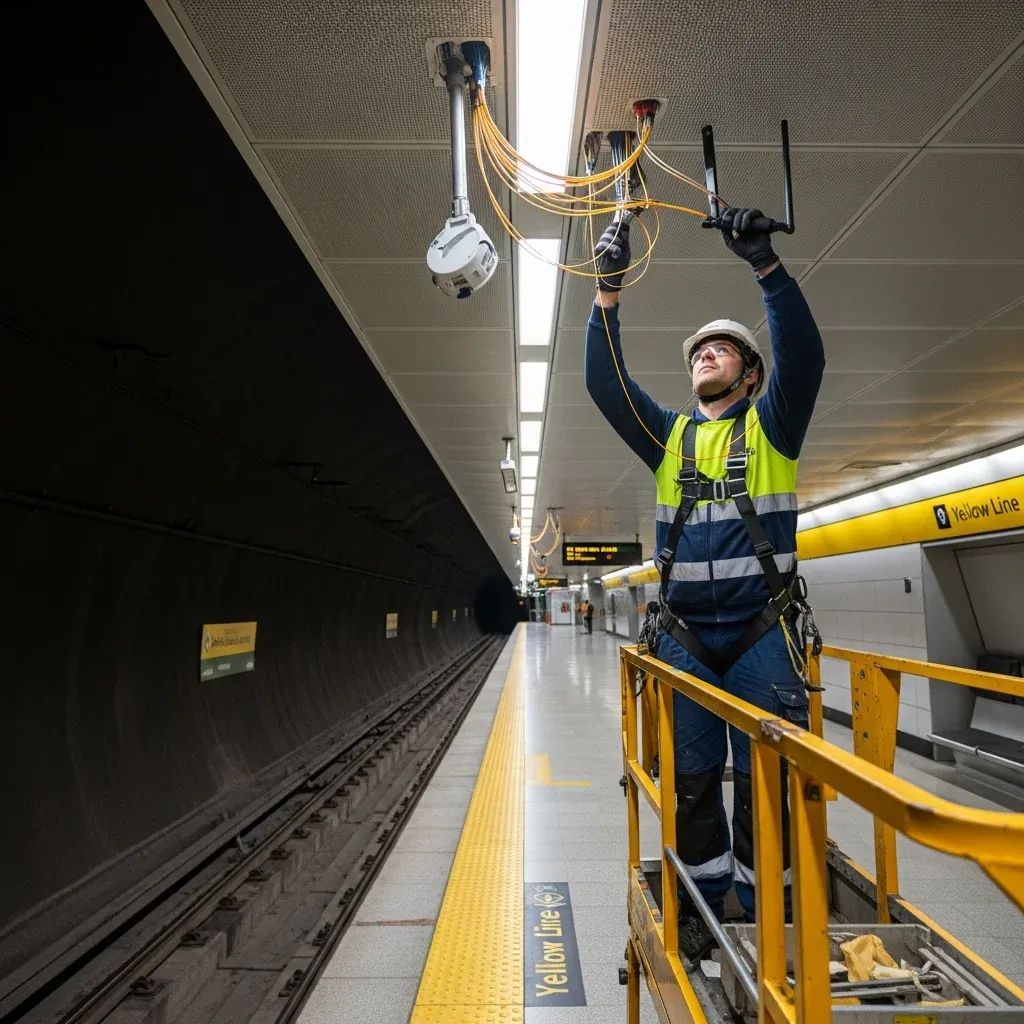
Portugal's Cabinet has authorized an additional €48M injection into Lisbon's beleaguered Circular Metro line, pushing the total bill to €380M—an 80% surge from the 2018 blueprint. The Rato-to-Cais do Sodré link, originally priced at €210M and due in December 2023, now won't open until Q1 2027, more than three years behind schedule.
Why This Matters
• Tax exposure: Nearly four out of every five euros being spent were never in the original budget, raising questions about whether this cost blowout pattern will repeat on future transport projects.
• Completion timeline: Commuters hoping for faster cross-city routes must wait until at least early 2027; the line has slipped 39 months from its original deadline.
• Limited catchment: Government spokesman António Leitão Amaro openly questioned allocating €380M to "two neighborhoods that are not particularly deprived," hinting at wider debates over infrastructure priorities.
From €210M to €380M: Anatomy of a Budget Overrun
When Metropolitano de Lisboa unveiled the Circular line expansion in 2018, engineers estimated €210M would suffice to connect Rato station on the Yellow Line to Cais do Sodré on the Green Line via two new stops—Estrela and Santos. Fast-forward to today, and that figure has ballooned by €170M, or 80%.
Most of the damage occurred in 2022, when escalating costs for steel, energy, and labor—fueled by pandemic-era supply snarls, inflation spikes, and the Ukraine war's ripple effects—forced the first major revision. Leitão Amaro, speaking after this week's Cabinet meeting, acknowledged the project has undergone four separate budget revisions since launch. "We cannot leave the work half-finished," he said, "but it is worth the country reflecting on how a project ends up at this cost dimension."
The €48M top-up approved by Portugal's Council of Ministers brings the total commitment to €380M, which incorporates previous budget increases from 2022 onwards plus this latest authorization. This price tag exceeds the entire annual capital budget for some smaller Portuguese municipalities.
What This Means for Lisbon Residents
The Circular line will connect the Estrela district—home to the Basílica da Estrela and the Assembly of the Republic—with the riverfront at Santos and Cais do Sodré. Travelers currently relying on surface trams or crowded bus routes will gain a direct underground alternative.
However, the three-year delay means another full cycle of election campaigns, tourist seasons, and commuter frustration before the first train rolls. Students, office workers, and tourists navigating between Belém, Santos, and central Lisbon will continue to face congestion challenges on existing surface transport.
A Pattern Across Three Lines
The Circular line is not an outlier. In recent statements, Portugal's State Secretary for Mobility revealed that all three expansion corridors—Yellow/Green, Red, and Violet—are running behind schedule, with combined budget pressures impacting the metro network.
The Red Line (São Sebastião–Alcântara) and Violet Line extensions face similar inflation pressures and labor challenges. Metropolitano de Lisboa has publicly committed to targeting the Q1 2027 timeline for the Circular line.
European Context: Portugal Is Not Alone
Cost overruns on urban rail are a continent-wide issue. Transport infrastructure projects across Europe have experienced delays and budget increases, a phenomenon particularly acute for complex underground construction requiring specialized tunneling through challenging geological conditions.
Lisbon's metro expansion faces similar headwinds to peer cities across the continent, where projects have encountered unforeseen geological obstacles, supply chain disruptions, and labor market constraints.
Political Accountability Questions
Leitão Amaro's remarks about spending €380M signal ongoing debate within Portugal's government over infrastructure priorities. Some observers suggest comparable investment could extend metro coverage into other underserved zones where car dependency remains high.
The Portuguese Parliament continues to scrutinize transport spending decisions, with officials exploring oversight mechanisms and accountability measures for major projects.
Timeline and Next Steps
Metropolitano de Lisboa is targeting early 2027 for service launch at the Circular line, with construction managers acknowledging that final system integration and testing could influence the precise opening date. Test operations are scheduled for late 2026, providing time for technical adjustments.
The two new stations—Estrela and Santos—will include standard platform facilities and comply with EU accessibility standards. Once operational, the Circular link will provide a direct underground connection across central Lisbon.
The €380M Question
For residents and taxpayers, the central question is whether the Circular line's €380M final cost represents a necessary investment or signals deeper project-management challenges. Lisbon's metro network requires expansion to meet transportation demand and support urban sustainability, yet the trajectory of budget revisions underscores the importance of strengthened oversight on future major infrastructure commitments.
As Portugal pursues infrastructure development priorities, the Circular line's progress will serve as a reference point in discussions about delivering transport projects reliably. For now, Lisbon commuters can mark their calendars for early 2027 and monitor further developments.