

Portugal's Cruise Boom Hits €940M—But Pollution and Seasonal Jobs Strain Residents
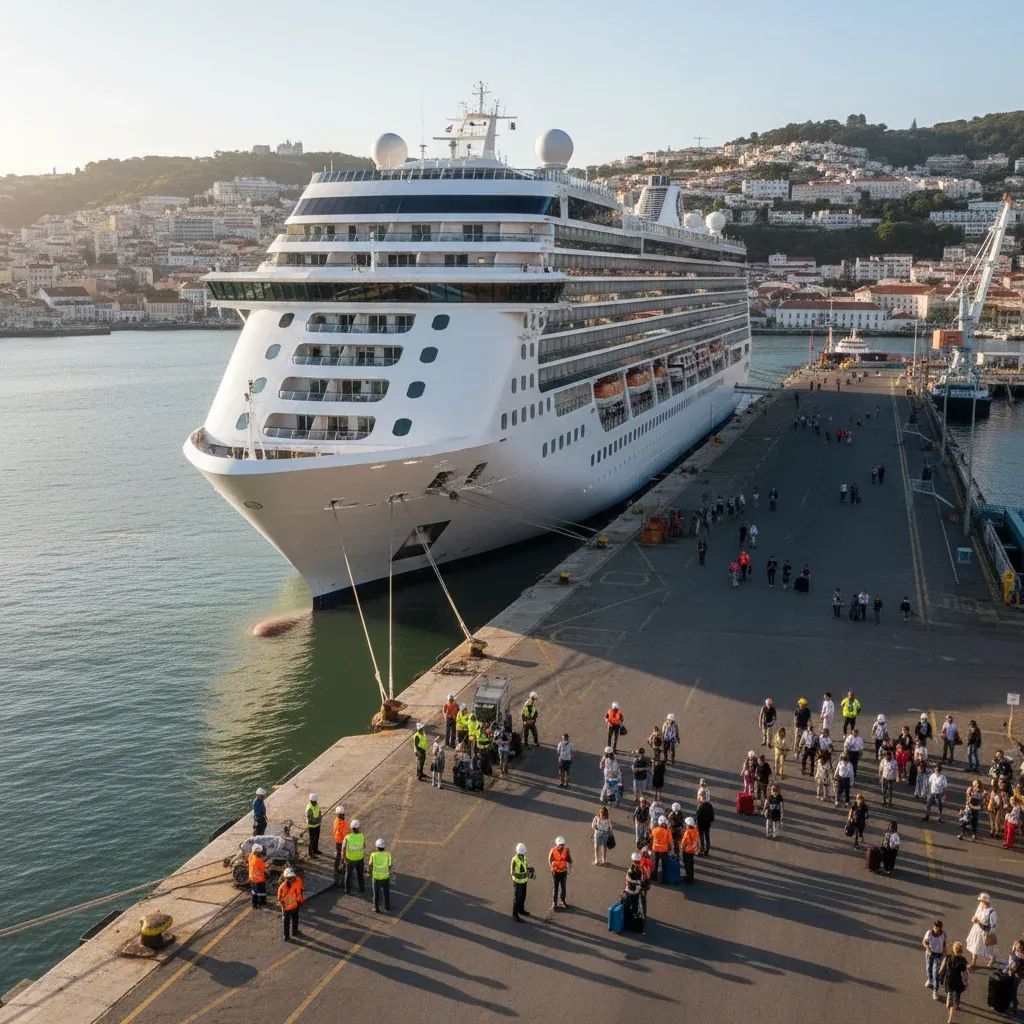
Portugal's cruise sector generated €940M in economic activity during 2024, supporting 9,800 jobs and marking a nearly 16% annual jump. Yet the concentration of mega-ships in Lisbon and Madeira, combined with heavy seasonal swings and air-quality concerns, reveals tensions between growth and livability that residents are already feeling.
The Two Sides of €940M
The figures announced this week at Europe's largest cruise industry gathering showcase undeniable economic gains: €225M in wages paid across the sector, €410M contribution to national GDP, and strategic positioning for Portuguese ports competing with Mediterranean hubs. But beneath the headline numbers lies a messier reality for people living in affected neighborhoods.
The good news: Homeport passengers—those embarking or disembarking in Lisbon or Funchal—spend €150–€200 per person on hotels, restaurants, and independent tours, far exceeding the €50–€80 spent by transit passengers on six-hour port calls. Lisbon's shift toward overnight calls is deliberately designed to capture this higher-value spending. Norwegian Aqua, a next-generation ship marketed as highly sustainable, will use Lisbon as a home base for multiple annual sailings, signaling confidence in Portugal's green-shipping transition.
The complication: The €225M wage bill masks sharp disparities. Permanent port roles in Lisbon and Funchal average €1,800–€2,200 monthly; seasonal excursion guides and retail workers earn €400–€700 for three to four months, with no job security or benefits—far below Portugal's €820 monthly minimum wage when annualized.
Air Quality: The Pollution Math
If you live in Lisbon's Alfama or near Funchal's harbor, this matters directly. A 2022 Lisbon-based research consortium found that berthed cruise ships released 2.44 times more sulfur oxides than all registered passenger vehicles in the capital—a finding that contributed to the European Court of Justice condemning Portugal in 2023 for breaching air-quality standards.
A single large vessel consumes 304,593 liters of marine fuel daily at berth, burning heavy fuel oil for air conditioning, lighting, and onboard systems. This generates sulfur dioxide, nitrogen oxides, particulate matter (PM2.5), and low-frequency noise. Residents report elevated respiratory complaints during peak cruise seasons; the issue is particularly acute for children, the elderly, and those with pre-existing conditions.
Relief is coming, but slowly. Lisbon's Onshore Power Supply (OPS) project—budgeted at €31M and scheduled for completion by end of 2026—allows docked ships to shut down diesel generators and draw electricity from the grid. The port authority projects a 77% cut in greenhouse gas emissions from berthed vessels, plus dramatic reductions in noise and vibration. Madeira is exploring parallel infrastructure with €6M in terminal upgrades aimed at accommodating liquefied natural gas and hybrid vessels, though no timeline has been announced.
Residents seeking air-quality data: The Portuguese Institute for the Sea and Atmosphere (IPMA) publishes daily air-quality indices for Lisbon and Madeira online, though real-time correlation with ship schedules is not yet available. Environmental groups are calling for mandatory transparency—real-time emissions reporting and monthly port-area air-quality analyses—to help residents track links between ship activity and respiratory impacts.
The Seasonality Trap: Feast and Famine
Madeira's cruise economy is heavily winter-dependent. November through March accounts for roughly 80% of annual calls, revenue, and employment. Summer berths sit largely idle, creating cascading problems: tour guides, taxi drivers, and retail staff face unpredictable hours and zero job security; port operators struggle to justify capital investment in underutilized assets.
Madeira's Porto do Funchal posted record numbers in 2025: 331 ship calls and approximately one million passengers and crew, generating €62.9M in direct revenue. January 2026 alone saw 41 calls—a 13.89% increase over January 2025—with passenger throughput climbing 26.27%. Yet this winter surge masks a structural problem: year-round workforce stability remains elusive.
Madeira's port authority is pursuing repositioning cruises—transatlantic voyages that move ships between summer and winter home ports—to fill the calendar. These voyages can waypoint in Madeira during traditionally quiet periods, though the strategy's effectiveness remains unproven.
Lisbon faces the inverse challenge: robust summer demand but seasonal dips when ships move south for winter. The city is courting small-ship luxury operators (Silversea, Seabourn, Ponant) to diversify deployments and stabilize year-round employment.
Crowding and Neighborhood Strain
When a 5,000-passenger mega-ship docks in Funchal or Lisbon's Alcântara terminal, the influx can overwhelm historic neighborhoods. Alfama, Baixa (Lisbon's medieval core), and central Funchal report increased crowding, noise, and proliferation of fast-fashion chains and souvenir stalls displacing traditional shops. Residents voice concerns about rising rents driven by tourism-related gentrification.
Funchal's vice mayor has called for a formal "cooperation protocol" between cruise operators, city government, and resident associations—diplomatic language for urgently needed management tools. Lisbon's cruise authority is investing in expanded gangways and improved traffic flow through the Alcântara terminal, recognizing that inefficient operations deter repeat business.
What's Next: 2026 Inflection Point
Three developments to watch:
Lisbon shore power launch (Q4 2026): If operational on schedule, this becomes a proof-of-concept for European green-port retrofitting, attracting additional green-certified vessel deployments. Delays risk momentum loss.
Air-quality monitoring and transparency: Will the Portugal Ministry of Environment and Climate Action mandate real-time emissions reporting and publish monthly analyses? Transparency is essential for public confidence.
Madeira's calendar smoothing: Can aggressive repositioning strategies stabilize employment during slow months? Success would ease the seasonality trap; failure perpetuates emigration among younger workers seeking year-round work.
The Portugal Cabinet is considering several initiatives, according to Infrastructure Ministry officials: shore-power subsidies for compliant operators, expanded Emission Control Areas in Portuguese waters, multi-stakeholder cruise councils in Lisbon and Madeira to formalize dialogue, and feasibility studies for per-passenger levies to fund infrastructure and community mitigation.
The Bottom Line for Residents
Portugal's cruise boom delivers real economic benefits—€410M GDP contribution, €225M in wages, and strategic positioning in European tourism. Yet residents in port neighborhoods are paying costs through air-quality degradation, seasonal employment instability, crowding, and rising housing costs. The shore-power project offers meaningful relief by 2027, but implementation delays or enforcement gaps could undermine those gains. Meanwhile, workers in seasonal roles and residents of historic cores need transparent data, meaningful participation in port-planning decisions, and policies that prioritize livability alongside growth.


