

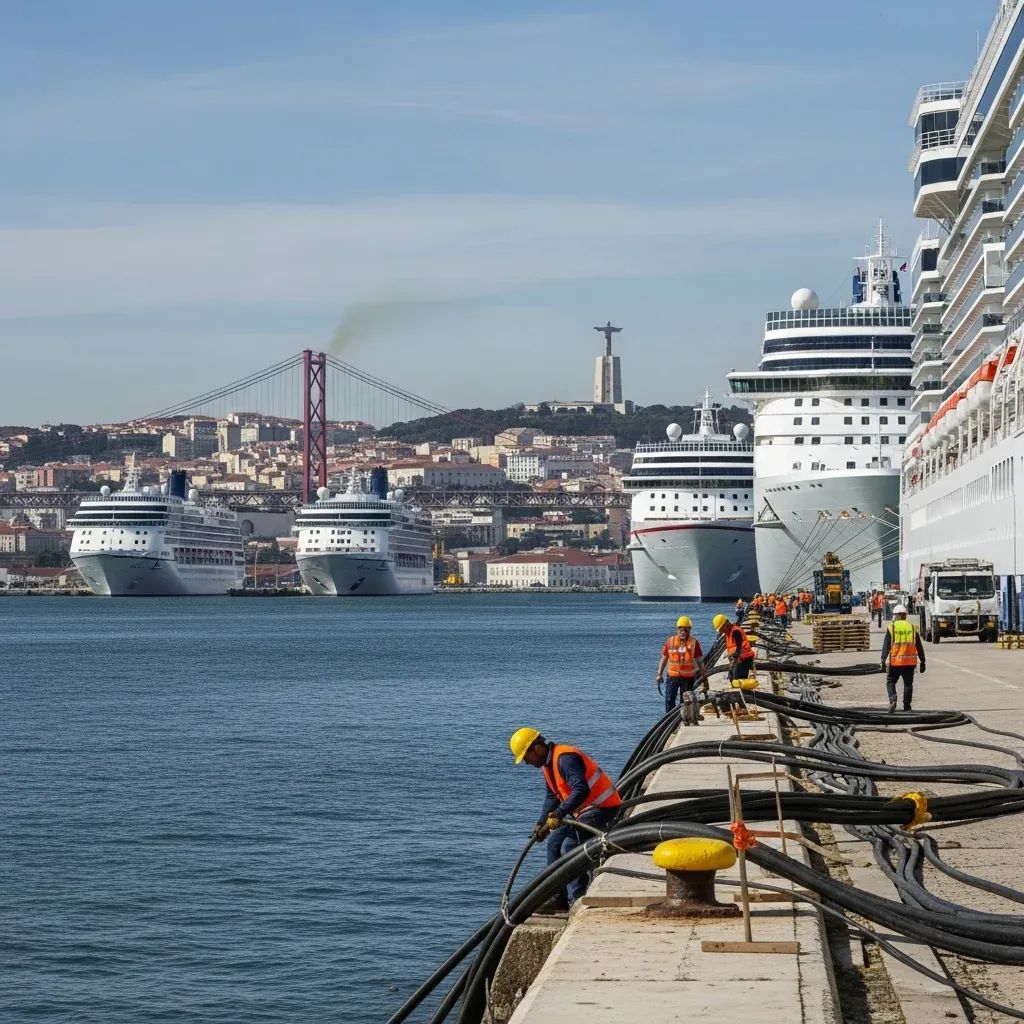
A walk along Lisbon’s Ribeira das Naus these days tells a clear story: the capital has never welcomed so many cruise passengers, generated so much cash, or moved so quickly to clean up the industry’s footprint. In short, 2025 crowned Lisbon the hottest embarkation point on the Atlantic seaboard and forced planners to think bigger—fast.
Quick takeaways for readers in Portugal
• €80 M in direct economic impact, shattering all previous tallies
• 206 226 turnaround passengers, a fresh record that cements Lisbon as an origin-and-destination port rather than just a stop-over
• 499 211 visitors in transit, feeding museums, cafés and taxis for single-day spending sprees
• 121 ship calls in 2025 – up 10 % on the year
• A planned €36 M shore-power network aims to slash quayside emissions by 77 % before the decade ends
Lisbon emerges as Iberia’s cruise magnet
Something changed the moment cruise lines realised travellers would happily start or finish their voyage beside the Tagus estuary. Until recently, ships treated the Portuguese capital as a picturesque detour between Barcelona and Southampton. Now operators are deliberately programming Lisbon as a turnaround hub, lured by an airport with inter-continental links and a city that can house thousands of passengers at once. The result? Three of the four vessels christened in 2025 chose Lisbon for a maiden call, giving the harbour a prime slot on global marketing campaigns.
Money talks: €80 M direct windfall—and counting
The cruise economy’s direct contribution—€80 M in 2025 alone—comes from port fees, provisioning, refuelling, local tours and hotel nights before or after sailing. That figure, calculated by the Administração do Porto de Lisboa (APL), excludes indirect gains such as additional flights into Humberto Delgado Airport or VAT from shoppers on the Avenida da Liberdade. By comparison, the wine sector needed an entire Douro harvest to match that scale of revenue.
Who is sailing in?
Europe still dominates, with 459 028 passengers; the UK supplies 40 % of that stream, a reminder of Britain’s long-running affection for Portugal’s capital. The real momentum, however, is trans-Atlantic: US citizens grabbed 23 % of market share, and Canadian traffic surged 19 % to 39 371 travellers. When it comes to longer itineraries—ships starting or ending in Lisbon—North Americans account for 43 %, a lucrative segment that typically spends more per day ashore.
April breaks every benchmark
April 2025 proved how quickly capacity can spike: 98 686 cruise guests and 55 separate calls created the busiest April since records began. Hoteliers near Santa Apolónia station posted occupancy rates topping 90 %, while extra suburban trains eased pressure on the Linha de Cascais after coaches clogged the riverfront.
Green port, blue sea
Record volumes bring scrutiny. In response, the APL is pouring €36 M into a phased On-Shore Power Supply (OPS) system. A new 4.4 km underground cable and substation, built with E-REDES, will let vessels switch off diesel engines at berth. The first sockets go live by 2027; full coverage of cruise and cargo quays follows by 2029. Complementing that hardware, Lisbon was the first southern-European harbour to adopt the Environmental Port Index—a digital dashboard that publicly grades each ship’s emissions in real time.
The road (and river) to 2026
Although the port authority has not published numeric passenger forecasts for 2026, executives insist the infrastructure can handle further growth. Ongoing works include extended gangways for mega-ships and smarter traffic flows to keep coaches from gridlocking the Alfama backstreets during peak arrivals. Industry insiders also expect the Norwegian Aqua—hailed as the world’s most sustainable cruise ship—to home-port more frequently, acting as a test case for Lisbon’s greener energy plug-ins.
Bottom line for Portugal
For residents, the cruise boom is a double-edged sword: jobs and revenue soar, but streets already straining under mass tourism feel the weight. The decisive factor will be whether investment in cleaner technology and smarter logistics outpaces passenger growth. If it does, Lisbon could offer a blueprint for midsize European ports hoping to cash in on the cruise wave without sacrificing liveability.


