Depression Therese Brings Fresh Threat to Portugal's Recovery Efforts
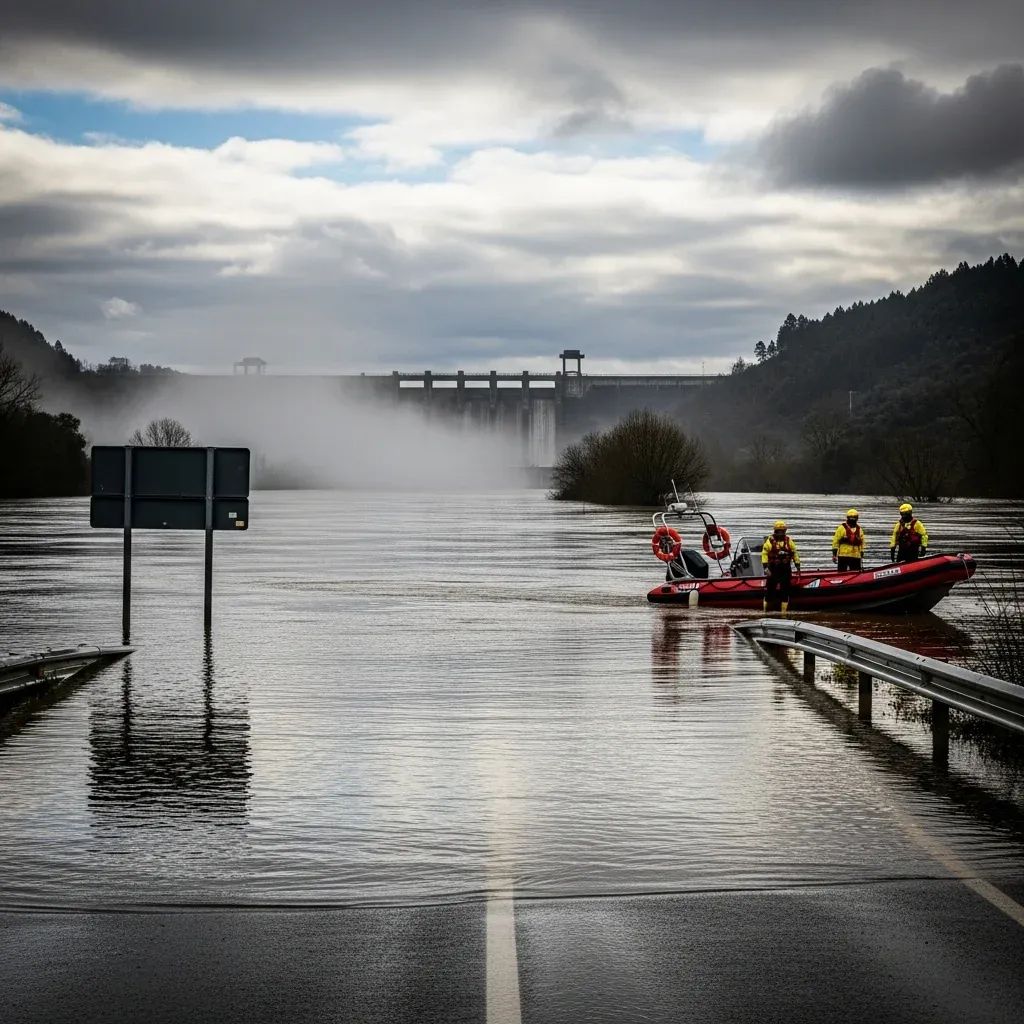
Portugal's mainland faces yellow-level precipitation alerts as Atlantic Depression Therese sweeps southeastward through mid-March. The Portuguese Institute for Sea and Atmosphere (IPMA) activated warnings across four mainland regions—Beja, Faro, Lisboa, and Setúbal—as the system approaches soil conditions still saturated from winter storms that struck between late January and mid-February. Authorities emphasize that saturated ground amplifies flood risk even from moderate rainfall.
Immediate Weather Threats and Regional Impact
Multiple regions face precipitation warnings through Friday, with Faro's alert extending through Saturday 3:00 AM backed by marine warnings forecasting waves up to 2.5 meters. Wind speeds across coastal zones will range from 40-61 km/h, with exposed highlands and western-facing slopes experiencing gusts reaching 65-70 km/h. Maximum daytime temperatures will hover around 15-18°C.
Portugal's Açores archipelago bore the depression's harshest effects, with the Regional Civil Protection Service documenting over 50 weather emergencies by Thursday. The majority involved fallen trees, collapsed fencing, and structural roof damage. Wind gusts reached 110 km/h in central island groups and 95 km/h in western zones. SATA Açores and Azores Airlines canceled multiple flights, affecting hundreds of passengers.
Madeira faces persistent hazards with the Funchal Maritime Authority extending marine warnings through Friday morning, citing northwest swells of 5-6 meters on the northern coast. Mountain zones face orange-level wind alerts with gusts potentially reaching 120 km/h at elevated terrain, and snow accumulation forecast above 1,200 meters altitude.
Why Saturated Ground Amplifies Danger
Ground conditions across the Center, Lisbon and Tagus Valley, and Alentejo regions remain compromised from storms spanning late January through mid-February. When soil loses infiltration capacity from existing saturation, rainfall cannot absorb into ground and instead channels into drainage networks already compromised by earlier flooding. Predicted rainfall accumulation of 40-50 mm could trigger flash flooding and mudslides in central and southern districts where drainage infrastructure remains damaged.
The IPMA forecasts organized squall lines advancing northward from the southern coast through Friday and Saturday, with the heaviest rainfall and thunderstorm concentrations persisting in Center and South zones. Coastal and elevated conditions will prove treacherous for outdoor activity due to combined wind, rain, and temperature effects.
Recovery Infrastructure Under Stress
Portugal's recovery apparatus faces compressed timelines between successive crises. In mid-February, Prime Minister Luís Montenegro unveiled comprehensive recovery initiatives addressing household, business, and infrastructure repair over coming years.
The government established a Solidarity Emergency Network coordinated among Entrajuda, the Portuguese Federation of Food Banks, the Portuguese Red Cross, and the Central Region Reconstruction Mission Structure. The network surveyed over 1,200 social institutions across calamity-status municipalities, documenting material needs and volunteer requirements.
A retail campaign through Missão Continente supermarket chain raised €950,000 in public donations, which Missão Continente and Fundação Galp matched and doubled, bringing the relief pool to approximately €2M for temporary housing, food assistance, and material support for displaced families.
European Union solidarity accompanied Portuguese efforts. European Council President António Costa conveyed the EU's formal condolences and reaffirmed support during the country's recovery phase.
Operational Guidance for Residents and Business Operators
Portugal's Civil Protection services recommend continuous monitoring of IPMA updates and alerts. Residents should secure outdoor furniture and unsecured objects before sustained wind arrives; verify roof fastenings and water drainage systems remain functional; and clear gutters of accumulated debris.
In flood-prone neighborhoods, families should prepare emergency kits containing essential medicines, documents in waterproof containers, battery-powered radios, and supplies for 72 hours without external assistance. Identify evacuation routes in advance and practice them with household members.
The "O Turismo Acolhe" temporary accommodation program continues offering hotel stays for displaced families. Beneficiaries should contact their parish or municipal civil protection office to access enrollment. The Solidarity Emergency Network distributes material aid and volunteer labor for cleanup operations through local social institutions.
Fiscal obligations remain partially suspended for families and businesses under calamity-status municipalities. Residents may defer tax payments, VAT, and social security contributions; mortgage servicers may authorize payment deferrals; and utilities may offer temporary rate reductions. Contact your serviços de finanças (tax office) or utility provider to inquire about available forbearance programs.
Near-Term Forecast and Preparedness
IPMA meteorological models indicate Therese will dissipate by Saturday evening as the Atlantic low-pressure core drifts northeastward toward the Bay of Biscay. However, meteorological guidance suggests North Atlantic conditions remain unsettled, with additional disturbances potentially forming in subsequent weeks.
For Portuguese residents and policymakers, the message is clear: extreme Atlantic depressions now constitute a recurring weather challenge demanding adaptive infrastructure and robust emergency coordination. Each year carries elevated probability of multiple severe events, with recovery windows compressed between successive crises.
Communities adapting quickly and comprehensively to this new reality will weather future storms more successfully than those treating reconstruction as temporary response rather than permanent strategic priority.