One month after storms Kristin, Leonardo and Marta tore through Portugal in late January and early February 2025, homeowners are still waiting for government aid while municipal leaders warn the reconstruction process has become a bureaucratic quagmire—and the €3.5 billion national recovery program now risks overlooking the hardest-hit territories.
The Portugal Cabinet's newly unveiled PTRR (Portugal Transformação, Recuperação e Resiliência) was designed to rebuild devastated regions, but local authorities in Leiria, Coimbra, and other central districts are sounding alarms: the system is collapsing under its own weight, and without immediate fixes, thousands of residents face months of delay before repair funds arrive.
Why This Matters
• Financial exposure: Insurance claims alone reached €750M, and municipalities like Leiria are considering €30M loans to plug processing gaps.
• Bureaucratic bottleneck: Leiria's City Hall received 6,000 applications—30% of the entire regional total—but has only 10 urban planning staff to process them.
• Health risk: Standing water from flooding has prompted official mosquito warnings from Portugal's Health Directorate, with dengue and West Nile virus now on the watchlist.
• Reconstruction uncertainty: One month on, some residents still lack stable electricity and telecoms, and the inspection backlog means repairs cannot legally begin.
What Residents Need to Know
If you've been affected by the January-February storms and need to apply for reconstruction aid:
Application Requirements:
• Government grants max out at €10,000 per household for direct reconstruction
• You will need photos of damage, proof of residency, and tax compliance documentation
• Claims under €5,000 with photographic evidence typically receive three-day approvals if no site visit is required
• Larger claims usually take 15 days, though delays are currently extending this timeline
Where to Apply:Contact your local municipal government's urban planning or civil protection department. In Leiria and other affected areas, applications are being processed, but expect delays due to high volume. Do not wait for perfection in your application—submit with available documentation, as requirements are evolving.
If Processing Is Delayed:
• Businesses can access 90-day credit moratoria on loans
• Two credit lines totaling €1.5 billion support reconstruction and working capital
• Contact the Banco Português de Fomento for emergency financing options
The Damage: Scale and Recovery Challenges
The three-storm series generated estimated economic losses between €5 billion and €6 billion, with €750M in insured claims alone. This represents the most significant insured loss Portugal has experienced in recent decades. Of the claims filed, 115,000 relate to homes, with thousands more covering commercial premises and vehicles.
Eighteen people died across the three storms, six of them in Leiria district. Between 1,200 and 3,000 residents were evacuated as rivers overflowed and urban flooding spread. EDP's electricity subsidiary reported €80M in infrastructure damage, with 6,000 kilometers of network and over 5,000 utility poles destroyed or severely damaged. The national road operator, Infraestruturas de Portugal, logged over 4,200 incidents, including a catastrophic breach of the A1 motorway near Coimbra when a dike ruptured.
Municipalities Drowning in Paperwork
Gonçalo Lopes, the Socialist mayor of Leiria, articulated the core problem bluntly: "We were thrown to the front line to solve a problem without being asked whether we had the conditions, nor was there any negotiation about how it should be done."
The government promised three-day approvals for smaller claims and 15-day turnarounds for larger ones. In reality, application forms have been "systematically altered," and requirements change daily, Lopes said. Leiria alone is handling 6,000 applications with a 10-person urban planning department—an impossible ratio that forced the city to recruit private surveyors, engineers, university professors, and civil engineering students to conduct informal pre-assessments.
Lopes is negotiating a €30M loan with the Banco Português de Fomento and the European Investment Bank to cover immediate municipal costs while waiting for state reimbursement. "Either we move forward or we die," he said. "Either money comes from one side or the other, or from both."
The mayor also warned against the government's recent decision to expand PTRR eligibility nationwide. While supportive of national ambition, he insisted hard-hit zones like Leiria must remain the priority. "I will be a voice. I will never stay silent. The aid must arrive" for the most affected territories.
Urban Planning: Prevention Over Reaction
Maria José Roxo, a professor of geography and regional planning at Universidade Nova de Lisboa, argues that while Portugal cannot prevent Atlantic storms intensified by climate change, it can minimize damage through smarter land use.
The core problems are channelization of urban watercourses and soil impermeabilization—paving over absorbent ground. "Cities must be sponge cities that absorb water," Roxo said, citing Setúbal's successful urban park along the Sado River as a model. Existing legislation prohibiting construction on floodplains is "well made," but enforcement remains lax. Roxo advocates for riverbank restoration, reforestation of burned lands, and soil conservation techniques in agriculture to retain water and biodiversity.
"Either we invest in adaptation and prevention now, or we pay far more in reconstruction later," she said.
Health Alert: Mosquito-Borne Disease Risk
Standing water from flooding creates ideal breeding grounds for disease-carrying mosquitoes. The Directorate-General of Health (DGS) warns that mosquitoes can transmit dengue, Zika, chikungunya, and West Nile fever, even in clean-looking water.
Action steps: Check and empty stagnant water in plant saucers, buckets, tarps, gutters, discarded tires, and ornamental fountains weekly. Cover containers to prevent new breeding. Report pools of standing water to your local municipality.
Military Support and Moving Forward
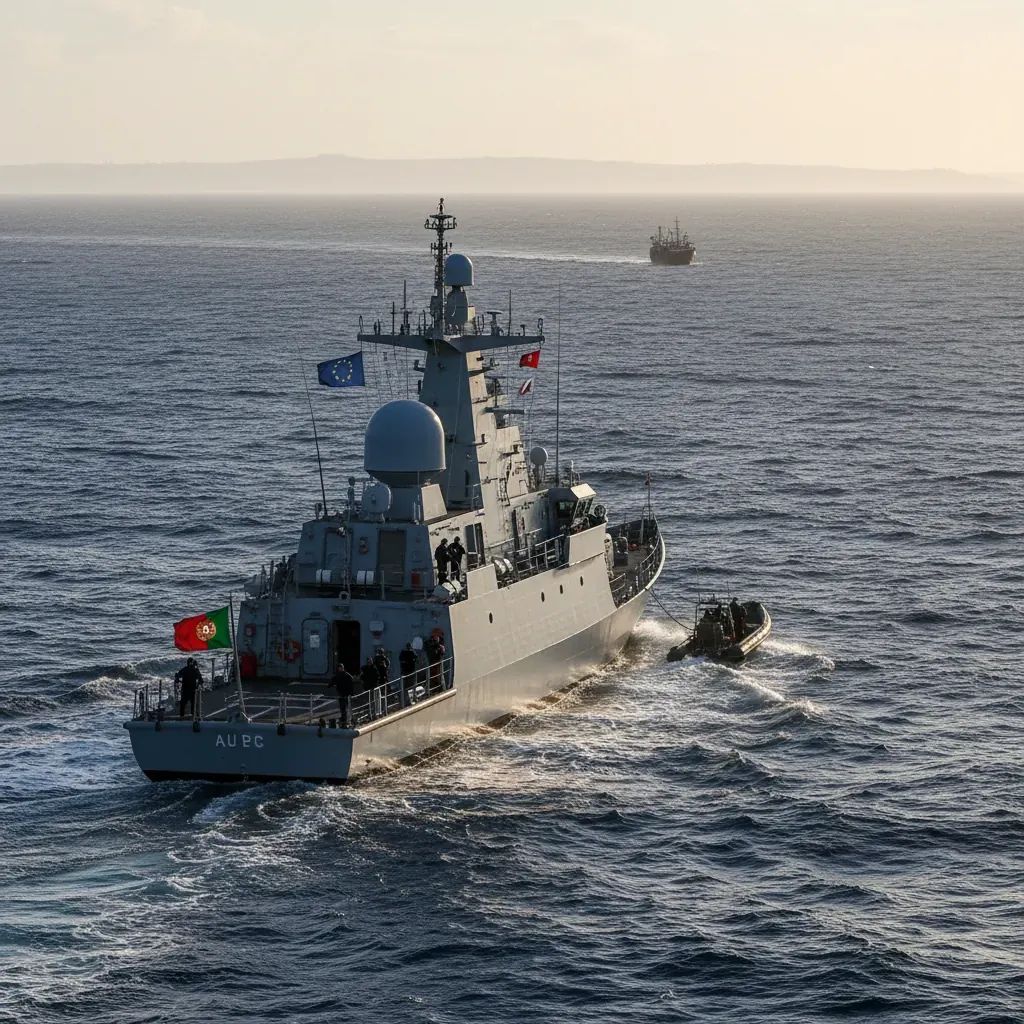
The Portuguese Armed Forces deployed between 2,000 and 3,000 troops daily at the height of the crisis to reinforce dikes, evacuate residents, and clear debris. The Ministry of National Defense confirmed that municipalities will not be billed for this military assistance. Firefighters nationwide and thousands of volunteers supported the response, backed by private-sector donations of equipment and materials.
The government's ENAAC 2030 (National Climate Adaptation Strategy) is being finalized to integrate climate resilience into regional and municipal planning. Nature-based solutions—dune rehabilitation, wetland restoration, and riparian renaturalization—will complement infrastructure hardening and improved early-warning systems. Coastal protection alone has received €65M in funding to address erosion hotspots.
One month into recovery, normality has not fully returned. E-Redes reports electricity restoration is "practically complete," though isolated cases persist. Telecoms remain patchy in rural areas. The psychological toll on communities that lost loved ones or saw lifelong homes destroyed remains immeasurable. Whether Portugal converts this trauma into systemic reform will depend on political will, financial commitment, and the ability of municipal staff to navigate a reconstruction program that is as much a test of governance as it is of engineering.