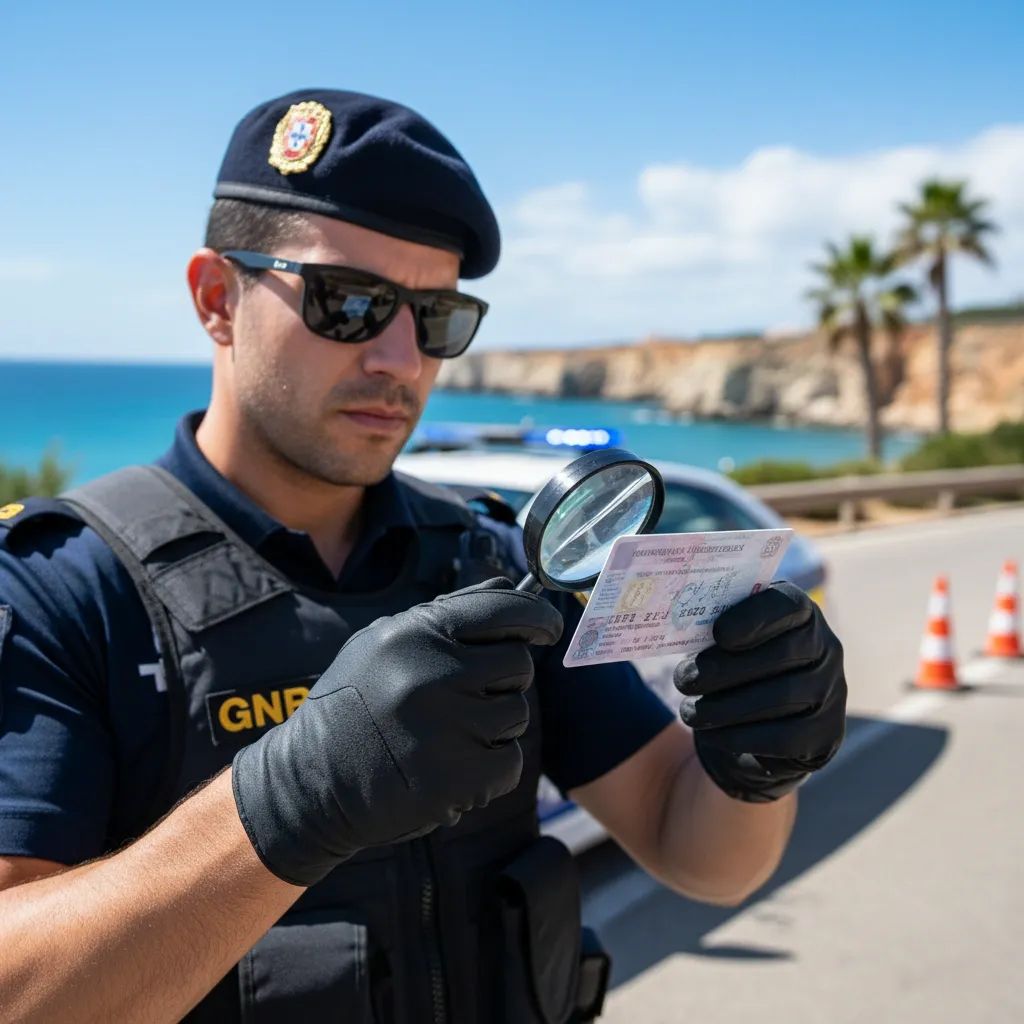
The National Republican Guard (GNR) intercepted a 33-year-old fugitive wanted on an international arrest warrant during a routine roadside inspection in Armação de Pêra, a coastal town in the Faro district, on February 24. The man's downfall came not from a high-profile manhunt but from a seemingly mundane detail: a fake foreign driver's license that failed to pass scrutiny during a standard traffic stop.
Why This Matters
• Routine checks work: The arrest underscores how everyday law enforcement activity in Portugal can intercept international fugitives hiding in plain sight.
• Interpol coordination: The warrant, issued in June 2024, was for serving a prison sentence related to robbery, demonstrating active cross-border judicial cooperation.
• Document fraud red flag: The case highlights how falsified identification remains a key vulnerability for fugitives operating in Portugal's tourist-heavy regions.
From Traffic Stop to Interpol Capture
Officers from the GNR's Territorial Command in Faro, specifically the Armação de Pêra Territorial Post, flagged the suspect during a standard vehicle inspection. The driver presented what appeared to be a foreign-issued driving license, but something about the document raised immediate red flags among the patrolling officers.
According to a statement released by the GNR, follow-up investigative procedures confirmed both the falsification of the license and the existence of an active international detention warrant. The document had been forged, and deeper checks revealed the man was wanted to serve an active prison sentence for robbery — a warrant that had been circulating through Interpol channels since the middle of 2024.
Officers detected the fraudulent document through a combination of visual inspection, verification of security features, and real-time access to law enforcement databases that flagged inconsistencies with legitimate credentials.
Legal Process and Detention
Following his arrest, the fugitive was brought before the Évora Judicial Court, which handled the procedural formalities surrounding his international warrant. The court ordered his transfer to the Beja Prison, where he is expected to remain while arrangements are finalized for serving his sentence.
The case reflects Portugal's integration into European and international judicial cooperation frameworks, including the Interpol Red Notice system and European Arrest Warrants (EAW). These mechanisms allow Portuguese authorities to act swiftly when fugitives surface within national borders, even when the original crime occurred abroad.
What This Means for Residents
For those living in or moving through Portugal's Algarve region, this arrest is a reminder that the country's law enforcement maintains an active posture on document verification and fugitive detection, even in areas known more for tourism than serious crime.
Foreign nationals residing in Portugal should be aware that carrying valid, authentic identification is not merely a formality — it is the first line of scrutiny in any interaction with police. The GNR's roadside operations are designed to catch not only traffic violations but also broader criminal activity.
The case also illustrates that Portugal is not a safe haven for those evading justice elsewhere. The country's participation in international policing networks means that warrants issued by Interpol, the EU, and bilateral agreements are actively enforced on the ground.
Roadside Checks and Fugitive Detection
The GNR's roadside operations are designed to enforce traffic law, but they function as a screening mechanism for criminal activity. Officers checking for insurance compliance, vehicle registration, and driver's licenses are also cross-referencing identities against national and international wanted lists.
The Faro district, with its blend of expatriate communities, seasonal tourism, and proximity to Spain, represents a strategic zone for such enforcement. The combination of transient populations and increased police scrutiny in border regions and tourist hubs means that presenting falsified credentials carries significant risk.
Broader Implications for Expats and Travelers
For expatriates, digital nomads, and long-term visitors in Portugal, this case serves as a practical reminder: carry legitimate documents at all times, and ensure that Portuguese translations or International Driving Permits (IDP) accompany foreign licenses if required by law.
Portugal's legal framework allows for significant penalties related to document fraud, including fines, deportation, and criminal prosecution. For those already under international warrants, the stakes multiply — a minor traffic stop can escalate into extradition proceedings within hours.
The arrest also highlights the interconnectedness of European and global law enforcement. A warrant issued in one jurisdiction can be enforced thousands of kilometers away, and Portugal's geographic position as a Western European hub makes it a frequent intersection point for fugitives moving between continents.
Final Context: Portugal's Role in Global Policing
Portugal is not merely a passive participant in international law enforcement — it is an active node in a network that includes Interpol, Europol, the Schengen Information System (SIS), and bilateral extradition treaties. The country's judicial and police institutions are structured to respond rapidly to cross-border requests, whether for arrest, extradition, or intelligence sharing.
The GNR's Territorial Command in Faro operates in one of the country's most internationally exposed regions, where millions of tourists, seasonal workers, and expatriates pass through annually. The ability to identify a fugitive during a routine document check reflects both training quality and system integration — two factors that make Portugal a challenging environment for those attempting to evade justice.
For residents, the takeaway is straightforward: Portugal's roads are policed for both safety and security. The line between a traffic violation and an international arrest is thinner than many assume, and the consequences of presenting falsified credentials can be swift and severe.