

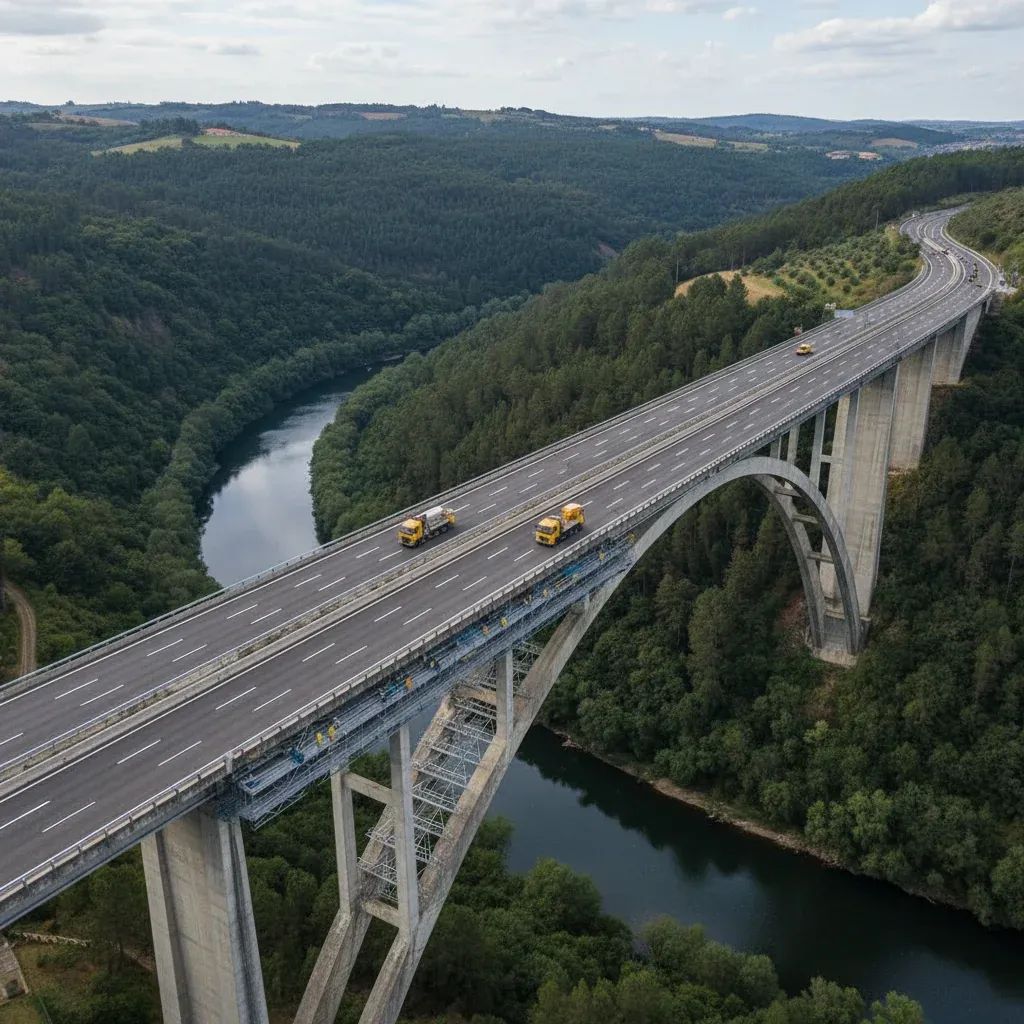
The Portugal Infrastructure Ministry has ordered a nationwide safety audit of every major road and rail structure, a step that could reshape how — and where — the country spends billions of euros on transport in the next decade.
Why This Matters
• 30-day clock – The LNEC must deliver the list of bridges, tunnels and embankments to be inspected by mid-March.
• Hidden costs – If repairs are flagged, tolls or train fares could rise to fund the work.
• Travel disruption – Expect targeted lane or line closures during the 12-month survey.
• Insurance hint – Home and business premiums in flood-prone districts may be recalculated once the risk map is public.
Why the Sudden Urgency?
Last winter’s sequence of Atlantic storms — locals still talk about Kristin — left several motorways under water and a handful of rural rail lines out of service for weeks. While no major bridge failed, imagery of eroded embankments on the A1 and cracked ballast near Santarém rattled officials. Climate models now indicate that what used to be a once-in-20-years weather punch could become a five-year routine. The audit is the Government’s attempt to move from reactive repairs to preventive maintenance before the 2030 investment pipeline is locked in.
What Exactly Will Be Inspected?
The mandate, spelled out in Despacho 1776-A/2026, tells the National Laboratory for Civil Engineering (LNEC) to focus on roughly 8,000 structures that keep Portugal’s 16,000 km road and 2,600 km rail networks standing. Priority assets include:
• 600 bridges and viaducts on the TEN-T corridors.
• 120 tunnels, many dug before modern seismic standards.
• 1,900 retaining walls and cut slopes in landslide-prone valleys.
• All hydraulic passages beneath the Linha do Oeste and riverfront highways.
For concessioned motorways, the Mobility and Transport Institute (IMT) and Infraestruturas de Portugal (IP) will oblige private operators to run parallel checks, forwarding raw data to LNEC for cross-validation. The laboratory may subcontract drone surveys or load-testing rigs to international specialist firms if local capacity falls short.
Budget, Deadlines and the Politics of Money
The audit lands in a tricky fiscal year. OE2026 trimmed headline capital spending on new roads and rail from €7.39 billion to €4.46 billion, yet PPP liabilities balloon by 25% to nearly €1.5 billion. Any red-flag findings could force the Treasury to re-open the books in autumn or lean more heavily on EU climate-resilience funds. Separately, the first payment on the Porto–Lisboa high-speed line Oiã-Soure PPP is due in July 2026; cost overruns here would compete with any emergency bridge works for the same revenue stream.
Expert Voices and Early Pushback
The Order of Engineers applauds the sweep but warns against “panic headlines”, noting most critical assets already receive routine inspections. Still, the body echoes the Communist Party’s call for extra headcount at LNEC, arguing that a 12-month window is “ambitious” without at least 40 additional structural engineers. Concessionaires, meanwhile, stress that their contracts cap unexpected maintenance bills; negotiations over cost-sharing could drag.
What This Means for Residents
Portugal’s 3.5 million daily commuters will not feel the audit immediately, but ripple effects are likely:
• Commuting delays – Short, staggered closures on the 25 de Abril Bridge or the Porto Metro viaducts could add minutes to rush-hour trips.
• Higher tolls or fares – Concession contracts allow operators to recover extraordinary maintenance through tariff tweaks; a €0.10-€0.20 lift on long-distance tolls is feasible for 2027.
• Home insurance adjustments – Expect insurers to price landslide or flood risk more granularly once the LNEC database goes public.
• Job market blip – Civil-engineering firms may hire aggressively, a boon for recent graduates.
The Road (and Rail) Ahead
By late March the Government will know which structures make the priority list. Monthly progress briefings will be posted on Portal Base, letting municipalities coordinate detours. If the final report, due February 2027, uncovers systemic weaknesses, Lisbon has signalled it will pivot uncommitted PNI 2030 funds toward “fix-it-first” projects rather than shiny new corridors. In practical terms, that could postpone a few dual-carriageway upgrades but would likely extend the life of assets most drivers already rely on every day.
Bottom line: the audit is less about crisis and more about hard-nosed risk management. Treat it as an insurance policy on the backbone of Portugal’s mobility — and prepare for the small inconveniences that come with a deep structural health check.


