
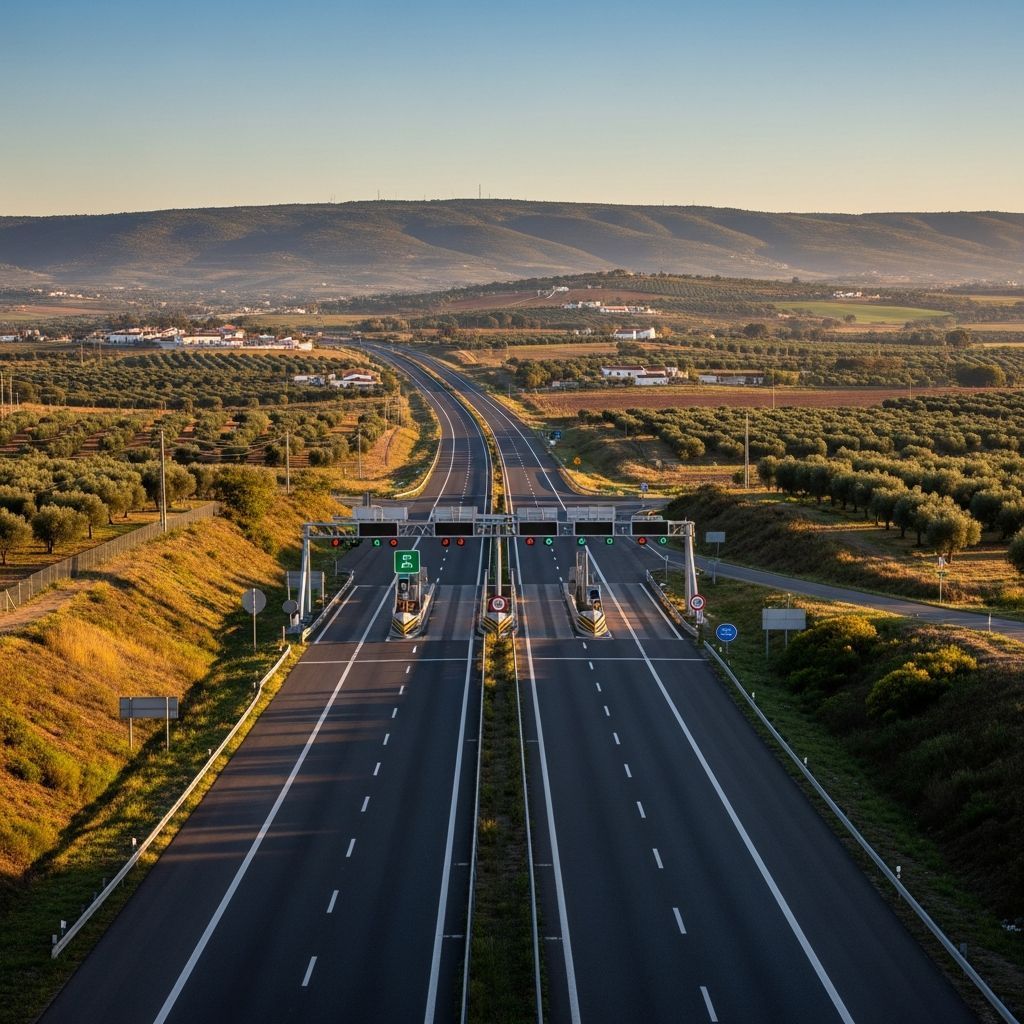
Portugal’s new State Budget has cleared parliament, yet the fiercest argument is not about taxes or pensions but about who should foot the bill for phasing out motorway tolls. Within hours of the final vote, the finance team warned that the concessions approved by opposition benches could drain more than €100 million every year, leaving little room for fresh public investment.
Budget approved but road toll fight intensifies
The governing alliance of PSD and CDS-PP pushed the OE2026 through on the strength of its majority, while the PS opted for abstention and Chega joined smaller parties in forcing dozens of amendments. At the heart of those changes lies a series of toll exemptions on the A25, stretches of the A2 and A6 in the Alentejo, and freight corridors around Porto and Leiria. Ministers accuse the opposition of electioneering; opposition leaders say they are ending an unfair system that penalises inland regions. Both claims cannot be simultaneously true, yet the financial reality will arrive long before the next ballot.
What changes on the road in 2026
For drivers heading east from Aveiro, the A25 now becomes completely free, erasing the last paid segments between Esgueira and Albergaria. In the south, residents and locally registered companies will glide past formerly costly gantries on the A2 between Almodôvar and the A6 link and on the A6 from that junction to Caia. Around Porto, lorries using the outer ring A41-CREP during peak periods can ignore the electronic beeps that usually mark every trip; similar relief arrives for freight on the A8 and A19 near Leiria. Implementation depends on electronic licence-plate tagging that Infraestruturas de Portugal still has to deploy, yet officials promise activation before the end of the first quarter.
The price tag and who pays
Finance Secretary José Maria Brandão de Brito calculates that the new exemptions wipe out just over €100 million in annual toll revenue. Socialist deputies counter that their own models point to merely €35 million, citing narrower eligibility in Alentejo and a time-limited suspension for heavy vehicles in the north. The gap matters because every euro lost to tolls has to be offset by higher transfers to private concessionaires, deeper borrowing or cutbacks elsewhere. In a tight fiscal year when the government is targeting a deficit below 0.4 % of GDP, that shortfall looms large.
Why the government is worried about contracts
Buried in every motorway concession is a clause on financial re-equilibrium. When the state changes a tariff unilaterally, the operator is entitled to compensation, either in cash or through an extended franchise. Officials inside the finance ministry whisper that talks with at least three motorway companies have already started and that one, overseeing the Beira Interior network, has flagged arbitration if losses are not recompensed swiftly. Beyond direct payments, cancelling tolls forces the state to absorb maintenance costs, procurement fees for deactivating gantries and potential penalties for early termination of collection services. That cocktail, civil servants note, rarely stays within the headline €100 million.
Political calculus ahead of local elections
Strategists across the aisle read the same polls: Interior districts complain loudly about double-digit fuel inflation while jobs concentrate along the coast. By endorsing toll cuts, the PS repositions itself as champion of regional equality; Chega brands the move an attack on Lisbon-centric elitism; governing parties argue responsibility is to balance the books so future projects—high-speed rail, hospital upgrades, metro expansions—retain funding. What resonates with voters in Viseu or Évora next autumn may decide whether this budget becomes a footnote or a turning point.
What drivers should expect in early 2026
Even as certain gantries switch off, the annual indexation formula pushes most tolls up by about 2.3 % on 1 January. A motorist commuting daily between Coimbra and Porto will save nothing under the new rules yet pay slightly more at Each station. Meanwhile, transport firms based in Gaia anticipate bigger savings on the A41, potentially rerouting fleets and altering traffic flows on the congested VCI. The Infrastructure Ministry plans a two-year study to measure whether diverting heavy goods vehicles away from city cores actually reduces emissions and congestion or merely shifts them elsewhere.
Outlook: study now, pay later?
Parliament has ordered the Mobility and Transport Authority to propose a sustainable road-funding model by mid-2026. Options include a universal vignette, distance-based charging tied to carbon output, or blending tolls with fuel duties. Whatever the solution, the political theatre surrounding the present exemptions illustrates a bigger dilemma: Portugal wants motorways that are safe, modern and affordable, yet every reduction in user fees pushes the burden back onto taxpayers. For now, drivers may celebrate cheaper trips across the Alentejo plains and along the Vouga River, but the invoice—visible or hidden—will eventually land on the national counter.


