
A mild breeze glides over the low hills of Almodôvar, carrying with it whispers about hidden chambers, a half-reptile guardian and piles of precious metal that no one has ever touched. The plot sounds lifted from fantasy, yet it has shaped both archaeological practice and local imagination for decades. What follows unpacks how folklore, misguided treasure hunting and today’s science collide on the promontory known as Mesas do Castelinho.
The tale that refuses to stay buried
Legends in the Alentejo rarely fade, but the Lizard Man myth clings to Mesas do Castelinho with unusual tenacity. Generations have repeated the story of a woman who descended into an underground dwelling sparkling with gold, silver and copper, only to discover a host whose spouse was half human, half reptile. Her startled invocation of “God” allegedly shattered the enchanted house, sealing the hoard beneath layers of red earth. Folklorists point out that these motifs—an underground realm, a forbidden word, a zoanthropic guardian—echo wider Iberian and even Mediterranean storytelling traditions. Still, the setting’s specificity anchors it firmly in southern Portugal. Locals insist the creature remains on watch, turning the archaeological mound into a place where history and supernatural cautionary tales meet.
Scars left by a premature gold rush
The myth might have stayed harmless had it not sparked a real-world hunt in 1986. Convinced that the hoard was more than folklore, private owners authorised heavy machinery to tear into the plateau. The result was irreversible: walls from the Iron Age, stone alignments of a Roman grid and traces of later Islamic fortification were sliced apart before experts could record them properly. No ingots surfaced, but the event became a textbook example of how treasure fever can sabotage cultural heritage. Portuguese heritage law has tightened since then, yet older residents still recall the rumble of diggers echoing down the Almodôvar valley—and the collective embarrassment that followed when the only discovery was rubble.
From pickaxe to scanner: science changes the conversation
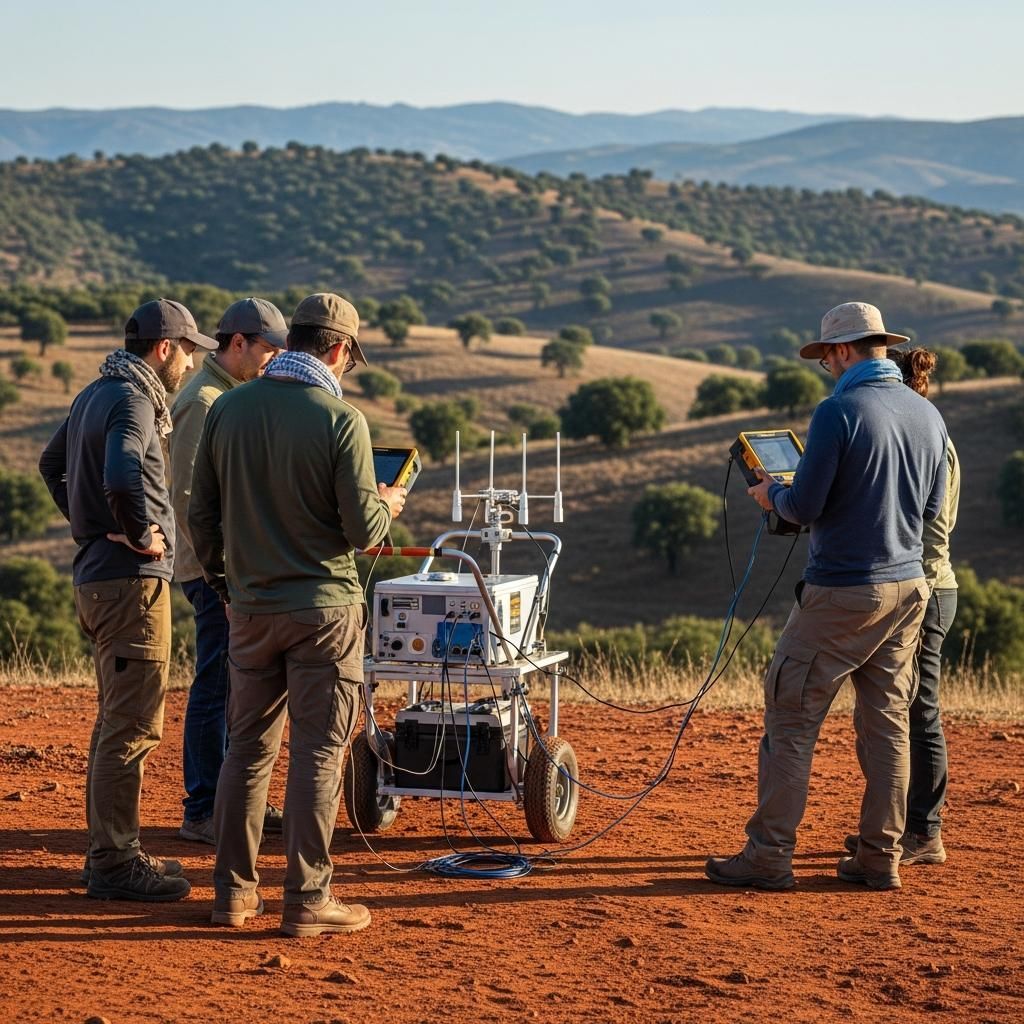
When professional teams from the University of Lisbon stepped in three years after the fiasco, they replaced brute force with stratigraphy, ground-penetrating radar, ceramic typology and painstaking osteological cataloguing. Excavations have now mapped a settlement arc stretching from the 5th century BC to the 12th century AD, exposing a ‘failed’ urban plan attempted by early Roman administrators, a compact Islamic fortress on the summit and scattered votive artefacts such as a terracotta human head now showcased in Santa Clara-a-Nova. Although journals continue to mine these finds for insight into Iron-Age exchange networks and Moorish warfare, none mentions bullion. Geophysicists say their equipment can detect voids and walls down to several metres, yet so far the screens reveal only soil stratification, not shimmering metal veins. Even so, every summer field school is greeted by villagers asking whether the scanners will finally pinpoint “o ouro do lagarto”.
Why the mystery endures in 2025
Portugal’s south has weathered depopulation, drought and shifting economic tides, and stories such as this offer both escapism and identity. Tourism boards quietly leverage the legend to lure hikers off the Algarve motorway, while academics use it in outreach programmes that contrast ethical archaeology with clandestine digging. Investment chatter about record-high gold prices occasionally reignites speculation, but municipal officials emphasise that the real treasure is the multilayered narrative connecting pre-Roman trade, Latin epigraphy, Islamic engineering and modern Alentejan folklore. Whether metal lies hidden or not, the guardian creature has fulfilled its role: it keeps the spotlight on a hilltop where Portugal’s earliest chapters, written in stone and myth, still wait for careful readers rather than fortune seekers.


