Over 51,000 residents across Portugal remain without telecommunications services more than a month after Storm Kristin devastated the country's communications infrastructure, with full recovery now estimated to take another two to three months for the most remote cases. The crisis has exposed the fragility of Portugal's telecommunications networks in the face of extreme weather, triggering tensions between municipal leaders and operators over the pace of repairs.
Persistent Digital Blackout
Portugal's National Association of Municipalities (ANMP) held an emergency summit on Tuesday in Coimbra with representatives from over 150 municipalities across the Centro region—spanning Aveiro, Coimbra, Leiria, Viseu, Dão Lafões, Beira Baixa, Beiras, and Serra da Estrela. The meeting, which included state secretaries for Local Administration and Regional Planning, centered on a stark reality: significant portions of the Centro region remain digitally isolated.
Pedro Pimpão, president of the ANMP and mayor of Pombal in Leiria district, expressed deep frustration over the ongoing communications vacuum. "One month later, we still have a significant portion of our territory without communications," he told reporters. "For us, at this moment, communications assume even greater relevance."
According to the latest figures from the Reconstruction Mission Structure for Central Portugal, headed by Paulo Fernandes, approximately 51,086 users were without service as of Monday—down from 83,900 on February 18, but still a substantial figure. The outage affects 33 municipalities, with 40,398 fixed-line customers and 10,688 mobile network users cut off.
Paradoxically, while mobile network disruptions have decreased by nearly 4,000 users since February 23, fixed-line customers without service have increased by 6,779 during the same period. This troubling reversal suggests that underlying infrastructure damage is more severe than initially assessed.
What This Means for Residents and Businesses
The communications blackout has compounded an already difficult recovery. While electricity has been largely restored—the Mission Structure reports 100% restoration of low-voltage power, with only three companies still lacking medium-voltage supply—the absence of phone and internet access remains crippling.
"In territories with a very aged population, this makes an enormous difference, even from the standpoint of mental health impact on people," Pimpão emphasized. The mayor, whose own constituency includes families and businesses that only regained electricity within the past few days after more than a month without power, underscored the cascading effects on economic activity.
Businesses have been hit particularly hard. Without reliable communications, companies cannot process transactions, coordinate logistics, or maintain customer relationships. The ANMP called on operators to reinforce field teams and expedite network repairs, warning that affected areas remain in a state of emergency requiring additional support.
Beyond telecommunications, municipalities are grappling with damaged road networks and impassable forest paths—infrastructure repairs that carry an estimated price tag the Mission Structure has not budgeted for. "The rehabilitation of the road network is a brutal financial investment that was not planned," Pimpão said, calling for special attention in future aid packages.
Operator Response: NOS Absorbs Losses, Predicts Long Tail
NOS, Portugal's largest telecommunications operator, acknowledged that between 2% and 3% of its customer base—representing fewer than 5,000 users—remain without service. Of those, approximately 3,000 are in areas still lacking electricity, which renders telecom infrastructure inoperable.
Miguel Almeida, CEO of NOS, told reporters during a results conference in Lisbon that the company would absorb all losses without seeking government compensation. "You can rest assured... we will not ask the Government to pay these losses. We assume them," he said, adding that customers would not bear the cost either.
Almeida estimated the damage at millions of euros, involving hundreds of kilometers of fiber optic cable destroyed, damaged mobile stations, and equipment losses, though the company has not finalized a total. Crucially, he noted that no insurance coverage exists for catastrophic weather damage on this scale.
The executive, who has 26 years in the telecommunications sector, described Storm Kristin—which struck on January 28—as unprecedented in modern times. "The truth is we didn't know, we had no idea of the dimension this storm would have," Almeida said. "No operator was prepared for this."
He explained that the storm destroyed thousands of poles and severed fiber optic cables in hundreds of locations, requiring painstaking manual repairs. While the bulk of service has been restored, the remaining 2% to 3% represent isolated cases that will require two to three additional months to resolve.
Almeida also criticized the Portuguese Government's spectrum fee structure, arguing that prohibitive microwave link taxes discourage investment in network redundancy—backup systems that could have mitigated outages during the storm. "Unfortunately, the Government insists on charging impossible fees... making investment in microwave [links] practically impossible," he said. He dismissed satellite connectivity as viable only for emergency contingency for a limited number of clients, not a scalable solution.
Economic Toll Reaches Historic Levels
Storm Kristin, along with subsequent depressions Leonardo and Marta, resulted in 18 deaths—six of them in Leiria alone—and hundreds of injuries and displacements across Portugal. The Reconstruction Mission Structure has logged 139,500 registered claims, totaling €505M in assessed damages. Of those claims, 85% relate to residential properties and 15% to businesses.
Initial government estimates placed direct reconstruction costs above €4B, though more recent assessments from the Mission Structure suggest total economic damage could reach €6B. The Leiria region alone accounts for between 50% and 60% of total losses.
Economic fallout extends beyond direct physical damage. Layoffs have begun: 423 requests for temporary suspension of employment contracts have been filed by 408 companies, affecting 3,668 workers. Credit lines—totaling €2B in combined investment and treasury support—have drawn 5,068 applications worth approximately €1.2B.
Applications for housing recovery assistance have reached 22,460, with an average payout of €5,797, totaling roughly €130M. Loss-of-income support claims number 4,932.
The Portuguese electricity distributor EDP alone estimated around €80M in direct impacts from Storm Kristin, including damage to electrical grids, generation assets, and associated operational costs. The storm left approximately one million people without power across multiple districts.
Government Response and Infrastructure Overhaul
The Portuguese Government has presented the Transformation, Recovery, and Resilience Plan (PTRR), which includes measures to strengthen communications infrastructure and cybersecurity. Key proposals include implementing national roaming—allowing customers of one operator to use another's network in emergencies—underground cabling to protect against future storms, and distributing satellite phones and Starlink connections to parish councils.
The National Communications Authority (ANACOM) has imposed consumer protections, including a ban on service suspensions for non-payment in affected municipalities and mandatory flexible payment plans. However, ANACOM warned in February that while mobile network recovery would take approximately two weeks, fixed-line restoration could extend into mid-June due to extensive infrastructure destruction.
Ongoing Weather Instability Complicates Recovery
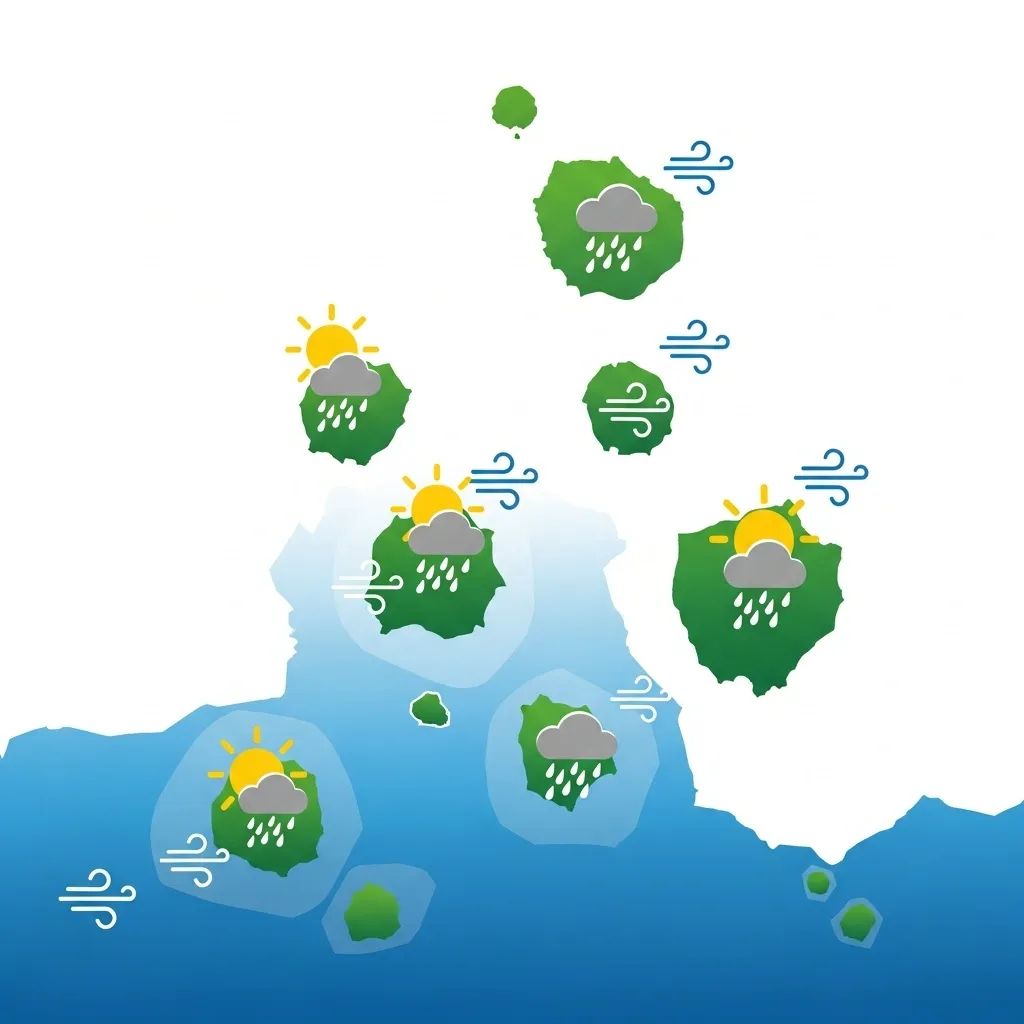
Recovery efforts are unfolding against a backdrop of continued atmospheric instability. Depression Regina struck Portugal between March 2 and 3, bringing heavy showers, thunderstorms, and wind, with nine districts under yellow weather warnings. The Portuguese Institute for Sea and Atmosphere (IPMA) issued further warnings for March 5 and 6, placing multiple coastal districts under orange alerts for sea agitation—with waves forecast to reach 5 to 6.5 meters, and maximum heights of 11 meters—and yellow warnings for winds gusting up to 70-80 km/h.
Snow warnings were also issued for Guarda and Castelo Branco districts above 1,400-1,600 meters elevation. Forecasts for March 2026 indicate an unusually unstable month with above-average precipitation.
The IC3 highway, a critical artery between Penela and Espinheiro, remained closed as of March 3 due to Storm Kristin damage, creating significant congestion and logistical challenges. The Civil Protection Authority of Médio Tejo has called for additional resources to confront what it termed the "new normal" of climate change, citing Kristin, Leonardo, and Marta as harbingers of more frequent extreme weather events.
European parliamentarians have also taken notice, calling for the creation of a European agricultural reinsurance mechanism in response to the agricultural losses sustained during Storm Kristin.
Path Forward
While electricity has been substantially restored and the state of calamity designation that covered 68 municipalities officially ended on February 15, the communications crisis underscores a broader vulnerability in Portugal's critical infrastructure. The extended recovery timeline—stretching into late spring or early summer for some rural users—raises questions about network resilience and the adequacy of disaster preparedness protocols.
For the thousands of Portuguese households and businesses still waiting for reconnection, the digital isolation continues to exact a toll measured not just in economic losses but in psychological strain, particularly among elderly populations in remote areas. As climate models predict more frequent and severe weather events, the lessons from Storm Kristin may prove a costly but essential catalyst for infrastructure modernization across Portugal.